Nowhere to Run
You are being hunted. The most terrifying, aggressive empires in the ancient Andes—the Incas and the Collas—are rapidly expanding their borders, swallowing up every peaceful community in their path. You are backed against the edge of a massive, freezing expanse: Lake Titicaca. You cannot fight them. You cannot outrun them on land.
So, what do you do?
You step off the earth entirely.
The survival story of the Uros people of Lake Titicaca is one of the most mind-bending feats of Pre-Columbian engineering in human history. When faced with total annihilation, they didn’t just flee. They built a world where their enemies couldn’t follow.
The Ultimate Vanishing Act
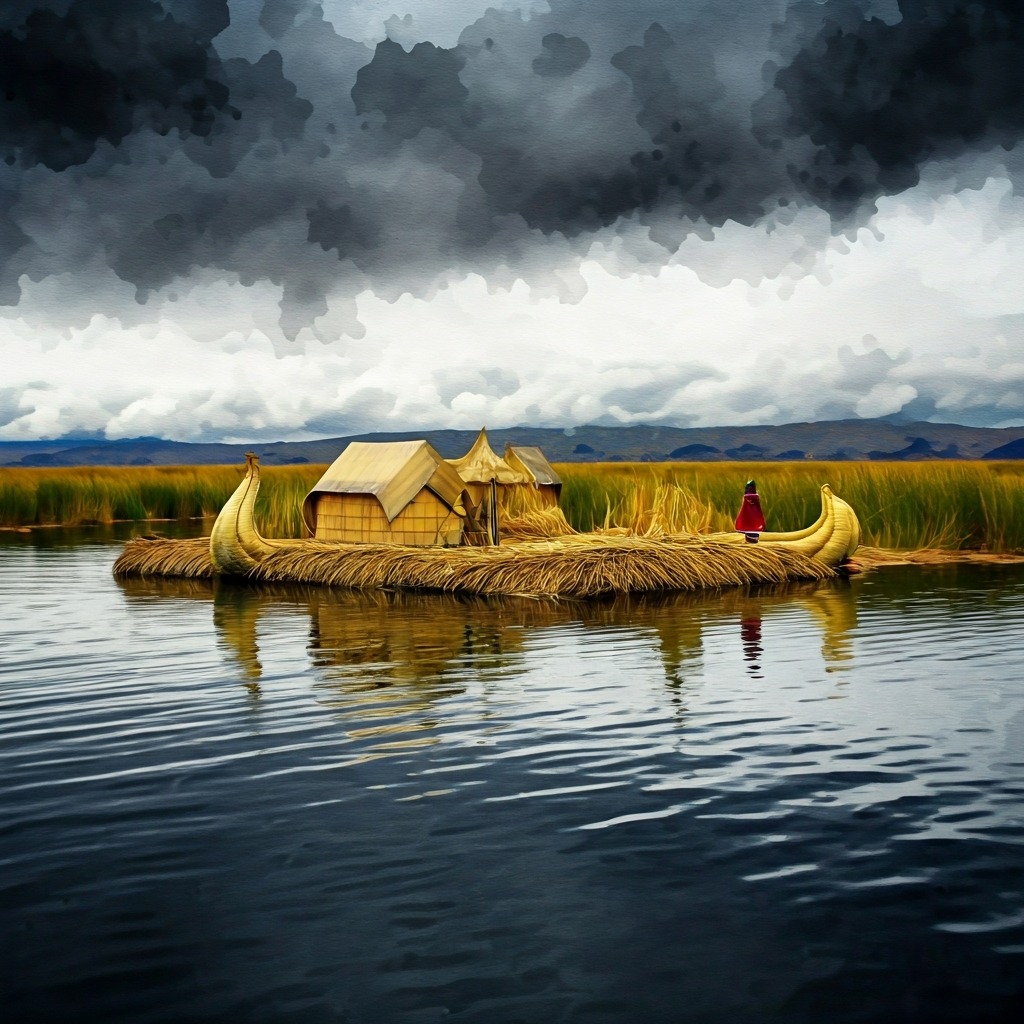
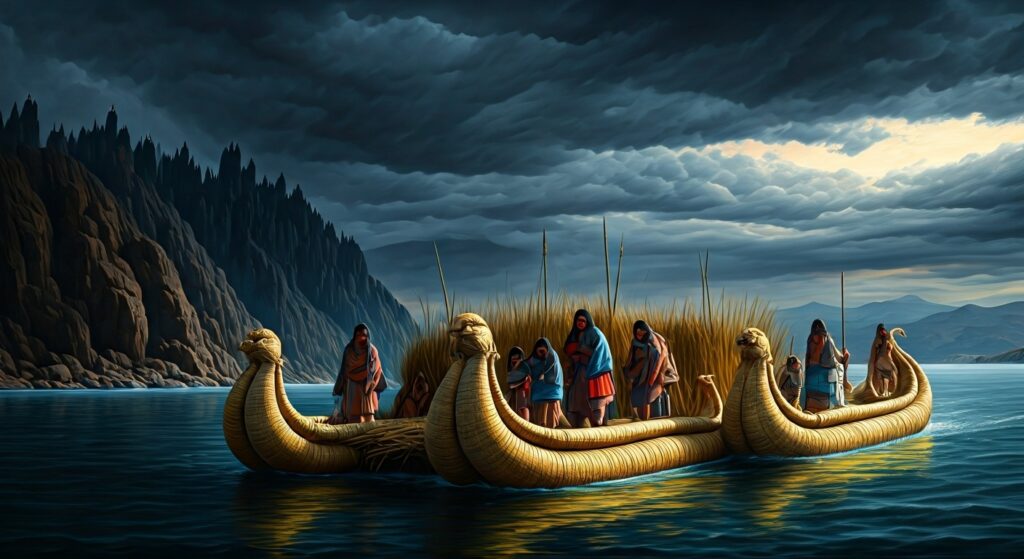
The Uros are a pre-Incan civilization, an ancient people who predated the famous empires that eventually sought to conquer them. Instead of surrendering to the approaching armies, the Uros engineered a brilliant, almost unbelievable defensive strategy. They didn’t just build boats to escape; they built entire floating islands.
By constructing these buoyant platforms, the Uros created mobile fortresses. If an enemy threat appeared on the horizon, they didn’t have to man the barricades or prepare for a bloody siege. They simply pulled up their anchors and drifted out into the deeper, treacherous waters of the lake. It was the ultimate vanishing act. Over centuries, what began as a desperate, temporary defensive measure evolved into a permanent, gravity-defying way of life.
Fortresses of Grass
How exactly do you build an island from scratch? The foundation of Uros life relies entirely on the totora reed, a plant that grows abundantly in the shallows of Lake Titicaca.
The construction begins with the khili—the dense, interwoven root blocks of the totora reeds. During the rainy season, these massive root systems naturally detach from the lakebed and float to the surface. The Uros harvest these buoyant blocks, tie them together using heavy ropes, and anchor them to the lake bottom using long poles.
On top of this living base, they layer crisscrossing bundles of dried totora reeds. But there is a catch: the reeds at the bottom of the island are constantly rotting away in the water. Because of this, maintaining the island is an endless, everyday chore. Fresh reeds must be added to the surface every few weeks just to keep the ground from sinking beneath their feet. Visitors today often describe walking on a Uros island as stepping onto a giant, floating sponge.
Living on Kindling
Living your entire life on a giant pile of dried kindling presents an obvious, terrifying problem. Cooking is essential, but one stray ember could incinerate an entire floating neighborhood. To manage this extreme fire hazard, the Uros build their cooking fires on top of thick, carefully arranged piles of stones.
Historically, the Uros were pure hunter-gatherers who lived entirely off the lake’s bounty. They fished the freezing waters for ispi and carachi, and hunted aquatic birds like flamingos and ducks. They even utilized the totora reed for sustenance; the white bottom of the reed is rich in iodine and acts as a natural painkiller.
Today, their everyday life is a surreal blend of ancient tradition and modern convenience. Thanks to solar panels, these floating fortresses now feature televisions, cell phones, small medical dispensaries, and even a floating radio station.
A Sinking World
Despite their incredible resilience, the Uros are currently facing threats that cannot be escaped by simply pulling up anchor.
Culturally, the original Uru language has already been lost, replaced by Aymara and Spanish due to historical intermarriage and assimilation. Economically, their survival now depends heavily on tourism. This is a double-edged sword. While tourism provides the essential income needed to buy modern goods and send their children to mainland universities, it has drawn heavy criticism. Some anthropologists argue that the islands closest to the mainland have become highly commercialized “human zoos,” where daily life is performed for cameras rather than lived authentically.
Yet, many Uros fiercely defend the tourism industry. To them, it is simply the modern equivalent of their ancient defensive tactics—the very tool that allows them to maintain their islands and stay on the lake rather than migrating to the city. They are playing the board they were given to stay alive.
The most terrifying threat, however, comes from the water itself. Severe pollution and climate change in Lake Titicaca are disrupting the growth of the totora reeds. Without the reeds, there is no khili. Without the khili, the islands—and the Uros’ entire floating world—will literally dissolve into the lake, taking one of history’s greatest survival stories with it.