To conquer the Andes is to fight gravity, altitude, and nature itself. Yet, in the 15th century, the Inca Empire didn’t just survive this brutal landscape—they bent it to their will. Without iron tools, draft animals, or the wheel, they engineered a sprawling, 18,600-mile network of stone that defied logic. It was called the Qhapaq Ñan, or “The Great Road.” It was a breathtaking feat of human willpower, cosmic alignment, and, ultimately, the very instrument of their devastating downfall.
The Blueprint of Gods
At its zenith, the Inca Empire (Tawantinsuyu) was a behemoth. To keep its blood pumping, engineers constructed a 30,000-kilometer circulatory system of stone. Stretching across six modern South American countries, this web of highways was built on a simple, brilliant philosophy: do not fight the mountain; become the mountain.
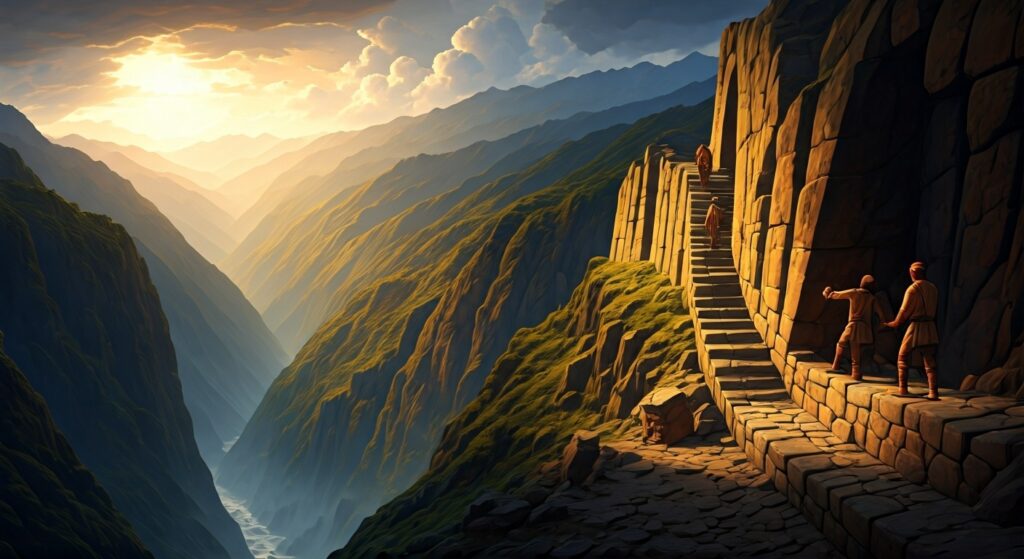
They carved sheer staircases into vertical cliffs and erected massive retaining walls to hold back the earth. Where torrential rains threatened to wash away their empire, they engineered sophisticated drainage systems that still function today. The road morphed to fit its environment—wide, paved highways across flat plains, and vertiginous, stomach-dropping paths hugging the edges of the world.
Woven Over the Abyss
But what happens when the earth simply drops away? The Andes are scarred by deep, impassable river gorges. Without steel cables or iron bolts, a canyon should have been a dead end. Instead, the Inca turned to grass.
They engineered massive suspension bridges woven entirely from ichu grass. These fibrous cables, thick as tree trunks, were strong enough to support marching armies. The most famous surviving example, the Q’eswachaka bridge, is still dismantled and rewoven by hand every single year by local communities—a continuous, living thread of ancient engineering that defies modern logic.
The Flesh-and-Blood Internet
A road is useless if nothing travels on it. For the Inca rulers in Cusco, the Qhapaq Ñan was an instrument of absolute control, and its data packets were human.
The empire operated a highly efficient postal system fueled by the chasquis—elite, lung-busting relay runners. Stationed at intervals along the highway, these runners sprinted at breakneck speeds across altitudes exceeding 16,000 feet. They carried messages recorded on quipus, intricate, knotted strings used for complex data keeping.
Through this human relay, a message could travel from Cusco to Quito—a staggering 1,500 kilometers—in just under a week. To keep this massive logistical machine running, the Inca built tambos (way stations) roughly a day’s walk apart, packed with weapons, clothing, and ancient survival foods like chuño (freeze-dried potatoes) and charqui (dried meat).
Paving the Cosmos
To view the Qhapaq Ñan merely as a feat of civil engineering is to miss its soul. To the Inca, this wasn’t just a physical highway; it was a sacred geography.
The main arteries radiated outward from the Coricancha, the glittering Temple of the Sun in Cusco. Routes were meticulously aligned with astronomical events, connecting the empire to huacas—sacred shrines, mystical springs, and holy mountains. Walking the Qhapaq Ñan was a religious pilgrimage, a physical tether between the earthly realm and the divine.
The Fatal Red Carpet
Every great mystery has a twist, and the story of the Qhapaq Ñan ends in tragic irony. The very masterpiece that allowed the Inca to build and control their empire became the instrument of its swift, brutal destruction.
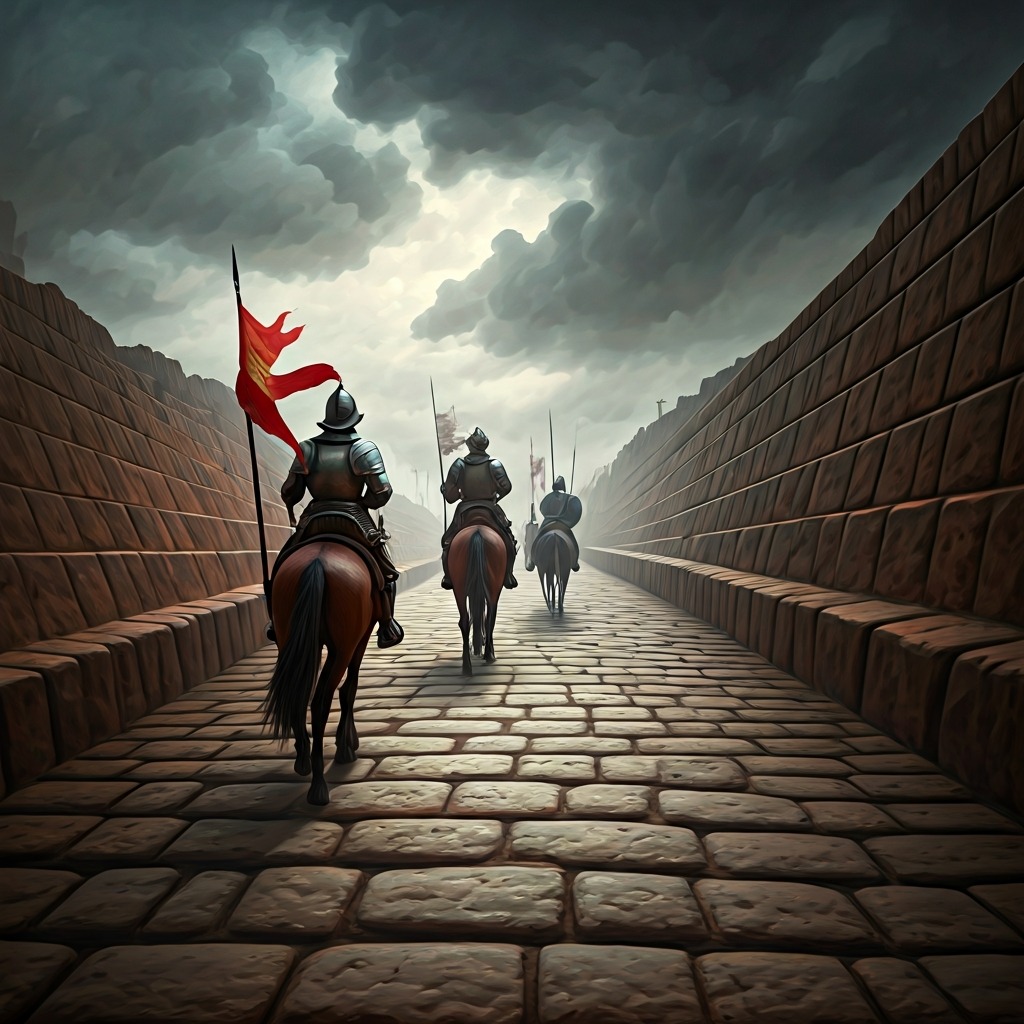
When Francisco Pizarro and his Spanish conquistadors arrived in 1532, they didn’t have to hack their way through impenetrable wilderness. The Inca had unwittingly rolled out a paved, perfectly engineered red carpet right into the heart of the Andes. The wide roads and sturdy bridges allowed Spanish horses—terrifying, alien beasts the roads were never designed for—to penetrate the empire with devastating speed. The infrastructure of Inca dominance became the highway of their downfall.
Today, the Qhapaq Ñan remains a silent, stone-paved testament to a civilization that conquered the most unforgiving landscapes on Earth—only to be undone by their own brilliant creation.