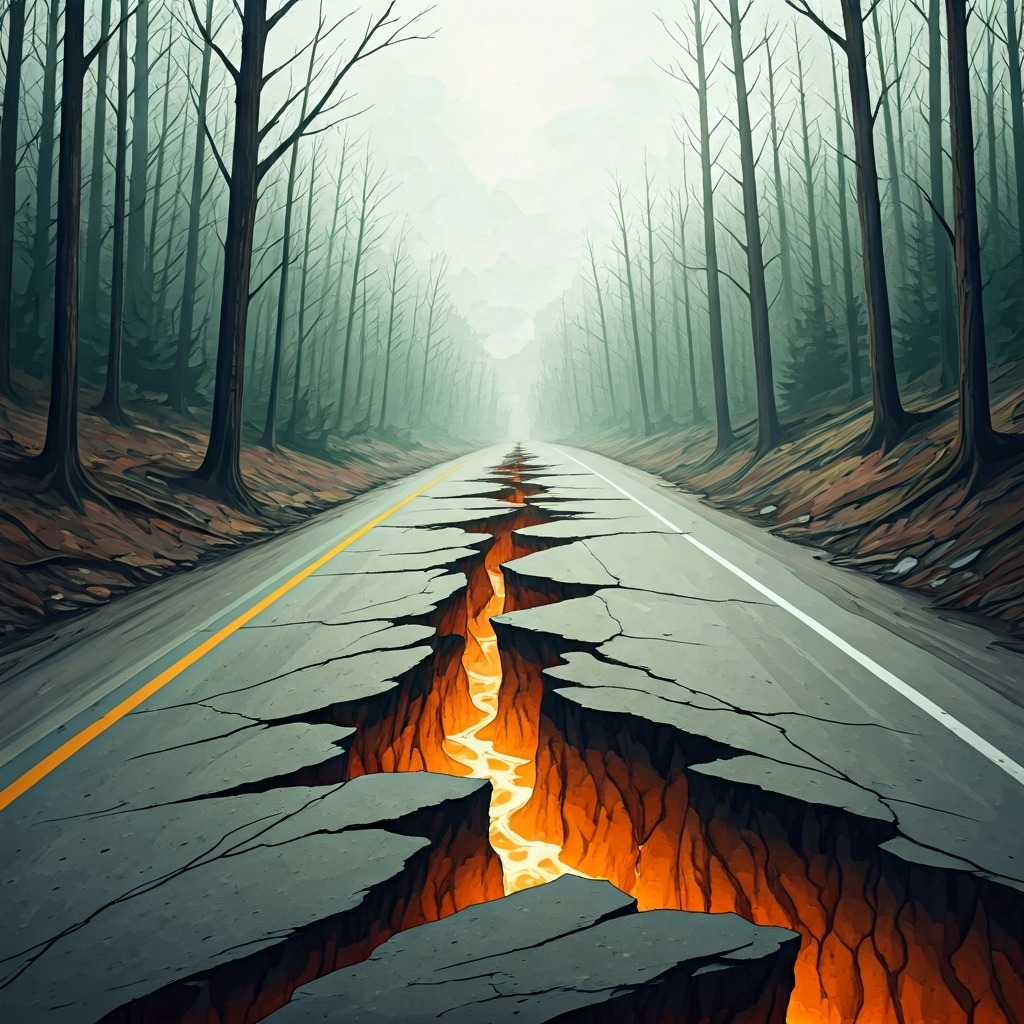
The landscape of Centralia, Pennsylvania, looks less like a quiet American borough and more like the aftermath of an apocalyptic event. Steam vents from fractured pavement. The earth is unnervingly hot to the touch. It is a ghost town, wiped off the map by the U.S. Postal Service, abandoned by its residents, and left to rot. But the culprit behind this wasteland wasn’t extraterrestrial or supernatural. It was a simple, catastrophic human error—and a subterranean fire that simply refused to die.
A Spark in the Boneyard
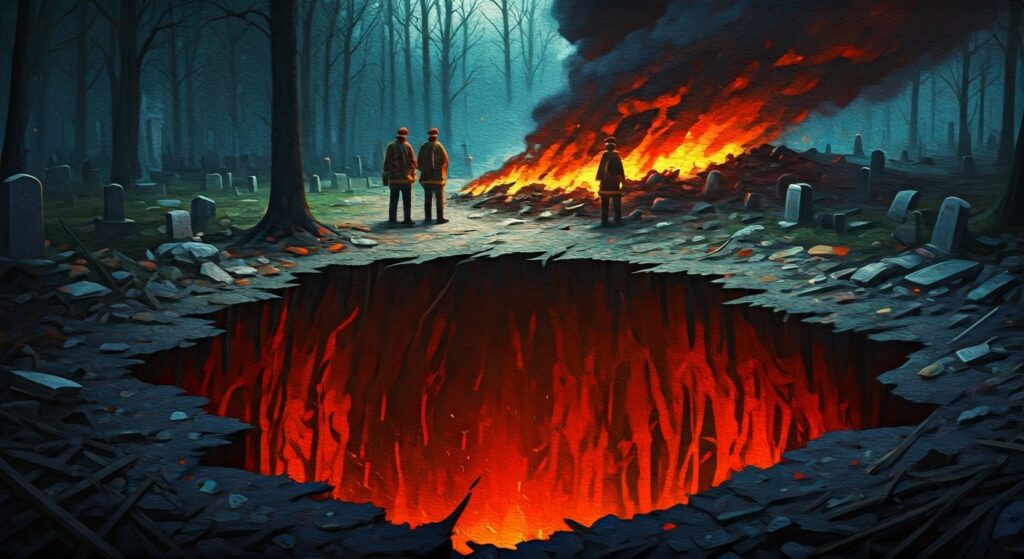
Every devastating true-crime saga begins with a seemingly mundane detail. In late May 1962, the borough council of Centralia wanted to spruce up the town ahead of Memorial Day. They hired five volunteer firefighters to clean up the local landfill, an abandoned strip-mine pit situated ominously next to the Odd Fellows Cemetery.
The plan was standard protocol for the era: ignite the trash to reduce its volume, then hose down the embers. The firefighters executed the plan perfectly, watching the flames consume the garbage before drenching the pit with water.
But beneath the smoldering ash, a silent monster had just been awakened.
Unbeknownst to the cleanup crew, an unsealed opening lay hidden at the base of the pit. It led directly into the Buck Mountain coal seam—a massive, labyrinthine network of abandoned mine shafts twisting directly beneath Centralia’s homes, businesses, and streets. The fire caught the exposed coal, crept into the pitch-black depths, and began to spread.
The Monster Beneath the Floorboards
Throughout the 1960s and 70s, the town and the government engaged in a desperate, slow-motion battle against the creeping inferno. They tried everything to kill it. They excavated the earth. They flushed the mines with a slurry of crushed rock and water. They dug massive trenches to cut off the fire’s path.
But thanks to a lethal cocktail of bureaucratic red tape, inadequate funding, and a catastrophic underestimation of the fire’s intensity, every single intervention failed.
While the suits dragged their feet, the reality for Centralia’s residents morphed into a waking nightmare. Carbon monoxide and sulfur dioxide began seeping through the floorboards of family homes. Gardens withered and died from the roots up. The pavement buckled, splitting open to vent foul-smelling steam.
The town fractured. Neighbors turned on neighbors. Some residents begged for government buyouts and immediate evacuation, while others claimed the entire crisis was a massive hoax designed to steal their mineral-rich land. It was a classic case of denial in the face of an invisible, creeping doom.
The Earth Opens Up
The simmering tension finally boiled over in 1979. John Coddington, a local gas station owner, went to check the fuel levels in his underground tanks. When he pulled out the dipstick, it was hot. Really hot. He tested the temperature of the gasoline stored beneath his station and discovered it had reached a highly explosive 136 degrees Fahrenheit (57.8 degrees Celsius). The town was sitting on a literal powder keg.
But it was a near-tragedy two years later that finally forced the nation to look at Centralia.
On Valentine’s Day in 1981, a 12-year-old boy named Todd Domboski was playing in his backyard. Without warning, the earth simply gave way beneath his feet. A sinkhole, 150 feet deep and billowing lethal clouds of carbon monoxide, opened up to swallow him whole. Todd managed to grab hold of an exposed tree root, clinging for his life in the toxic smoke until his cousin pulled him to safety.
The image of a child nearly being swallowed by a burning abyss was too much to ignore. The national media descended on Centralia, and the government could no longer look away.
The Ghost Town Legacy
In 1983, Congress finally appropriated $42 million for a voluntary relocation program. Most of the 1,000-plus residents took the money and fled to nearby towns like Ashland and Mount Carmel. By 1992, Pennsylvania invoked eminent domain, condemning every building in the borough.
A few stubborn holdouts refused to leave, sparking a bitter, decades-long legal war to keep their homes. It wasn’t until 2013 that a settlement was finally reached, allowing the last remaining residents to live out their days in Centralia, with the grim agreement that their homes would be demolished after they passed.
Today, Centralia is a ghost town. Its 17927 ZIP code was revoked in 2002. A buckled, steaming section of Route 61 became a massive tourist magnet known as the “Graffiti Highway”—until the state finally covered it with dirt in 2020 to keep trespassers away. Its eerie, fog-shrouded, ash-covered streets even served as the primary inspiration for the legendary 1999 video game Silent Hill.
But unlike a video game, you can’t just hit reset on Centralia. The fire is still down there, spreading across four underground fronts and spanning over 400 acres. Geologists estimate there is enough coal left in the Buck Mountain seam to keep the fire burning for another 250 years.
The next time you walk down a quiet suburban street, remember Centralia. Beneath the pavement, beneath the manicured lawns, the earth holds secrets—and sometimes, those secrets catch fire.