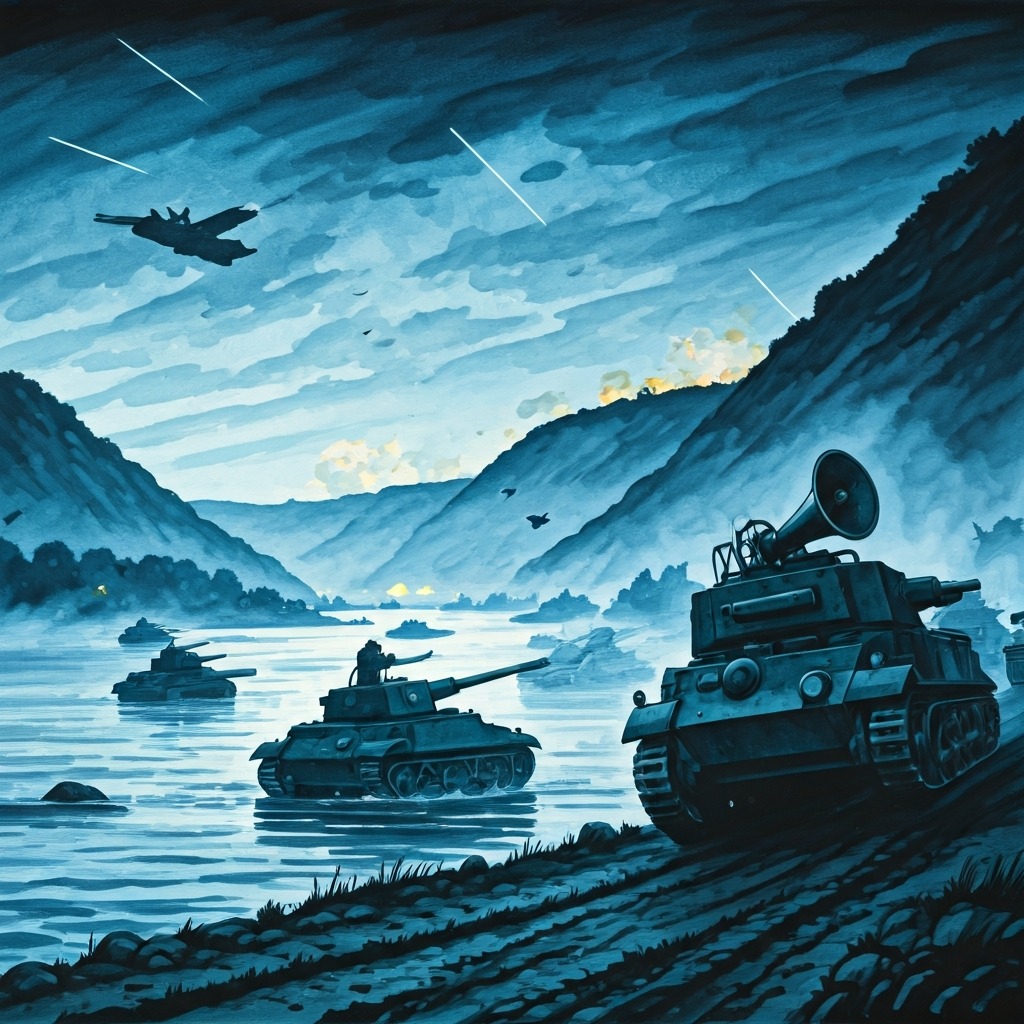
In the brutal theater of World War II, the Allied forces deployed a top-secret unit tasked with a seemingly impossible mission: to march directly into the crosshairs of the German war machine without firing a single bullet. Their arsenal? Rubber, wire recorders, and sheer audacity. This wasn’t a combat infantry; it was a traveling roadshow of deception. Welcome to the unbelievable true story of the 23rd Headquarters Special Troops—better known as the Ghost Army.
The Phantom Battalion That Never Existed
Activated in early 1944, this highly classified 1,100-man tactical deception unit was handed a suicide pact of a mission: impersonate massive Allied army units to trick German intelligence. They needed to make the enemy believe heavily armored divisions were massing in empty fields.
To build a phantom army, the military didn’t recruit sharpshooters or seasoned infantrymen. They recruited artists.
Quietly scouting the Pratt Institute, Cooper Union, and elite theater companies, the government assembled a motley crew of creatives. Among their ranks were future fashion icon Bill Blass, minimalist painter Ellsworth Kelly, wildlife illustrator Arthur Singer, and photographer Art Kane. They weren’t deployed to fight. They were deployed to put on the deadliest show on earth.
Smoke, Mirrors, and Rubber Shermans
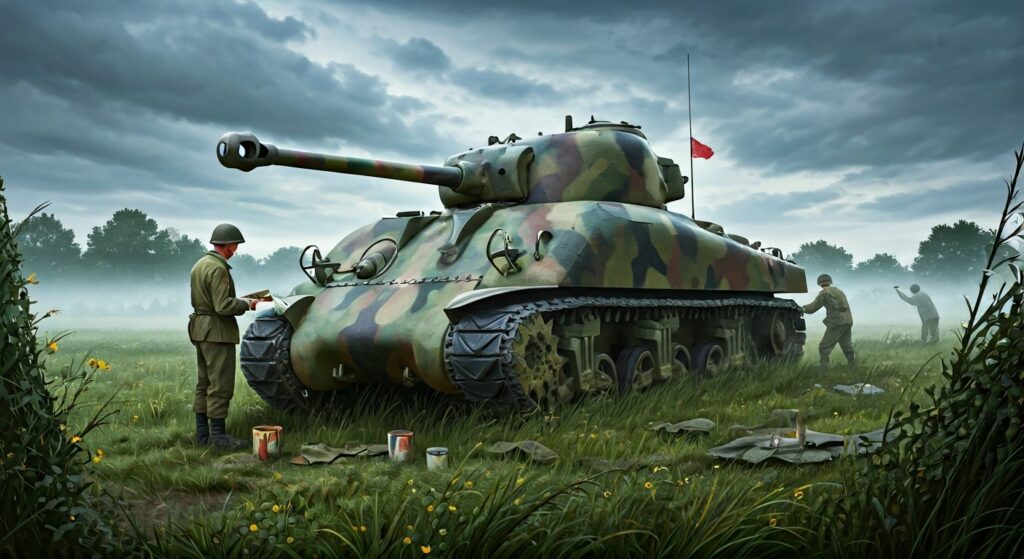
To pull off a battlefield illusion of this magnitude, the Ghost Army needed props. The visual deception fell to the 603rd Camouflage Engineers, who deployed hundreds of inflatable rubber M4 Sherman tanks, jeeps, artillery pieces, and airplanes.
But German aerial reconnaissance was meticulous; a pristine rubber tank looks exactly like a pristine rubber tank from the sky. So, the artists went to work. They painstakingly painted the inflatables to look weathered and mud-splattered. They drove bulldozers through the dirt to carve heavy, realistic tank tracks leading right up to the dummy vehicles. To the enemy flying overhead, it looked like a lethal armored division preparing to strike.
A Symphony of Madness
Visuals were only half the battle. If a forest is full of tanks, it must sound like a forest full of tanks. Enter the 3132 Signal Service Company.
These audio engineers recorded the deafening roars of actual armored and infantry units at Fort Knox, mixing the chaotic symphony on state-of-the-art wire recorders. They blasted these tracks through massive, 500-pound speakers mounted on halftracks. The auditory illusion was so powerful and precise that it could project the terrifying rumble of an advancing army up to 15 miles away, chilling German soldiers to the bone.
The Art of the “Spoof”
The illusion also had to hold up on the airwaves. The Signal Company Special engaged in what they called “spoof radio.” Every Morse code operator has a distinct rhythm and style of tapping, known in the military as a “fist.” The Ghost Army operators studied the specific fists of the radio operators in the units they were impersonating, mimicking them flawlessly. When German intelligence intercepted the traffic, they heard exactly who they expected to hear.
But the most daring act was the atmospheric deception. These men were literal crisis actors. Soldiers would sew the division patches of the units they were impersonating onto their uniforms, paint fake bumper markings on their vehicles, and roll into recently liberated French towns. They deliberately frequented local cafes, loudly spreading disinformation while fully aware that enemy spies were sipping espresso at the next table. It was a masterclass in espionage.
The Grand Finale: Operation Viersen
Operating precariously close to the front lines across France, Belgium, Luxembourg, and Germany, the Ghost Army staged more than 20 battlefield deceptions between June 1944 and March 1945. Their crowning achievement arrived in March 1945 with Operation Viersen.
As the 9th US Army prepared for a massive push across the Rhine River into Germany, the Ghost Army was called in to draw the enemy’s attention away from the actual crossing point. Impersonating the 30th and 79th Infantry Divisions, they threw everything they had at the Germans—thousands of inflatable vehicles, blaring sonic tracks of roaring engines, and relentless fake radio traffic.
The Germans swallowed the bait whole. They diverted their forces to meet the phantom threat, allowing the real 9th US Army to cross the Rhine with minimal resistance. It is estimated that the Ghost Army’s brilliant illusions saved between 15,000 and 30,000 American lives by the war’s end.
The Best Kept Secret of the 20th Century
Despite pulling off one of the greatest long-cons in military history, the men of the 23rd Headquarters Special Troops packed up their rubber tanks and went home in total silence. Sworn to absolute secrecy, they couldn’t tell even their spouses or families what they had done to win the war.
The Ghost Army’s exploits remained locked away in government vaults until they were finally declassified in 1996. It took decades for these legendary tricksters to get their due, but in 2022, they were awarded the Congressional Gold Medal—the highest expression of national appreciation.
They defeated tyranny with rubber, wire recorders, and sheer audacity, proving once and for all that in the theater of war, reality is often far stranger than fiction.