The ocean is a master at keeping secrets, but few maritime puzzles have haunted our collective imagination quite like the quintessential ghost ship of the 19th century. It is a story that has baffled historians, sailors, and armchair detectives for over a hundred years.
This is the chilling true story of the Mary Celeste.
A Phantom on the Open Water
The voyage began with all the promise of a routine Atlantic crossing. On November 7, 1872, the American merchant brigantine set sail from New York Harbor bound for Genoa, Italy. At the helm was Captain Benjamin Briggs, a respected, seasoned mariner. Joining him were his wife Sarah, their two-year-old daughter Sophia, and a hand-picked crew of seven veteran sailors. Deep in the ship’s hold sat a highly volatile cargo: 1,701 barrels of denatured industrial alcohol.
For weeks, the Atlantic swallowed them in silence.
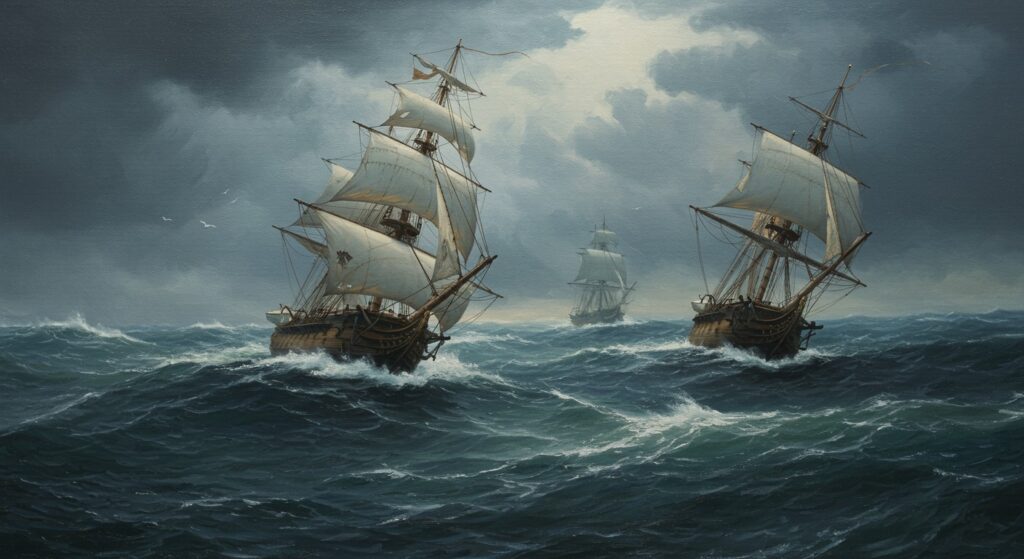
Then, on December 4, 1872, the British brig Dei Gratia, commanded by Captain David Morehouse, spotted a vessel sailing erratically roughly 400 miles east of the Azores. Its sails were slightly torn, and it was yawing wildly in the biting wind. As the Dei Gratia drew closer, Morehouse recognized the ship. It was the Mary Celeste.
Morehouse signaled the vessel. He received only the howling wind in response.
The Suffocating Silence Below Deck
When a boarding party from the Dei Gratia finally climbed over the gunwales of the Mary Celeste, they were met with a haunting, suffocating silence. The ship was completely deserted.
The mystery only deepened as the men searched the vessel. The Mary Celeste was in perfectly seaworthy condition. She had taken on a little water and her rigging was slightly damaged, but she was entirely capable of sailing. Below deck, the boarding party found a massive six-month supply of food and water. The crew’s personal belongings, including their valuables, were completely untouched. The cargo of alcohol was largely intact, though nine barrels were mysteriously empty.
The ship’s logbook offered no answers; the final entry, dated November 25, noted their position but hinted at no distress.
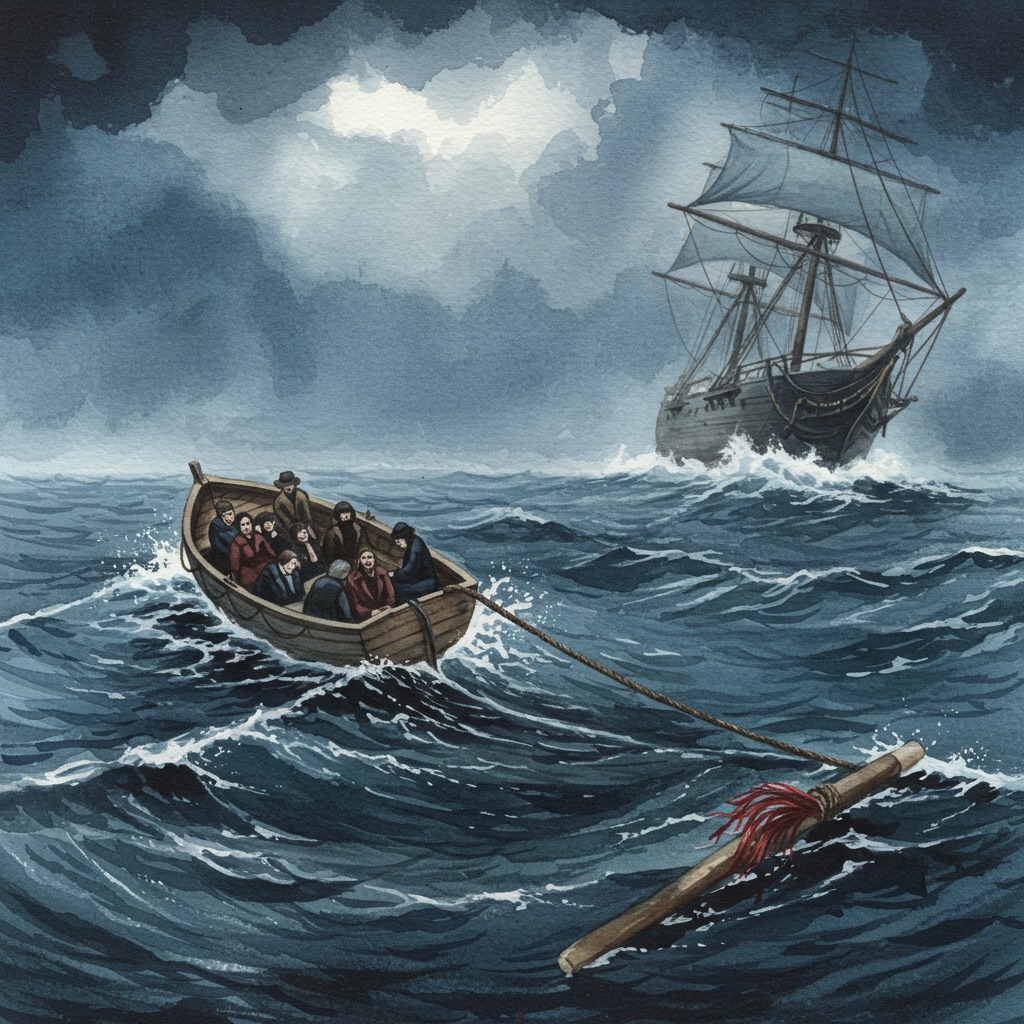
Yet, there were two terrifying clues. The ship’s single lifeboat was missing. And trailing in the cold Atlantic water behind the ship was a severed, frayed towline.
Mutiny, Murder, or Sea Monsters?
The Dei Gratia crew sailed the ghost ship to Gibraltar, where a salvage inquiry was immediately convened. The Attorney General of Gibraltar, Frederick Solly-Flood, was convinced of foul play. He aggressively pushed two theories: either the crew of the Mary Celeste had mutinied and murdered the Captain’s family, or the crew of the Dei Gratia had slaughtered everyone aboard to claim the salvage money.
However, investigators found absolutely no evidence of violence—no blood, no signs of a struggle, no missing weapons. The mutiny theory was also quickly dismissed; Captain Briggs was known as a remarkably fair leader, and his crew possessed spotless records. Ultimately, the Dei Gratia crew was cleared of wrongdoing and awarded a fraction of the salvage value, but the inquiry ended without a definitive answer.
Nature abhors a vacuum, and the public rushed to fill the silence with wild speculation. Rumors circulated of pirate raids, but pirates would never have left the valuables and cargo behind. Others whispered of paranormal interventions, sea monsters, and giant squids plucking the crew from the deck one by one.
The Fiction That Became Fact
The myth of the Mary Celeste was pushed even further into the realm of folklore by a young, then-unknown writer named Arthur Conan Doyle. In 1884, he published a sensationalized short story based on the mystery titled J. Habakuk Jephson’s Statement.
Doyle’s tale introduced fabricated details that the public quickly mistook for fact. He wrote of half-eaten meals left on the dining table and still-warm cups of tea in the galley. He even misspelled the ship’s name as the Marie Celeste. These fictional elements became deeply ingrained in the public consciousness, permanently blurring the line between historical fact and spooky folklore.
The Invisible Terror in the Hold
So, what actually happened to the ten souls aboard the Mary Celeste? Modern maritime historians and experts largely point to a much more grounded, yet equally terrifying, explanation: the “Alcohol Fume Theory.”
Remember those nine empty barrels? They were made of porous red oak. Experts believe that during the rough Atlantic crossing, these specific barrels leaked noxious fumes into the ship’s enclosed hold. When a crew member opened the hatch to check the cargo, a sudden, massive release of vapor—or perhaps even a minor pressure explosion—blew upward.
Imagine the sheer panic. Captain Briggs, terrified that his ship was about to detonate and kill his wife and child, ordered an immediate, temporary evacuation. The crew scrambled into the lifeboat. Briggs, ever the seasoned sailor, didn’t want to abandon his perfectly good ship entirely. He tethered the lifeboat to the Mary Celeste using a towline, intending to wait out the danger at a safe distance until the fumes cleared.
Tragically, the weather worsened. The heavy seas violently tugged at the small lifeboat. The towline snapped.
Unable to row fast enough to catch the wind-blown brigantine, Captain Briggs, his family, and his crew watched helplessly as the Mary Celeste sailed away without them, leaving them to perish in the vast, unforgiving Atlantic.
A Cursed Legacy
The Mary Celeste was eventually returned to service, but she carried a dark reputation. Sailors are a superstitious lot, and the vessel was widely considered cursed. In 1885, her final captain deliberately wrecked her on a reef off the coast of Haiti in a botched insurance fraud scheme.
Despite her shameful physical end, the Mary Celeste achieved immortality. She remains drifting in our history books—a perfectly sound ship, sailing silently through the Atlantic, guarding the final, desperate moments of the ten souls who vanished into the deep.