The English Channel in late November is a violent, churning abyss. To look out at its freezing, pitch-black waters and decide to race a wooden boat across it in the dead of night requires a staggering level of hubris.
But maritime history is built on disastrous miscalculations. Few, however, are as catastrophic—or as entirely preventable—as the events of November 25, 1120. It is a story of blinding arrogance, a terrifying night on the water, and a single, fateful decision that plunged an entire nation into decades of bloody chaos.
A Superyacht for a Prince
In late 1120, King Henry I of England was a man at the height of his power. The youngest son of William the Conqueror had just successfully defended his Norman territories against the French, and it was time to return across the Channel in triumph.
With him was his 17-year-old son, William Adelin, his sole legitimate male heir. In the fragile, cutthroat world of medieval dynastic politics, the entire future of the Norman dynasty rested squarely on this teenager’s shoulders.
At the harbor of Barfleur, Normandy, a renowned mariner named Thomas FitzStephen approached the King. FitzStephen was seafaring royalty; his grandfather had captained William the Conqueror’s legendary flagship during the 1066 invasion. He offered the King passage on his state-of-the-art vessel, the Blanche-Nef, or the White Ship. It was widely considered the fastest, most modern ship in the royal fleet.
Henry had already made his travel arrangements, but he offered a compromise: his golden-boy son, Prince William, and his glittering retinue of aristocrats would take the White Ship instead.
The Fatal Hubris of Youth
What followed was the medieval equivalent of a billionaire’s yacht party gone horribly wrong.
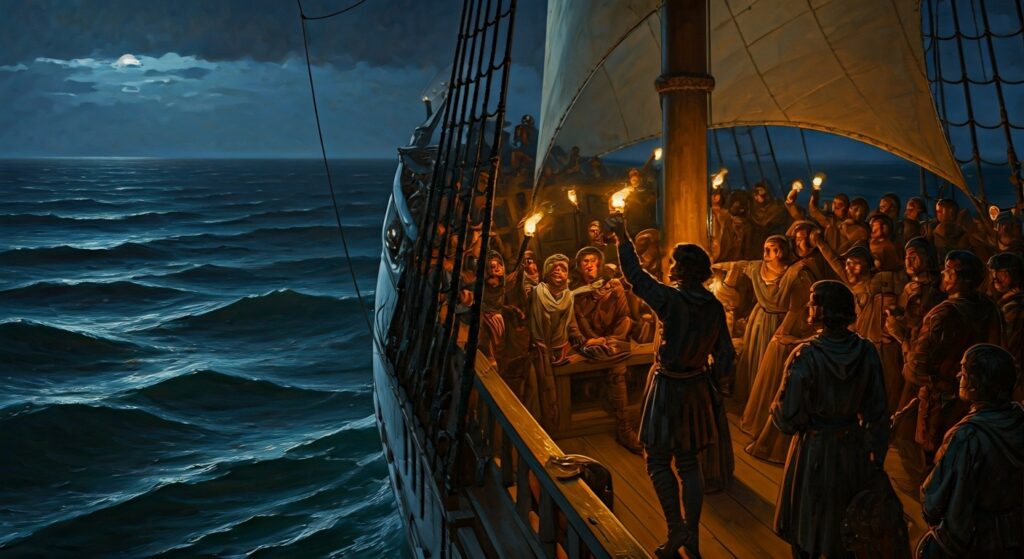
Left to their own devices, the 17-year-old prince and his entourage of young nobles turned the docks into a wild, raucous festival. William ordered copious amounts of wine to be rolled out, distributing it not just to his aristocratic friends, but to the ship’s crew.
The revelry quickly devolved into blinding intoxication. When a group of local priests arrived to perform the customary blessing of the ship before its dangerous voyage, the drunken nobles laughed them off the docks, hurling insults and mocking their prayers.
However, a few passengers looked at the staggering crew, the setting sun, and the darkening waters, and decided to quietly slip away. Among them was William’s cousin, Stephen of Blois, who reportedly disembarked claiming to suffer from a sudden bout of diarrhea.
That seemingly minor stomach bug would soon alter the course of English history.
Into the Pitch-Black Channel
King Henry I’s ship had departed in the late afternoon, navigating the treacherous channel while there was still daylight. The White Ship, delayed by the endless partying, didn’t push off from the docks until well after dark.
Drunk, boastful, and feeling invincible, William Adelin and his crew made a deadly decision: they were going to row frantically into the pitch-black night and overtake the King’s ship. The intoxicated oarsmen put their backs into it, propelling the wooden vessel blindly through the freezing waters.
Just outside the harbor of Barfleur lay the Quilleboeuf rock, a notorious and jagged navigational hazard. A sober captain might have carefully navigated around it. A drunken crew, racing through the dark, never even saw it coming.
The ship struck the rock with a sickening, violent crunch. The wooden hull was instantly pierced, and the freezing ocean roared inside.
The Ghost of a Sister’s Plea
In the sudden, terrifying chaos, the royal guards knew exactly what to do. They grabbed Prince William and threw him into the ship’s only small lifeboat. His oarsmen rowed him clear of the sinking wreckage. Against all odds, the heir to the throne was safe.
But as he sat in the freezing dark, listening to the screams of nearly 300 people drowning in the black water, a voice cut through the night. It was his half-sister, the Countess of Perche, begging him not to abandon her.
Unable to leave her to die, William ordered his men to turn the lifeboat around.
It was a fatal act of mercy. As the small boat bumped against the sinking wreckage, dozens of desperate, freezing people threw themselves at it, clawing for survival. The sheer weight of the panicked nobles swamped the tiny lifeboat. It flipped, taking the 17-year-old heir to the throne down into the icy depths.
The Butcher and the Captain
By morning, the English Channel was eerily silent. Out of the approximately 300 people on board the White Ship, only one man survived.
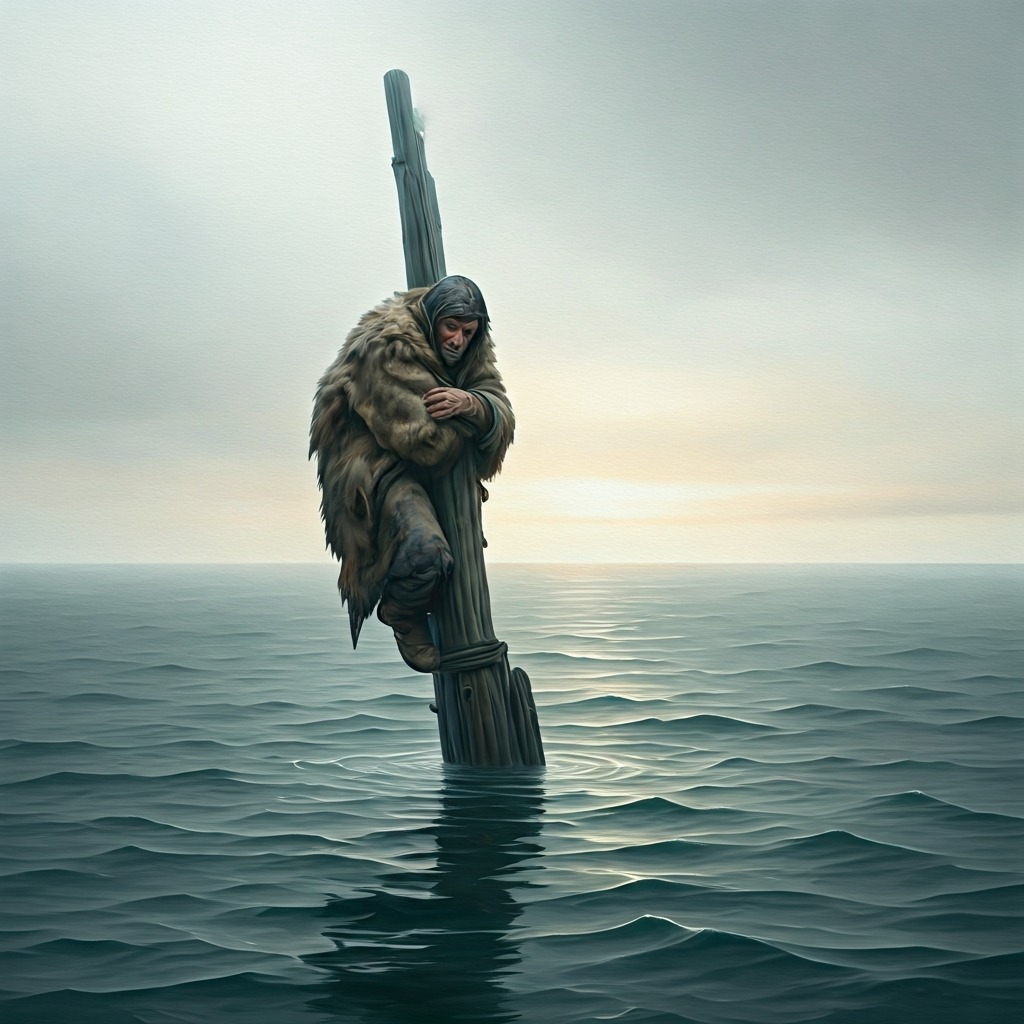
It wasn’t a lord, a knight, or a prince. It was a butcher from Rouen named Berold. He had only been on the ship to collect debts owed to him by the deadbeat aristocrats. Wrapped in a thick ram-skin coat that insulated him from the lethal cold, Berold managed to cling to the ship’s mast throughout the night.
According to chroniclers, Captain FitzStephen had also surfaced and clung to the mast. But as the freezing hours ticked by, the captain asked the butcher a single question: Did the Prince survive?
When Berold told him that William had gone down, FitzStephen realized the magnitude of his failure. Declaring he could never face the King, the captain let go of the mast and slipped beneath the waves.
When Christ and His Saints Slept
When the news finally reached England, it is said that King Henry I collapsed to the floor and never smiled again. But the tragedy of a grieving father was only the beginning.
With his only legitimate male heir dead at the bottom of the sea, Henry desperately tried to force his barons to swear fealty to his daughter, Empress Matilda. But the Anglo-Norman lords despised the idea of being ruled by a woman.
When Henry died in 1135, the throne was immediately usurped. The man who took it? Stephen of Blois—the very cousin who had stepped off the White Ship 15 years earlier because of a stomach ache.
Stephen’s power grab sparked a brutal, 19-year civil war against Matilda’s loyalists. The era became known as The Anarchy, a period of warfare and starvation so devastating that chroniclers famously wrote it was a time “when Christ and his saints slept.”
It all ended in 1153, when it was agreed that Stephen would rule until his death, but Matilda’s son, Henry II, would succeed him—giving birth to the legendary Plantagenet dynasty.
All of it—the civil war, the shifting of a dynasty, the thousands of lives lost—traces back to one freezing November night, a few casks of wine, and a group of young men who thought they could outrun the ocean in the dark.