It brought major metropolises to a standstill. It forced the redesign of public transit. It shattered skulls, drowned its victims, and left women helpless in the path of runaway horses. It wasn’t a disease, a natural disaster, or a weapon of war.
It was a skirt.
Welcome to the chaotic, deadly era of the “hobble skirt”—an early 20th-century garment so restrictive it held the fashion world hostage and turned the simple act of walking into a lethal gamble.
A Rope, a Plane, and a Stolen Silhouette
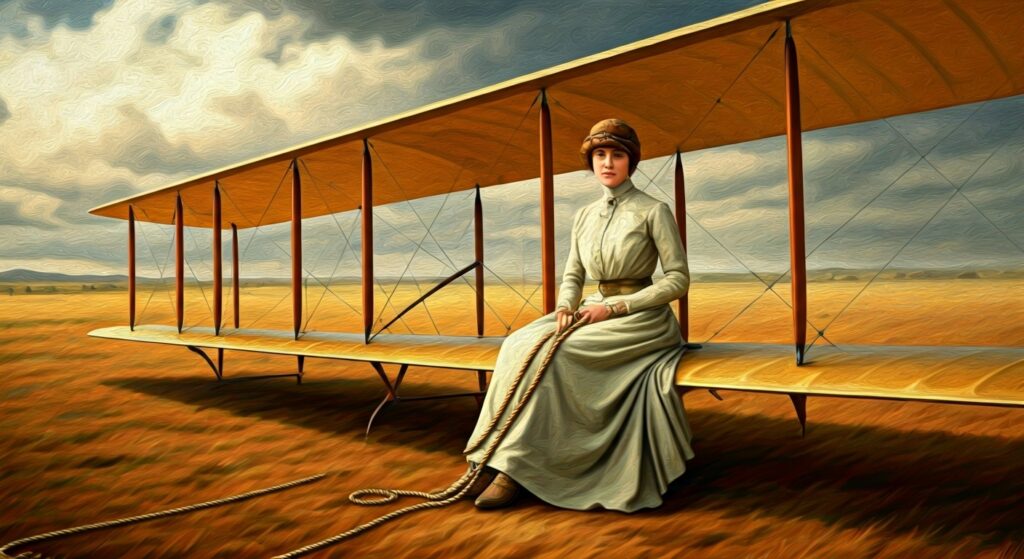
To understand how high-society women ended up voluntarily binding their legs, we have to look to the sky. The year was 1908, and Mrs. Edith Berg was about to make history as the first American woman to fly as a passenger in an airplane.
She was flying with none other than aviation pioneer Wilbur Wright. But airplanes in 1908 were essentially motorized kites, completely open to the elements. To prevent Berg’s voluminous skirts from billowing up in the wind and causing a scandalous—and dangerous—distraction, Wright took a piece of rope and tied it securely around her ankles.
When Berg landed and walked away with the rope still temporarily binding her skirt into a narrow taper at her feet, the fashion world was watching. The resulting restrictive silhouette caught the eye of avant-garde designers, sparking an idea that would soon sweep the globe.
Shackling the Legs
The creation of the hobble skirt as a high-fashion phenomenon is most famously attributed to the pioneering French designer Paul Poiret. Poiret was a visionary who hated the rigid, organ-crushing Victorian corset. He gave women the empire waist and looser bodices, famously boasting that he had “freed the bust, but shackled the legs.”
And shackled they were. To achieve Poiret’s ultra-chic, tapered look, the hem of the skirt was brought in so tightly around the ankles that it forced the wearer to walk in tiny, shuffling steps.
But there was a mechanical flaw in this aesthetic: women naturally wanted to take normal strides, and doing so in delicate silk or wool immediately ripped the expensive skirts to shreds. The fashion industry’s solution to this wasn’t to widen the skirt. Instead, they introduced a bizarre, hidden undergarment called a “hobble garter” or “fetter.” This was a literal band of fabric or elastic worn just below the knees to physically prevent a woman’s legs from spreading too far apart. The skirt wouldn’t tear, but a woman’s mobility was completely neutralized.
Redesigning the City for a Silhouette
It didn’t take long for this high-fashion trend to wreak absolute havoc on public infrastructure. Between 1910 and 1914, simply navigating the urban landscape became an extreme sport.
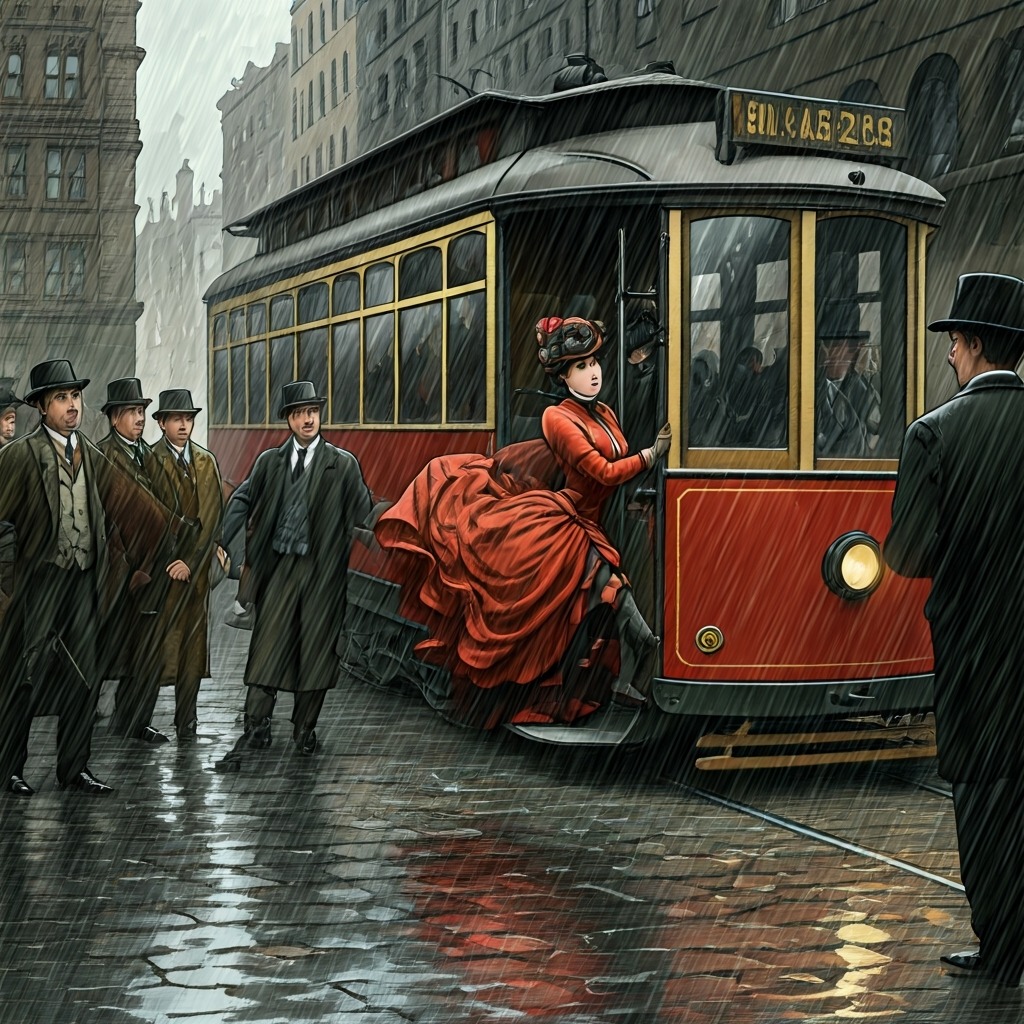
Curbs became insurmountable mountains. Staircases were treacherous. But the greatest drama unfolded on public transportation. Boarding a streetcar in a hobble skirt was a notoriously humiliating ordeal, requiring women to be hoisted up by conductors or helpful bystanders. This caused widespread train and tram delays across major cities like New York, London, and Paris.
The chaos was so severe that municipalities actually had to adapt their infrastructure to the fashion. Transport companies were forced to introduce “hobble skirt cars”—streetcars specifically redesigned with significantly lower entry steps and no doors, all just to accommodate the restricted mobility of chic women.
Death by Fashion
This is where the story turns dark. The hobble skirt wasn’t just an inconvenience; it was a genuine public safety hazard.
Newspapers of the era frequently reported on “hobble skirt accidents.” Women routinely suffered broken ankles and fractured skulls from tripping over uneven cobblestones or tumbling down stairs.
Tragically, the restricted movement also led to highly publicized deaths. There were horrifying reports of women drowning because they fell into water and physically could not separate their legs to tread water or stand up. Others were trampled and killed by runaway horses or early automobiles simply because they were incapable of running or jumping out of the way of oncoming danger. The fetter had quite literally become a death trap.
The Ultimate Irony
The timing of the hobble skirt is a masterpiece of historical irony. This trend peaked exactly alongside the height of the women’s suffrage movement.
Critics and satirists had a field day. They produced thousands of comic postcards and political cartoons mocking women who were marching in the streets demanding political freedom, all while willingly wearing physical shackles. Suffragettes themselves were deeply divided. Some viewed the hobble skirt as a blatant symbol of patriarchal control, while others simply saw it as the absolute height of modern chic.
In the end, it wasn’t common sense, feminism, or the threat of a fractured skull that killed the hobble skirt. It was global conflict. The outbreak of World War I in 1914 demanded that women take on active, physical roles in the workforce and the war effort. You can’t operate heavy machinery or drive an ambulance while your knees are bound together. The hobble skirt was rendered entirely impractical, and the bizarre, deadly fad vanished as quickly as it had arrived.