Imagine uncovering a 20th-century political manifesto buried beneath two millennia of dust.
History is full of rebels, tyrants, and visionaries, but every so often, a figure emerges who is so completely out of sync with their own era that they feel like a glitch in the historical matrix. Prepare to travel back 2,000 years to investigate a true-crime thriller wrapped in a sci-fi mystery. Looking at the evidence, it is almost tempting to believe this man was a time-traveler—or at least had someone from the future whispering in his ear.
Meet Wang Mang: the ancient Chinese emperor who seemingly tried to invent modern socialism two millennia before the word even existed.
The Perfect Inside Job
Our story begins in the twilight of the Han dynasty, around 45 BCE. Wang Mang wasn’t a rogue warlord swinging a sword at the gates; he was the ultimate political insider. As the nephew of the Grand Empress Dowager, he held a golden ticket to the absolute highest echelons of power. But instead of flaunting his wealth like the rest of the ancient elite, Wang Mang played a brilliant, chillingly patient psychological game.
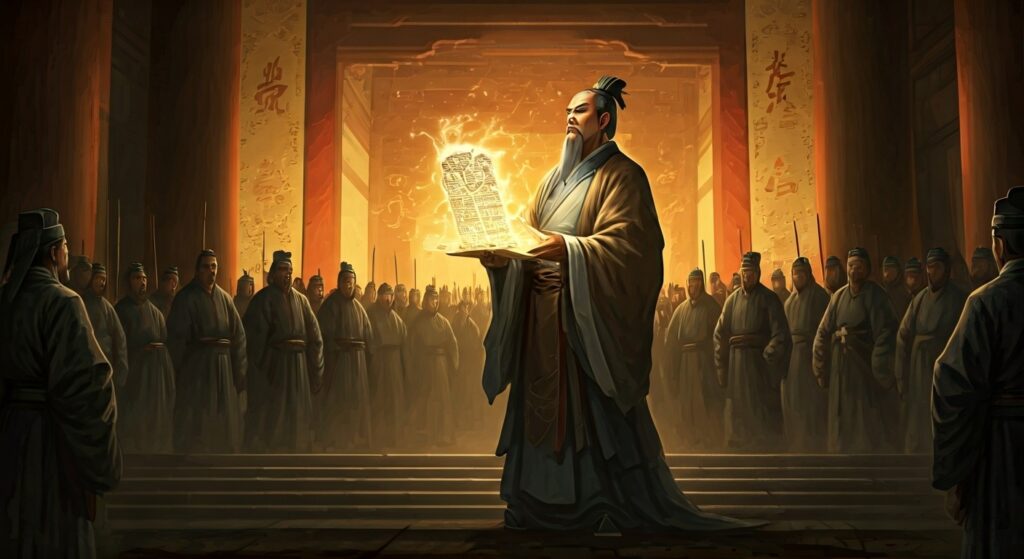
He cultivated the flawless image of a Confucian sage. He was famously frugal, aggressively humble, and seemingly devoted to the common peasant. For years, he patiently served as a regent to a succession of child emperors, pulling the strings from the shadows while building a cult of personality.
Then, in 9 CE, he sprang his trap. Executing a bloodless coup, Wang Mang claimed the “Mandate of Heaven,” peacefully usurped the Han throne, and established the Xin (meaning “New”) Dynasty.
It was the perfect political heist. But what he did with absolute power makes his reign one of the most fascinating anomalies in human history.
A Glitch in the Matrix
Once Wang Mang sat on the throne, he didn’t just collect taxes and build monuments. He launched a series of reforms so breathtakingly progressive they mirror 20th-century state capitalism.
First, he targeted the ultra-wealthy. Under his “Wangtian” system, Wang Mang nationalized all land. He explicitly forbade the private sale of property and began redistributing it to peasant families in equal plots, drawing inspiration from ancient utopian ideals.
But he didn’t stop at real estate. In a move practically unheard of in the ancient world, he abolished the slave trade. By prohibiting the buying and selling of human beings, he aimed to dismantle private slavery and prevent the elite from hoarding labor.
Then came the sweeping economic interventions. Wang Mang instituted strict price controls on essential goods like grain and cloth to protect the poor from price gouging. He offered state loans to peasants at low interest rates, slapped an early form of income tax on merchants and artisans, and created state monopolies on forestry and fishing.
Read his platform today, and it sounds like a modern political revolution. But as any student of history knows, the perfect plan usually falls apart in the execution.
The Blueprint Crumbles
Despite his visionary ideas, Wang Mang’s implementation was an unmitigated disaster. The landowning and merchant classes fiercely resisted the sudden, violent loss of their wealth and power. Meanwhile, the corrupt, underpaid bureaucracy tasked with enforcing these radical laws completely failed to implement them fairly.
Desperate to fund his massive state apparatus, Wang Mang introduced a series of frequent, dizzying currency reforms. He released dozens of new coins and even inexplicably reintroduced archaic tender like cowrie shells and knife money. The result was total economic chaos. He triggered a wave of hyperinflation that wiped out the life savings of the very peasants he was trying to save.
The Wrath of Heaven
In the ancient world, political legitimacy was inextricably tied to the Mandate of Heaven. If natural disasters struck, it meant the gods were furious with the emperor. And for Wang Mang, the sky literally fell.
Around 11 CE, the Yellow River experienced a catastrophic shift, changing its course entirely. The resulting floods and famine displaced millions. Starving, broke, and furious, the peasantry began to organize.
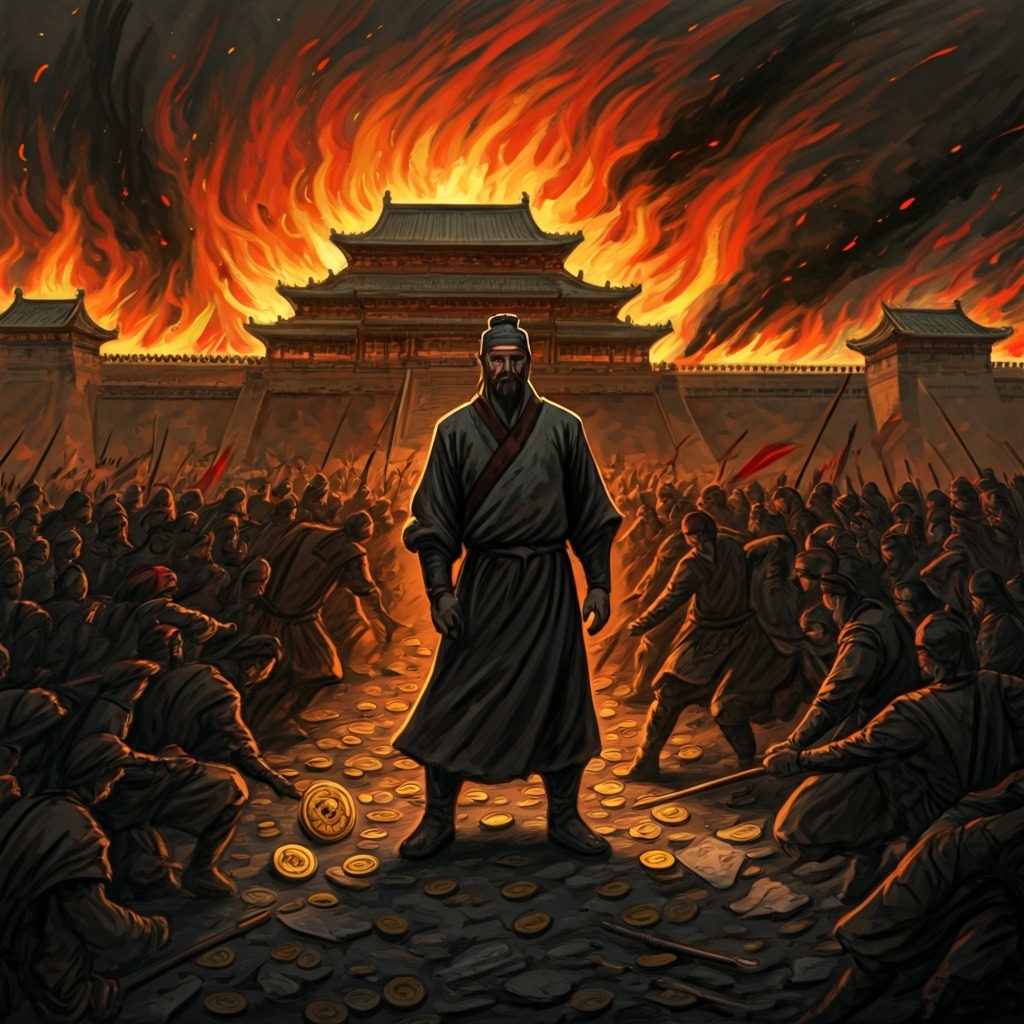
Massive agrarian rebellions swept across the countryside, led by insurgent groups with cinematic names like the Red Eyebrows and the Green Woodsmen. By 23 CE, the situation reached a bloody boiling point. Rebel forces breached the capital city of Chang’an. Wang Mang’s grand, time-defying social experiment ended in slaughter—he was killed by the mob, and the Han dynasty was restored.
The 2,000-Year Verdict
For nearly two thousand years, traditional scholars vilified Wang Mang as a treacherous, hypocritical usurper. His name became synonymous with betrayal.
But history is a matter of perspective. When the 20th century arrived, modern thinkers began to dust off his files. Intellectuals like Hu Shih completely re-evaluated his legacy, praising Wang Mang as a selfless visionary and an early socialist pioneer.
Wang Mang’s tragic reign leaves us with a haunting lesson that applies just as much to modern statecraft as it does to ancient empires. It proves that theoretically brilliant, progressive ideas—without pragmatic implementation, societal buy-in, and institutional support—can trigger catastrophic collapse. Whether he was a misunderstood genius, a dangerous tyrant, or a man simply born 2,000 years too early, Wang Mang remains one of history’s most riveting unsolved puzzles.