Imagine stepping onto a playing field where the penalty for losing isn’t a bruised ego, but a severed head.
Welcome to the Mesoamerican ballgame. Known as Pok-ta-Pok to the Maya and Ōllamaliztli to the Aztecs, this was no mere pastime. It was a brutal, terrifying spectacle where the physical world violently collided with the spiritual realm—and where the final whistle often signaled an execution.
The Court That Doubled As A Graveyard
Originating around 1600 BCE with the Olmecs, it stands as one of the oldest team sports in human history. But a walk into an ancient Mayan city would quickly reveal that the ballcourt was no place of leisure.
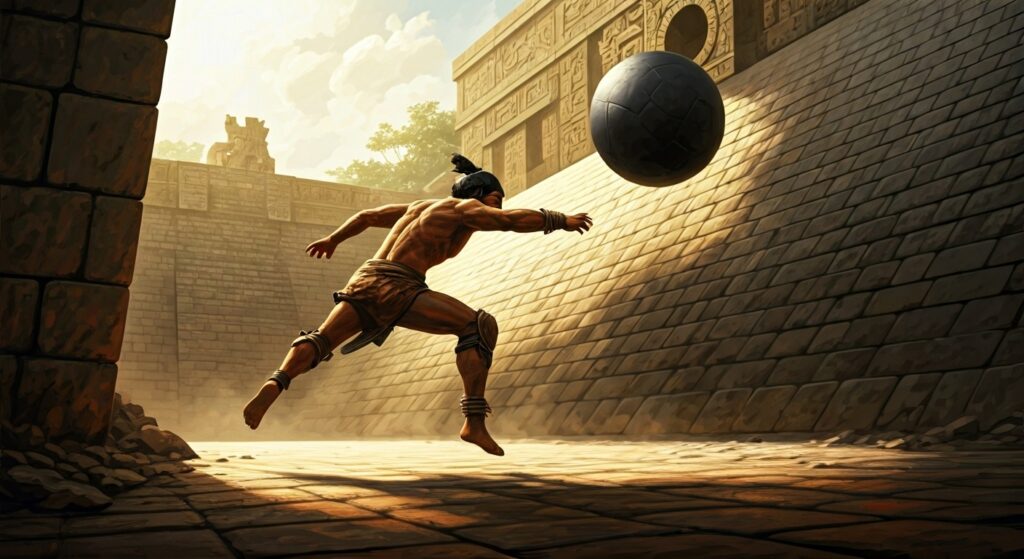
Matches were waged on massive, I-shaped masonry courts flanked by steep, imposing walls. To the Maya, this architecture wasn’t just practical for bouncing a ball; the court was a literal portal to the underworld. Stepping onto the stone floor meant stepping into the cosmic void.
Nine Pounds of Flying Rubber
If taking a modern soccer ball to the face hurts, the ancient equivalent was a death sentence. The ball used in Pok-ta-Pok was forged from solid rubber and weighed a bone-crushing six to nine pounds.
Players were strictly forbidden from using their hands or feet. Instead, they had to keep this heavy, erratic projectile airborne using only their hips, thighs, and torsos. The physical toll was unimaginable. Despite wearing thick padding, the sheer force of a solid rubber cannonball flying at high speeds caused severe, permanent trauma. A direct hit to the stomach or head could—and did—result in instant death.
In grander variations of the game, most famously at the colossal court in Chichen Itza, stone hoops were mounted high upon the sloping walls. Passing the heavy ball through one of these small rings was a near-impossible feat. If a player managed it, the game ended instantly in absolute victory.
A Descent Into The Dark
To understand why anyone would subject themselves to this brutal contest, one must look to the Popol Vuh, the magnificent Mayan creation epic.
The mythology details the harrowing journey of the Hero Twins, Hunahpu and Xbalanque, who are summoned into the underworld—a terrifying realm known as Xibalba. There, they are forced to play a high-stakes ballgame against the lords of death.
Because of this mythological backdrop, earthly matches were never just about athletic prowess. They were cosmic battles between light and darkness, life and death. The heavy rubber ball bouncing back and forth represented the sun moving across the sky. Dropping it wasn’t just a foul; it was a symbolic disruption of the universe itself.
When Defeat Demanded Blood
While everyday games were played for recreation and heavy gambling, ritual matches harbored a much darker purpose. Often staged after military conquests, the stakes of these games were terrifyingly absolute.
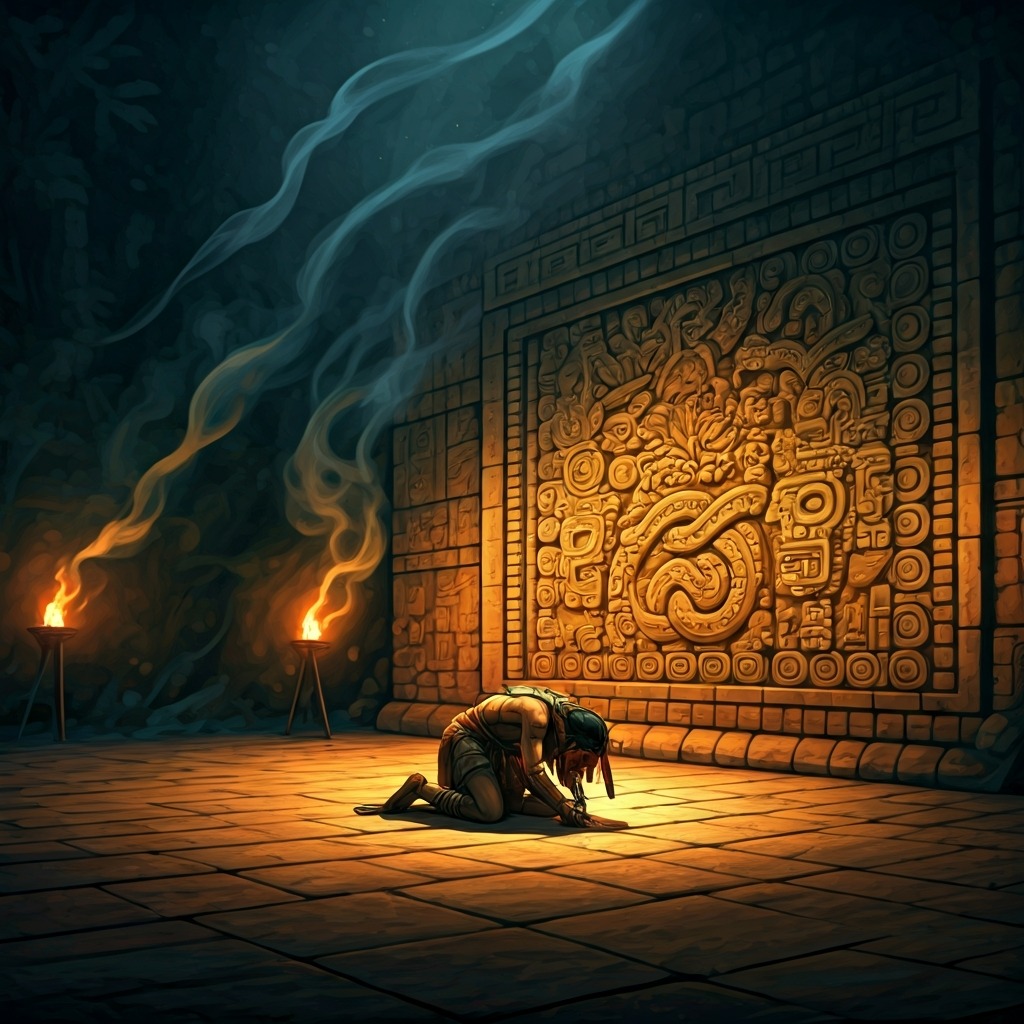
Chillingly detailed stone reliefs at Chichen Itza and El Tajin depict the gruesome aftermath: the decapitation of the losing team’s captain. In these ancient carvings, blood spurts from the captain’s severed neck, transforming into twisting serpents and fertile vines.
To the Maya, this blood sacrifice was not an act of mere cruelty, but a cosmic necessity for agricultural renewal. The death of the player served as a vital offering to appease the gods, ensuring the rains would fall, the crops would grow, and the universe would continue to turn.
For years, historians debated a macabre question: were the winners or the losers sacrificed? While the idea of victors offering themselves for a “glorious death” remains a popular myth, the prevailing historical consensus is far more sinister. The victims were usually captive warriors, forced to play a rigged game where their defeat—and subsequent execution—was predetermined from the moment they stepped onto the court.