We often look to the terrifying, freezing, endless ocean for tales of nature’s wrath. We imagine crushing waves and hidden reefs. But in the summer of 1858, the deadliest body of water on earth wasn’t a raging sea. It was a slow, thick, suffocating monster that crept right through the heart of the world’s most powerful city.
This is the story of the time a river almost wiped London off the map.
The Silent, Sludge-Filled Killer
To understand the terror of 1858, you have to look at how quickly London was outgrowing its own skin. In the first half of the 19th century, the city’s population skyrocketed from roughly one million to over 2.5 million.
With this boom came a highly praised technological marvel: the flush toilet. At first glance, the water closet seemed like a massive leap forward in urban hygiene. Before this, human waste was dumped into cesspits and hauled away by ‘night soil men.’ But the new flush toilets produced a catastrophic volume of liquid waste.
The old cesspits couldn’t handle the deluge. They overflowed, spilling raw waste into street drains originally designed only to carry rainwater into the River Thames. Add in the unchecked industrial effluent from slaughterhouses, tanneries, and factories dumping directly into the water, and the Thames was no longer a river. By the 1850s, it was a biologically dead, open-air sewer.
When Hell Boiled Over
In the summer of 1858, an unprecedented heatwave struck the city. Temperatures soared, with reports of the heat in the sun reaching a blistering 118 degrees Fahrenheit. The intense, baking heat caused the water levels of the Thames to plummet.
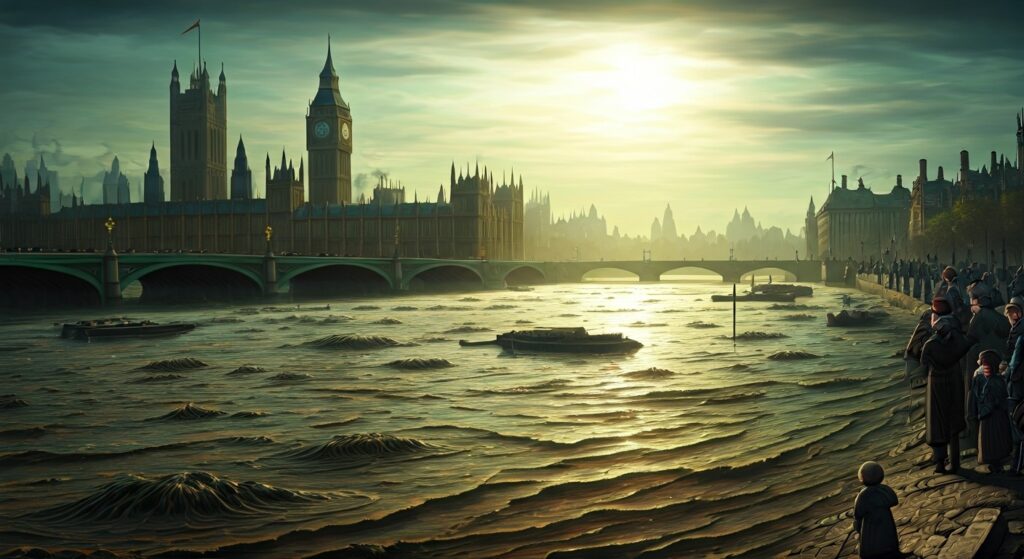
As the water receded, it exposed vast, deep banks of raw, fermenting human and industrial sewage along the river’s edge. Under the scorching sun, the sludge began to bake. The resulting stench was so violently overpowering that it triggered a city-wide emergency. The press and the public gave it a name that would echo through history: “The Great Stink.”
The Invisible Assassin at the Curtains
The newly constructed Palace of Westminster—the home of the British Parliament—sat directly on the banks of this fermenting nightmare. Lawmakers literally couldn’t breathe. The putrid smell infiltrated the halls of government, causing politicians to gag and faint in the corridors. In a desperate bid to keep working, they soaked the river-facing curtains in chloride of lime, a pungent disinfectant.
It didn’t work. The stench chewed right through it. Parliament seriously considered abandoning Westminster entirely and fleeing to Oxford.
But it wasn’t just the smell that had them terrified; it was the fear of an invisible assassin. At the time, the prevailing medical belief was the ‘miasma theory.’ The greatest minds of the era believed that deadly diseases like cholera were airborne, carried in foul-smelling, toxic clouds. Four years earlier, Dr. John Snow had demonstrated that cholera was actually a waterborne disease, but the stubborn medical establishment had completely ignored him. Because of this fatal misunderstanding, Londoners didn’t just think the smell was disgusting—they believed it was a literal cloud of death preparing to wipe out the entire city.
Eighteen Days of Panic
Nothing cuts through political red tape quite like the imminent fear of death. Driven by the belief that their own lungs were filling with a lethal miasma, Parliament acted with a speed that would be impossible today.
Chancellor of the Exchequer Benjamin Disraeli introduced a bill to completely overhaul the city’s waste management. In a record-shattering 18 days, the Metropolis Local Management Amendment Act was drafted, debated, passed, and signed into law. It granted unprecedented authority and a massive initial war chest of three million pounds to fix the crisis.
The Man Who Tamed the Monster
The monumental task fell to Joseph Bazalgette, the Chief Engineer of the Metropolitan Board of Works. Bazalgette didn’t just patch the problem; he executed one of the most ambitious engineering projects of the 19th century.
Rather than letting sewers flow into the Thames in central London, Bazalgette carved out 82 miles of massive underground intercepting sewers running parallel to the river. These colossal tunnels intercepted the existing waste streams, utilizing gravity to carry the sewage far downstream to outfalls at Barking and Crossness. There, it was dumped into the estuary at high tide, allowing the ocean to sweep it safely out to sea.
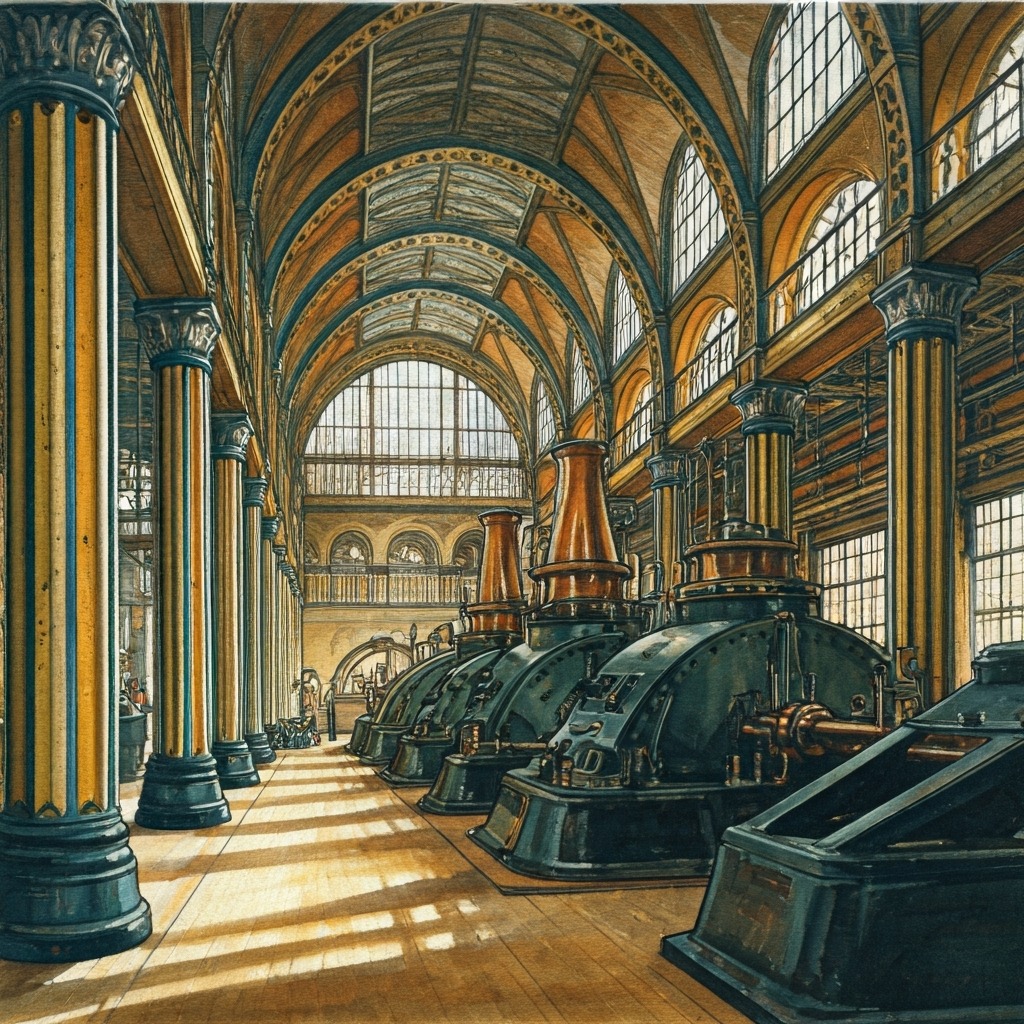
To make this gravity-fed system work, Bazalgette’s team built magnificent, cathedral-like pumping stations to lift the sewage where gravity wasn’t enough. He also created the iconic Thames Embankments. These structures narrowed the river, increasing its flow to naturally scour the riverbed clean, while simultaneously hiding his new intercepting sewers, water mains, and the new Underground railway beneath them.
A Legacy Set in Stone and Iron
Bazalgette’s system was an absolute triumph. It ended the Great Stink and restored the Thames. In a beautiful stroke of irony, by inadvertently separating the city’s drinking water supply from its human waste, his project completely eradicated cholera in London—proving Dr. John Snow right all along.
But the most incredible part of this story is Bazalgette’s foresight. When designing the tunnels, he calculated the densest possible population and the highest possible rainfall the city could ever see… and then he doubled the pipe diameter. “Well, we’re only going to do this once,” he reportedly reasoned.
Because of that single, visionary decision, his Victorian sewer network remains the backbone of London’s sanitation system today, flawlessly serving a population more than three times larger than it was ever designed for.