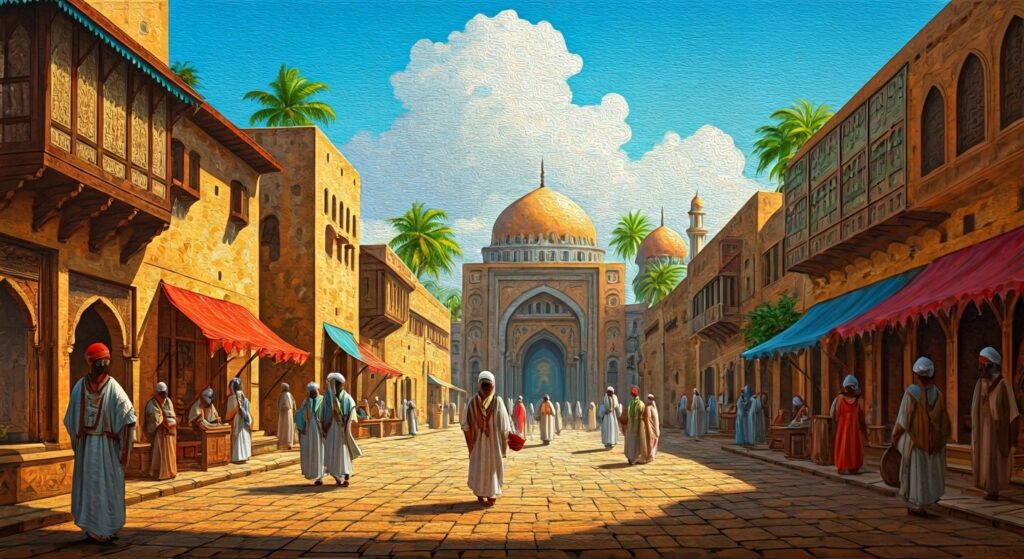
Swallowed by the Jungle
Imagine a bustling, cosmopolitan powerhouse—a city dripping with international wealth and boasting infrastructure that rivaled the greatest capitals of Europe. Now imagine its inhabitants abruptly packing up and vanishing into thin air, leaving their magnificent stone palaces to be devoured by the jungle.
Deep within the shadowy, vine-choked canopy of Kenya’s Arabuko Sokoke forest lies exactly that: the Ruins of Gedi. Dating back to the 11th century, this ancient Swahili settlement reached its absolute zenith in the 1400s. Yet, by the early 17th century, the city was mysteriously abandoned. The jungle reclaimed the streets, and Gedi became East Africa’s most tantalizing historical enigma.
The Medieval Beverly Hills of East Africa
If you harbor any lingering illusions that pre-colonial Africa was isolated from the rest of the world, Gedi will loudly prove you wrong. When archaeologists began peeling back the dense vegetation in the mid-20th century, they didn’t just find rudimentary tools. They unearthed a staggering treasure trove of luxury artifacts from across the globe.
Beneath the roots and rubble lay Ming Dynasty porcelain from China, exquisite Venetian glass from Italy, Spanish scissors, iron lamps from India, and intricate Islamic pottery from Persia. The inhabitants of Gedi were immensely wealthy power-brokers, trading local African goods like ivory and gold for the finest international commodities. Centuries before the term “globalization” was coined, Gedi was a thriving, cosmopolitan hub connecting Africa to the far reaches of the known world.
Centuries Ahead of Its Time
The wealth of Gedi wasn’t merely in what its citizens owned; it was in how they lived. The city’s urban planning was wildly sophisticated. Laid out in a strict, deliberate grid pattern, the metropolis was constructed entirely from coral rag, earth, and plaster. It featured a magnificent central palace, numerous grand mosques, and massive stone mansions for the elite.
But the true marvel lay hidden behind closed doors: the plumbing.
Long before European colonizers set foot on the continent, the houses in Gedi were equipped with indoor bathrooms featuring flush toilets, double-basin washstands, and intricate drainage systems. They utilized clever soak pits to filter waste far away from the city’s drinking water. Recognizing the immense value of their oasis, the inhabitants wrapped the entire city in two massive concentric walls—a clear sign that such extraordinary wealth required serious defense.
The Great Vanishing Act
How does a highly fortified city with indoor plumbing and global trade networks simply die?
By the early 1600s, Gedi was a ghost town. No one knows exactly what triggered the mass exodus, and historians have been fiercely debating the mystery ever since. Was it a violent end? One prominent theory suggests that a series of hostile invasions by the nomadic Oromo people from the north forced the elites to flee. Another points the finger at the Wazimba, a fierce group of raiders moving relentlessly up the coast.
Or perhaps the earth itself turned against them. Environmental factors are heavily considered; a dropping water table may have dried up the city’s wells, rendering their advanced plumbing useless and the city uninhabitable.
Then there is the economic angle. The arrival of the Portuguese in the 16th century severely disrupted the established Swahili and Arab trade monopolies. With their global trade network choked off by foreign interference, Gedi’s economy might have simply collapsed, starving the thriving metropolis into oblivion.
Guarded by the ‘Old Ones’
Today, the absolute truth of Gedi’s demise remains locked beneath the roots of the Kenyan forest. But the city isn’t entirely abandoned. The local Mijikenda people consider the ruins a sacred, spiritual site. They believe the crumbling coral walls and ancient mosques are fiercely protected by the spirits of their ancestors, known as the ‘Old Ones.’
Gedi stands today as a powerful, undeniable testament to the ingenuity and global connectivity of medieval African civilizations. It shatters outdated colonial narratives, proving that pre-colonial Africa was home to societies that were not only technologically advanced but thriving on a truly global scale.