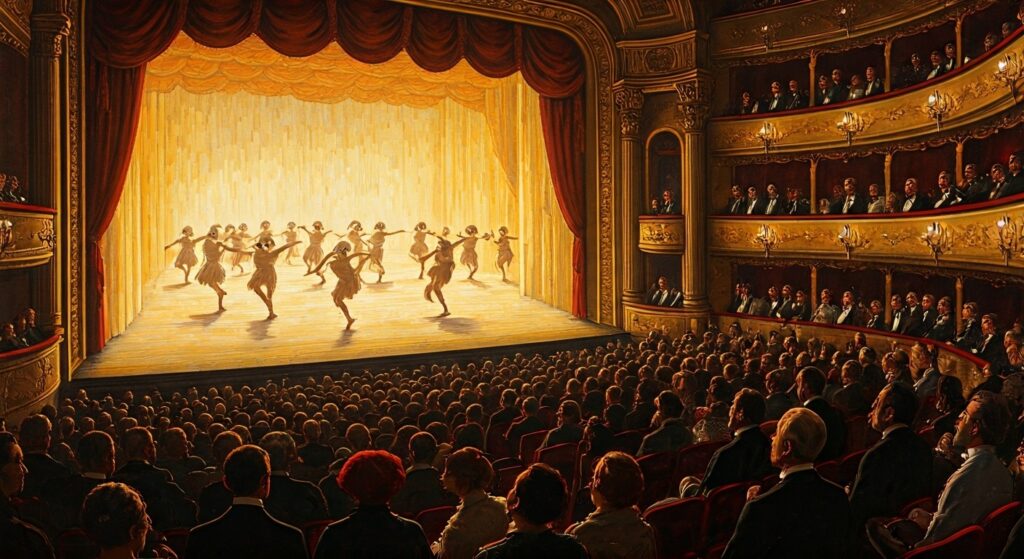
Paris. May 29, 1913. The velvet-draped Théâtre des Champs-Élysées is packed with the glittering elite of French society. They have come in their finest silks and tailored tuxedos, expecting a night of ethereal grace from Sergei Diaghilev’s legendary Ballets Russes. Instead, they are about to become unwitting participants in one of the most violent, scandalous nights in the history of art. Before the night is over, the theater will devolve into a literal war zone. Welcome to the premiere of Igor Stravinsky’s The Rite of Spring—the night classical ballet went brutal.
A Symphony of Strangeness
The tension in the theater was palpable before the curtain even lifted. Diaghilev had deliberately packed the house with a volatile cocktail of Parisian society: wealthy, conservative traditionalists occupied the expensive boxes, while fiercely protective bohemian intellectuals crowded the cheaper seats. It was a powder keg waiting for a spark.
That spark came in the form of a lone bassoon. Stravinsky’s score abandoned traditional harmony entirely, opening with a strained, unnaturally high note that sounded less like music and more like a creature in agonizing pain. As the orchestra joined in, the audience was battered by brutal, asymmetrical rhythms, aggressive percussion, and jarring polytonality. It was an auditory assault. Almost immediately, audible hisses and nervous laughter rippled through the darkened theater. Then, the curtain rose.
The Death of the Tutu
The Parisian elite expected delicate tulle, graceful pirouettes, and turned-out toes. What they saw completely inverted the elegance of classical ballet. Choreographer Vaslav Nijinsky had stripped away centuries of refinement.
The dancers appeared in heavy, historically ambiguous pagan smocks. Rather than leaping ethereally, they danced knock-kneed and hunched over, stomping the floor in jerky, convulsive spasms. The narrative was equally primitive: a pagan Russian tribe celebrating the advent of spring by forcing a young virgin to dance herself to death as a sacrifice to the sun god. To the conservative traditionalists, this wasn’t just bad art—it was a visceral, offensive attack on their delicate sensibilities.
Tuxedos and Fistfights
The hissing quickly escalated into venomous booing. The bohemians, desperate to defend this bold modernist vision, screamed back. Within minutes, the theater descended into absolute pandemonium.
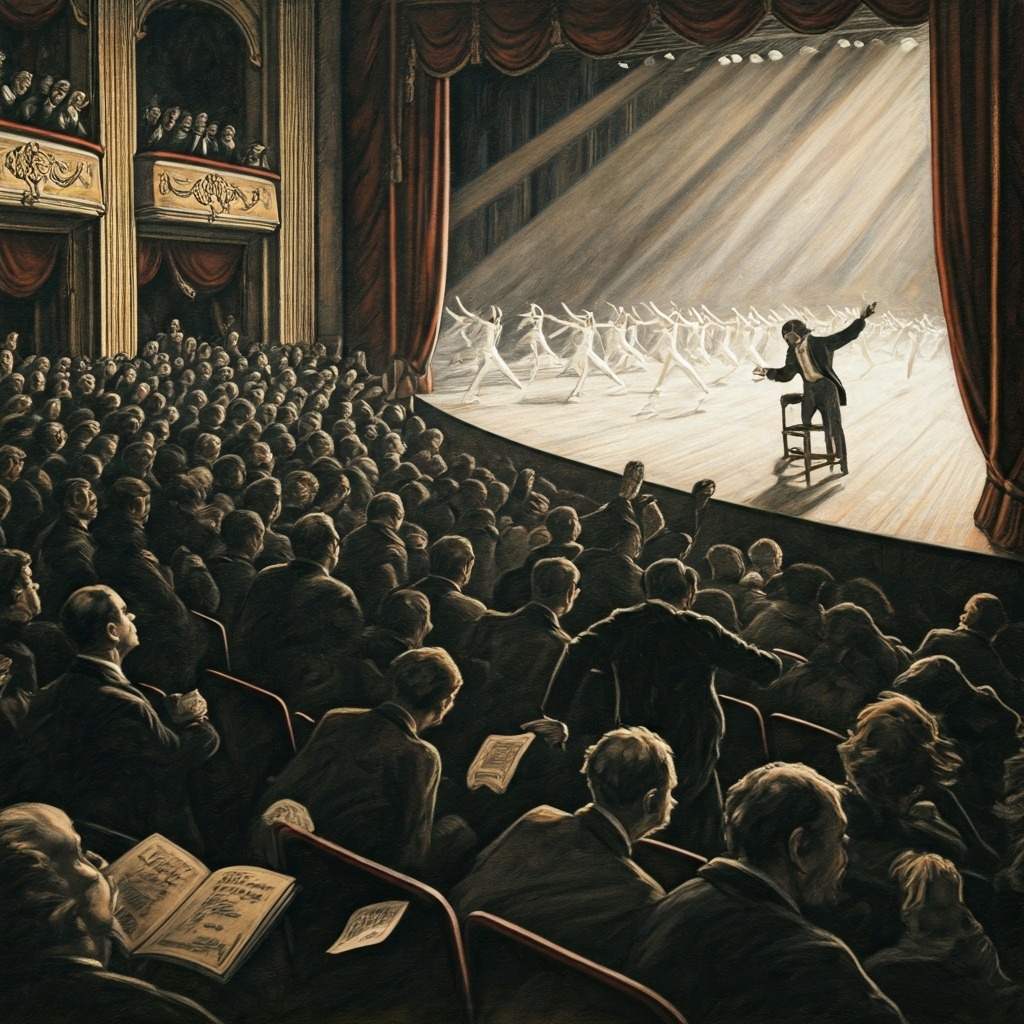
Verbal altercations exploded into physical violence. Fistfights broke out in the aisles as men in immaculate evening wear brawled with scruffy avant-garde artists. The cacophony of screams, whistles, and shattering canes grew so deafening that the dancers on stage could no longer hear the massive orchestra in the pit.
In a scene bordering on the surreal, Nijinsky was forced to stand on a chair in the wings, frantically beating his fists and screaming counts so his dancers could stay in time. Meanwhile, a desperate Diaghilev ordered the house lights to be flickered on and off in a futile attempt to shock the rioting crowd into submission. Police were summoned during the intermission, but the wild disruptions raged right through the second act.
A Calculated Chaos?
What actually triggered this legendary meltdown? While Stravinsky later tried to blame Nijinsky’s “incompetent” choreography, modern historians point to a much juicier culprit: Sergei Diaghilev himself.
Diaghilev was a master manipulator who understood that controversy was the ultimate currency. Many suspect the riot was a meticulously orchestrated publicity stunt. By deliberately seating opposing social factions together and presenting them with an aggressively avant-garde masterpiece, Diaghilev may have engineered the very clash that made his ballet immortal.
Yet, sociologists see the riot as something far more profound. It was a microcosm of the simmering tensions in pre-World War I Europe—a violent, physical clash between a rigid, dying bourgeois order and a chaotic, modernist future. Whether a brilliant marketing ploy or a genuine cultural fracture, the riot at The Rite of Spring proved one undeniable truth: art doesn’t just reflect society. Sometimes, it drags it, kicking and screaming, into a new era.