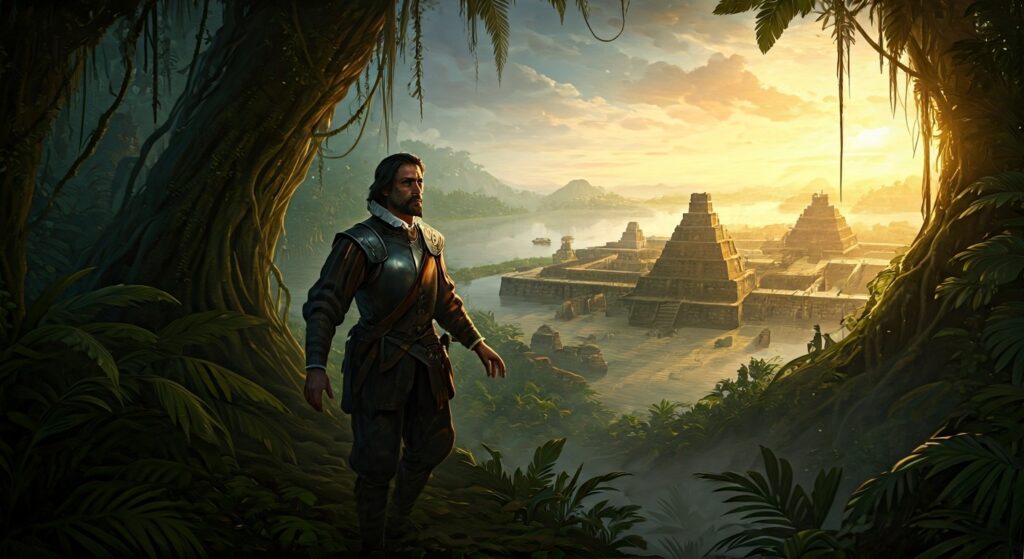
In 1542, a Spanish explorer named Francisco de Orellana stumbled out of the Amazon rainforest with a story that sounded like pure madness. He had just completed a grueling, unprecedented navigation of the Amazon River, but it wasn’t the harrowing journey that shocked the Spanish Crown. It was what he claimed to have seen along the way.
Orellana didn’t describe a sparse, impenetrable jungle inhabited by scattered, nomadic tribes. Instead, he reported witnessing massive, thriving metropolises. He spoke of complex societies, millions of citizens, and advanced road networks stretching for miles along the riverbanks.
For four centuries, European historians laughed him out of the history books. Orellana was dismissed as a desperate fraud, a man spinning fever dreams to secure more funding from the King of Spain.
But Orellana wasn’t lying. He had witnessed one of the greatest engineering marvels in human history—a secret buried right beneath the jungle floor.
The Green Desert Paradox
The historians’ skepticism wasn’t born entirely of arrogance; it was backed by biology. The Amazon rainforest presents a baffling ecological paradox. It is the most lush, biodiverse environment on Earth, yet its native soils—known as oxisols and ultisols—are notoriously acidic, highly weathered, and incredibly nutrient-poor.
If you attempt to farm the Amazon using traditional methods, the relentless tropical rains simply wash all the nutrients away. For centuries, science dictated that Amazonian soil could never support the intensive agriculture required to feed the sprawling empires Orellana claimed to have seen. The jungle was a “green desert.”
Case closed. Or so we thought.
Unearthing the “Black Earth”
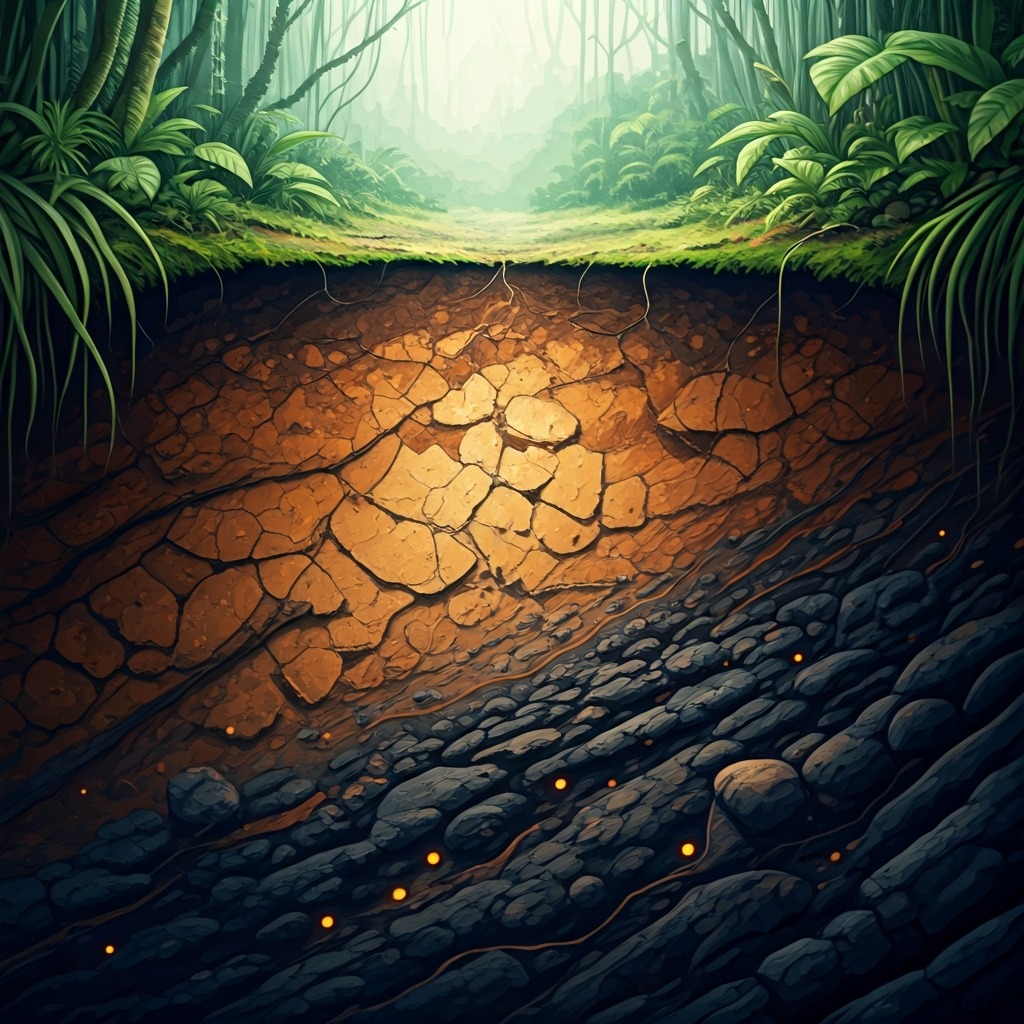
Fast forward to the 20th century. Soil scientists venturing deep into the Amazon basin began discovering something that defied all agricultural logic. Scattered across the rainforest, often buried just beneath the surface, were massive patches of dark, hyper-fertile soil.
The locals called it Terra Preta, Portuguese for “black earth.”
This wasn’t a natural geological anomaly. This dirt was made. Between roughly 450 BC and AD 950, Pre-Columbian indigenous populations had achieved something modern agronomists are still struggling to replicate. They hadn’t just farmed the land; they had engineered a super-soil.
The Alchemy of a Rainforest Empire
How do you build an agricultural empire in a nutrient-starved jungle? It turns out, the ancient Amazonians were master chemists.
Terra Preta is a meticulously crafted matrix. The ancient indigenous people mixed the poor natural soil with plant residues, animal and fish bones, human waste, and broken pottery sherds. But the magical ingredient—the linchpin of this ancient technology—was low-temperature charcoal, or biochar.
Instead of burning organic matter to ash, they smothered their fires in a process called pyrolysis. This created a highly porous charcoal. When mixed into the earth, this biochar acted like a microscopic sponge. Its porosity prevented essential nutrients from being washed away by the torrential Amazonian rains, while simultaneously providing the ultimate luxury real estate for beneficial microorganisms. The broken pottery sherds were the finishing touch, acting as a structural lattice that helped retain moisture.
Because of this brilliant pre-Columbian engineering, Amazonians were able to transition from shifting, slash-and-burn agriculture to sedentary, intensive farming. The cities Orellana saw were real, supported by millions of people who had literally built the ground they stood on.
The Dirt That Breathes
Here is where the story goes from fascinating to slightly eerie. From an ecological standpoint, Terra Preta behaves almost like a living organism.
Even today, centuries after these ancient civilizations were decimated by European diseases, patches of Terra Preta remain incredibly fertile. Research suggests that due to its rich, highly adapted microbial communities, the soil is capable of regenerating and even expanding its depth over time.
This realization completely shatters the myth of the Amazon as a pristine, untouched wilderness. It wasn’t an empty green desert. It was a highly managed, anthropogenic cultural landscape—a vibrant, 2,500-year-old food forest curated by brilliant engineers.
An Ancient Blueprint for the Future
The creators of Terra Preta played the long game better than anyone in history. Today, climate scientists and agronomists are desperately studying this ancient blueprint.
Because the carbon in biochar resists degradation for thousands of years, creating modern Terra Preta could serve as a massive carbon sink. It offers a tantalizing way to sequester atmospheric carbon while simultaneously reducing our reliance on chemical fertilizers, boosting crop yields, and restoring degraded lands globally.
The ancient Amazonians didn’t just adapt to their harsh environment; they outsmarted it. In doing so, they left behind a dark, rich legacy that vindicated a mocked explorer—and just might hold the key to saving our modern world.