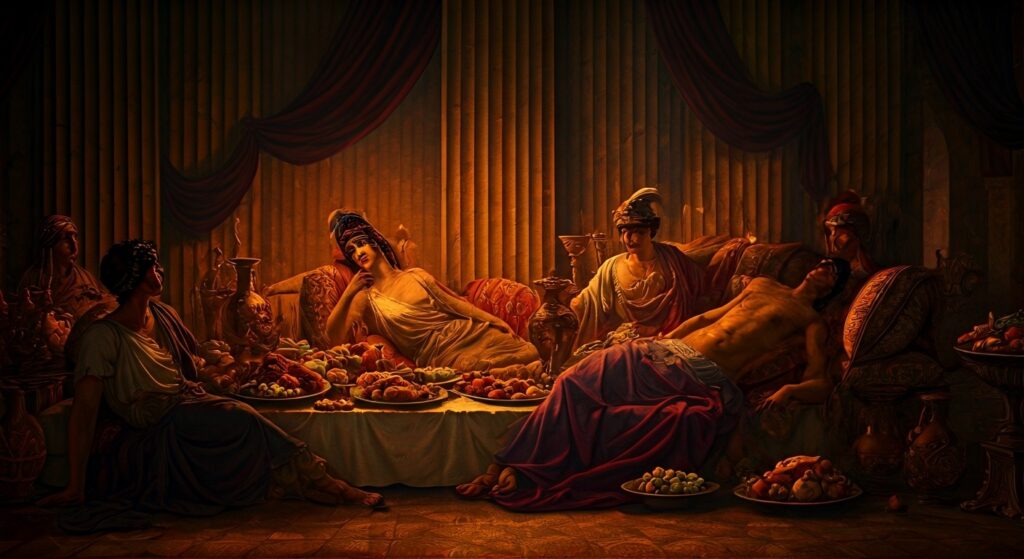
Picture the scene: an opulent, dimly lit banquet hall in the heart of ancient Rome. The ultra-wealthy elite, draped in fine silk, gorge themselves on roasted ostrich, honey-dipped dormice, and endless rivers of spiced wine. But even the most decadent aristocrat eventually hits a physical wall. The human stomach has its limits. So, what did these hopelessly gluttonous elites do when they couldn’t possibly stomach another bite?
According to popular legend, they simply stood up, walked down the hall to a specialized room called a vomitorium, purged their entire meal, and returned to the table to start all over again.
It is the ultimate symbol of ancient excess—a story of emperors like Nero and Caligula that has fascinated and disgusted us for generations. There’s just one tiny problem with this incredibly vivid, scandalous piece of historical trivia.
It is entirely, completely fake.
The Secret Behind the Archways
The truth about the vomitorium isn’t culinary; it’s architectural. If you were to step back in time and ask an ancient Roman for directions to the nearest vomitorium mid-dinner, they would look at you like you had lost your mind.
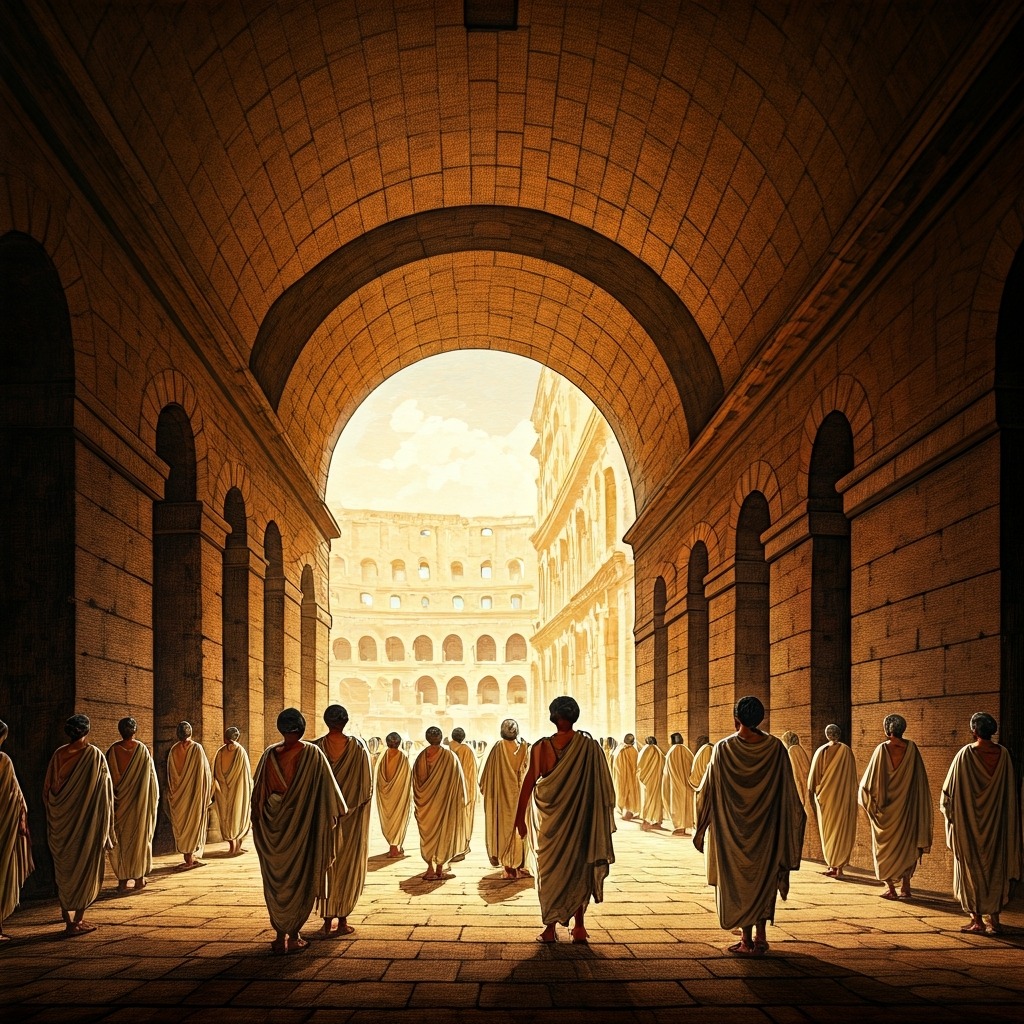
In ancient Rome, a vomitorium (or vomitoria in the plural) was a cleverly designed passageway situated below or behind a tier of seats in a massive public venue. The word itself derives from the Latin verb vomere, which translates to “to spew forth” or “to discharge.”
But the Romans weren’t talking about discharging their lunch. It was a brilliant, highly visual architectural metaphor. These massive corridors were engineered to “spew forth” tens of thousands of spectators into an amphitheater, theater, or stadium—such as the Colosseum—with jaw-dropping efficiency. Conversely, they allowed a roaring crowd of 50,000 bloodthirsty gladiator fans to exit the venue in a matter of minutes.
The Roman writer Macrobius is credited with the first recorded use of the term in this specific architectural context, writing about it in his 5th-century work Saturnalia. It was a testament to brilliant civic engineering and crowd control. So, how on earth did a masterpiece of ancient architecture transform into a literal room for throwing up?
A Scandal Fabricated in the Victorian Era
To find the culprit, we have to fast-forward from the fall of Rome to the late 19th and early 20th centuries.
During this time, there was a massive cultural fascination with the perceived moral decay of the Roman Empire. People wanted to believe the ancients were depraved monsters because it made for thrilling, scandalous entertainment.
The myth truly caught fire thanks to the English writer Aldous Huxley. In his 1923 comic novel Antic Hay, Huxley had a character mistakenly refer to a vomitorium as a place for purging. This single literary error perfectly aligned with the existing Victorian stereotypes of Roman depravity. The public eagerly latched onto it, and almost overnight, Huxley’s fictional blunder became accepted as historical fact.
The Disgusting Truth of the Triclinium
Now, you might be wondering: did the Romans actually purge during their feasts at all?
Brace yourself, because the historical reality is actually much grosser than the myth.
Ancient Roman moralists heavily criticized the gluttony of the ultra-rich. The philosopher Seneca the Younger famously complained of his contemporaries: “They vomit that they may eat, they eat that they may vomit.”
But Seneca was using hyperbole to critique extreme, individual behavior—not describing a widespread, culturally sanctioned practice with its own designated room. When elite Romans did overindulge to the point of physical sickness, they didn’t politely excuse themselves to a private, specialized chamber.
Instead, they typically did it right there at the dining table—known as the triclinium—into bowls brought over by enslaved servants. They didn’t even bother to leave the room.
Ultimately, the myth of the vomitorium highlights just how easily a historical metaphor can be misunderstood by later generations who are all too eager to believe the most bizarre and scandalous tales of the past. The Romans were brilliant, messy, and dramatic, but their vomitoria were built for moving crowds, not clearing stomachs.