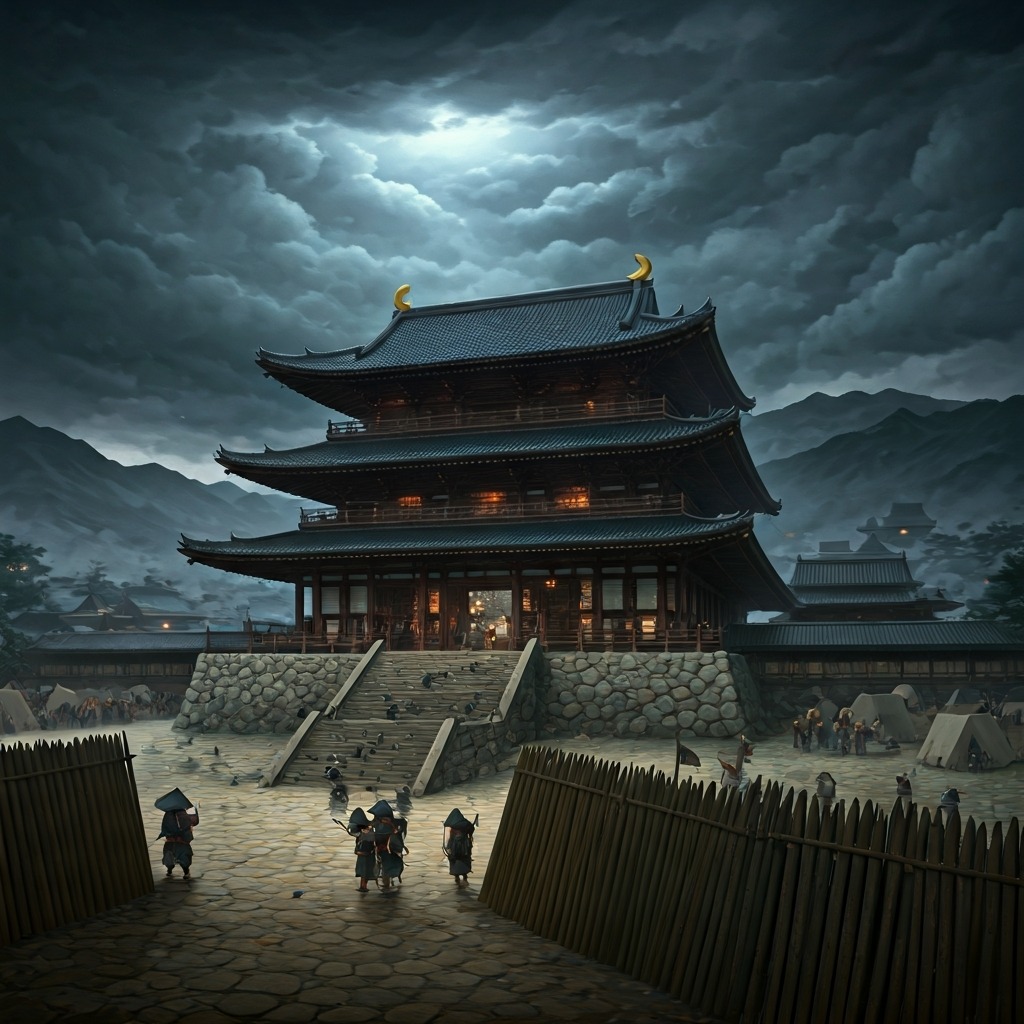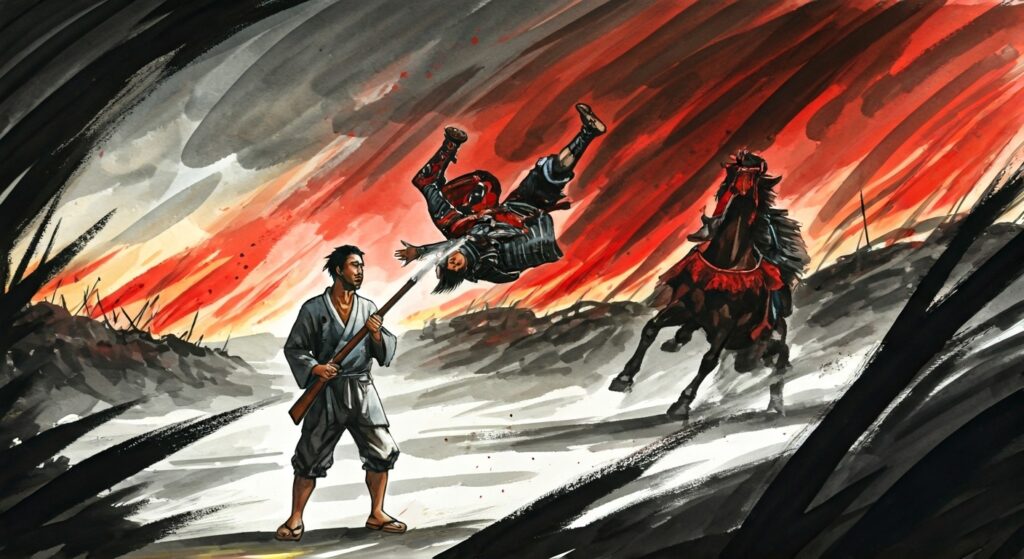
Picture the chaotic battlefields of 16th-century Japan. An elite samurai warlord, clad in master-crafted armor and trained from birth in the lethal arts of war, charges into the fray. Suddenly, a deafening crack echoes through the smoke. The warlord falls, struck dead by a single lead ball fired by a dirt-poor farmer holding a matchlock rifle.\n\nWe tend to treat the samurai as the undisputed heavyweights of Japanese history. But during the blood-soaked Sengoku (Warring States) period, the most terrifying faction on the map wasn’t a clan of elite warriors. It was a radical coalition of farmers, monks, and local merchants who looked at the samurai establishment and decided to burn it to the ground.\n\nThey were the Ikkō-ikki—the “Single-Minded Leagues.” And for nearly a century, they turned the feudal world completely upside down.\n\n## Weaponized Faith\n\nTo understand how a coalition of heavily taxed, war-weary commoners became a military juggernaut, you have to look at their radical foundation: Jōdo Shinshū, or True Pure Land Buddhism.\n\nIn the late 15th century, a charismatic priest named Rennyo transformed this faith into a massive socio-political force. Unlike other sects that required rigorous monastic discipline or elite gatekeeping, Rennyo’s message was dangerously accessible. Chant the Nembutsu, rely on Amida Buddha’s grace, and you were guaranteed entry into the Pure Land. Class, wealth, and status meant nothing.\n\nBut the militant wing of this movement adopted a battlefield philosophy that made them an absolute nightmare to fight. To the Ikkō-ikki, death in defense of the faith guaranteed instant salvation, while cowardice or retreat meant eternal damnation. They were an army that believed dying was the ultimate victory condition.\n\n## The Kingdom Without a King\n\nBy 1488, this movement pulled off the greatest upset in Japanese history. In Kaga Province, the local governor, Togashi Masachika, assumed he could easily crush a peasant uprising. He grossly underestimated his enemy.\n\nA staggering swarm of up to 200,000 Ikkō-ikki followers descended upon his castle, forcing the governor to commit seppuku. This wasn’t just a riot; it was a revolution. It marked the first time in Japanese history that commoners had successfully overthrown a samurai warlord and seized an entire province.\n\nFor the next century, Kaga became known as the “Peasants’ Kingdom.” There were no feudal lords. No samurai dictators. Just a syndicate of local families, low-ranking warriors, and priests running a proto-democratic consensus model. The underdogs had taken over the empire.\n\n## The Secret Arsenal of the Faithful\n\nThe samurai elite desperately tried to write the Ikkō-ikki off as a chaotic, disorganized mob. The reality was far more intimidating: they were an economic and technological powerhouse.\n\nThe leagues built massive, heavily fortified temple-complexes called ji-nai-machi that functioned as wealthy, independent city-states. The crown jewel of this network was the Ishiyama Hongan-ji in Osaka, a fortress that rivaled any samurai stronghold.\n\nThey also embraced cutting-edge technology. The Ikkō-ikki were among the very first in Japan to mass-produce and effectively deploy matchlock firearms (teppō). Their peasant infantry could punch right through elite samurai cavalry armor from a distance. They had the funds, the supply chains, and the firepower to match any warlord on the board.\n\n## The Demon King’s Vengeance\n\nYou cannot disrupt the feudal order so violently without drawing the attention of a ruthless apex predator. Enter Oda Nobunaga, the visionary warlord who had begun a brutal campaign to unify Japan.\n\nNobunaga looked at the Ikkō-ikki’s vast wealth, their control of strategic trade routes, and the fanatical loyalty of the masses, and realized they were the single greatest existential threat to his ambitions. He didn’t just want to defeat them; he wanted to erase them from history.\n\nWhat followed was some of the darkest, most suspenseful warfare in Japanese history. At the Sieges of Nagashima (1571-1574), after suffering heavy losses to the Ikkō-ikki’s defenses, Nobunaga changed tactics. He surrounded their fortresses with wooden palisades, trapped the defenders inside, and set the complexes ablaze. An estimated 20,000 men, women, and children were burned alive.\n\nThe climax of this bitter rivalry was the Ishiyama Hongan-ji War. It was a grueling, bloody chess match of blockades and political maneuvering that dragged on for a decade, making it the longest siege in Japanese history. Finally, in 1580, starved and battered, the fortress surrendered, marking the end of the Ikkō-ikki’s secular power.\n\nSamurai chroniclers did their best to remember the Ikkō-ikki as an unnatural disruption of the social order—a dangerous mob that had to be put down. But look closer, and you see a sanctuary for the oppressed, a radical experiment in self-governance, and a testament to the terrifying power of collective belief. They proved that with unshakeable faith, brilliant logistics, and a whole lot of matchlocks, the underdogs could bring titans to their knees.