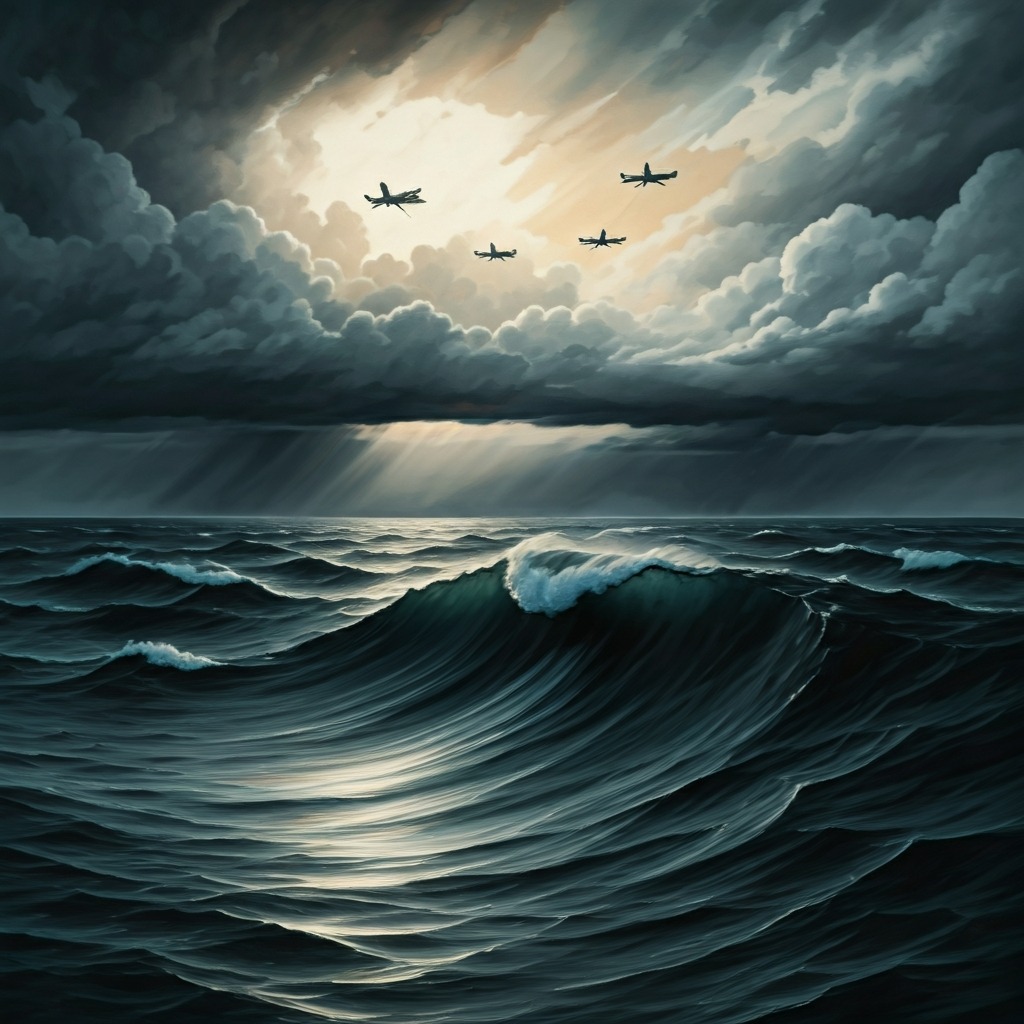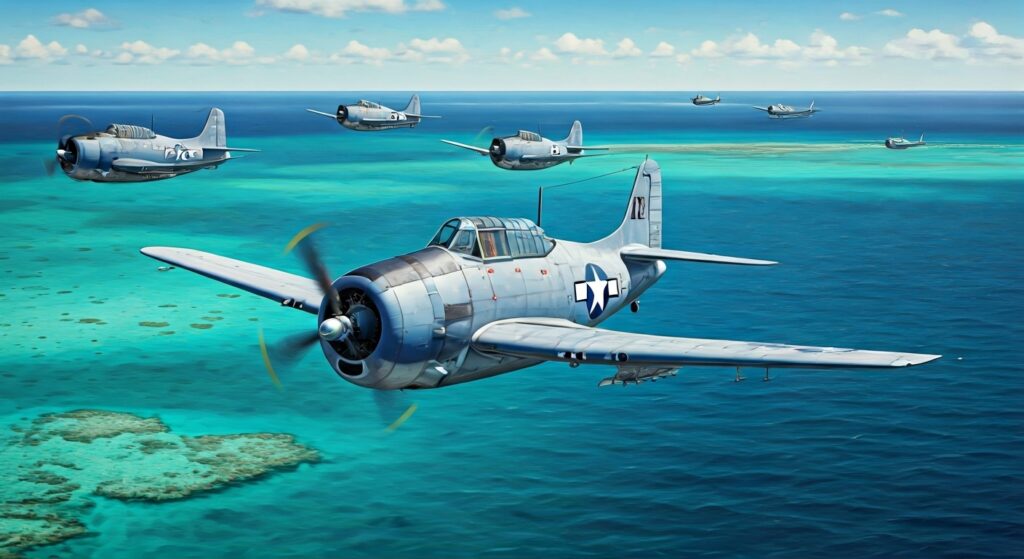
It is a crisp Wednesday afternoon—December 5, 1945. World War II has just drawn to a close, and the United States Navy is running routine training flights off the coast of Florida. It should have been a standard milk run. Instead, before the sun sets, 27 men and six aircraft will vanish into thin air, leaving behind only crackling static, a slick of oil, and a mystery that will haunt the world for decades.
This is the chilling true story of Flight 19—and the exact moment the legend of the Bermuda Triangle was born.
A Routine Mission
On that fateful afternoon, five TBM Avenger torpedo bombers roared down the runway at Naval Air Station Fort Lauderdale. The mission, designated Navigation Problem No. 1, was a standard over-water navigation and combat training exercise. Aboard the five heavy aircraft were 14 airmen, led by Lieutenant Charles C. Taylor.
Taylor was no rookie; he was a highly experienced combat pilot with roughly 2,500 flying hours under his belt. However, he was relatively new to the Fort Lauderdale area and its specific coastal geography.
The flight plan was straightforward: fly due east to Hens and Chickens Shoals to drop practice bombs, continue east into the Bahamas, pivot north, and then head southwest back to base. At first, everything went flawlessly. The bombing practice was a success. But shortly after the squadron made their turn north, the narrative took a sharp, sinister detour.
The Compasses Spin
Radio operators on the ground began intercepting deeply troubling transmissions. Lieutenant Taylor was profoundly disoriented. In a rising panic, he reported that both of his compasses had completely failed.
Through the crackling static, Taylor announced a fatal misconception: he believed the squadron was flying over the Florida Keys and the Gulf of Mexico. Historical consensus and subsequent aviation investigations suggest Taylor had actually mistaken the islands of the Bahamas for the Keys.
Operating under this catastrophic illusion, Taylor ordered his flight to head northeast, and then east, in a desperate bid to hit the Florida peninsula. In reality, he was driving his five aircraft further and further out into the unforgiving expanse of the open Atlantic Ocean.
Reading the radio transcripts from that afternoon evokes a profound sense of helpless dread. You can hear the junior pilots realizing their commander is making a deadly mistake. Some of the younger airmen can be heard on intercepts arguing that they should just fly west to reach the mainland. But this was 1945. Military discipline prevailed, and the squadron obediently followed Taylor into the void.
“We All Go Down Together”
As the afternoon bled into evening, the weather violently turned on them. Heavy rain, howling winds, and turbulent seas replaced the clear skies. The Avengers were heavy, rugged planes, but they were notoriously prone to sinking like stones if forced to ditch in rough water.
By 6:20 PM, the fuel gauges were tapping empty. Taylor’s final, chilling transmission indicated they were preparing to ditch the aircraft together. “When the first man drops to 10 gallons, we all go down together,” he reportedly ordered.
After that, there was only silence. No wreckage, no life rafts, and no trace of the 14 men were ever found.
The Rescuers Who Never Returned
If this were a work of fiction, the tragedy would end there. But reality is often much darker.
That evening, the military scrambled multiple search and rescue aircraft to hunt for Flight 19. Among them was a Martin PBM Mariner flying boat carrying a 13-man crew. Shortly after takeoff, the Mariner completely vanished from radar.
A nearby merchant ship, the SS Gaines Mills, reported seeing a massive mid-air explosion and sailing through a thick pool of oil and debris. The PBM Mariners had a grim nickname among pilots: “flying gas tanks.” They were highly susceptible to fuel vapor leaks. Investigators later concluded that a stray spark likely ignited the fumes, causing the rescue plane to explode in mid-air, instantly killing all 13 men aboard.
In a single day, 27 men and six aircraft were wiped from existence.
The Birth of a Legend
The official Navy investigation initially pinned the blame squarely on Lieutenant Taylor’s disorientation. But Taylor’s mother fiercely protested, arguing that the military was making her son a scapegoat without a single shred of physical evidence.
In a bureaucratic move that would inadvertently change pop culture forever, the Navy amended the official report in 1947. The official cause of the disappearance was changed to “unknown.”
That single word—unknown—was like throwing gasoline on a spark. How do five planes just vanish? In 1964, writer Vincent Gaddis coined the term “Bermuda Triangle” in an Argosy magazine article, using Flight 19 as his prime evidence. A decade later, Charles Berlitz’s bestselling book cemented the myth of paranormal forces and magnetic anomalies.
Ultimately, aviation historians view the loss of Flight 19 as a heartbreaking compounding of human error, equipment failure, and brutal weather. But the lack of physical closure keeps the ghost of Flight 19 flying through our collective imagination. It remains the ultimate symbol of the ocean’s terrifying, unfathomable depths.