The ocean is a graveyard of hubris. For centuries, humanity has looked at the terrifying, endless expanse of the Atlantic and thought they could conquer it. Usually, the resulting stories are filled with heroic sacrifices or epic discoveries. But sometimes, when the sea fights back, the thin veneer of human decency completely washes away.
This is the story of the SS Arctic—a tragedy not just of nature, but of unimaginable cowardice.
A Palace on the Abyss
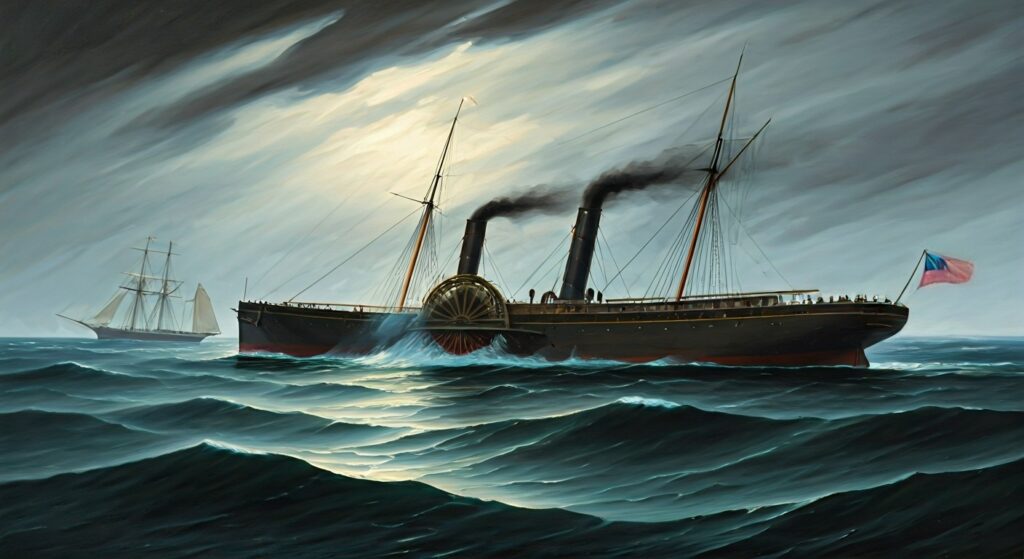
By September 1854, the SS Arctic was the undisputed pride of the American Collins Line. She was a massive, luxurious paddle steamer, built for one specific purpose: to outpace and outclass the rival British Cunard Line. A floating palace of mahogany, velvet, and steam, she was designed to carry the wealthy and the elite across the unforgiving ocean in absolute comfort.
On September 27, the Arctic was slicing through the Atlantic en route from Liverpool to New York. As she approached the coast of Cape Race, Newfoundland, a thick, suffocating fog rolled in. Visibility dropped to near zero. In an era before radar, navigating through a fog bank was essentially a high-speed game of Russian roulette.
Suddenly, the grey wall of mist parted, revealing a horrifying sight. The SS Vesta, a much smaller, iron-hulled French fishing ship, was sitting directly in their path.
The collision was deafening.
The Fatal Miscalculation
In the chaotic moments following the crash, Captain James Luce made a decision that would doom hundreds. Looking down at the smaller, battered French ship, Luce assumed the Vesta was the one in mortal danger. He immediately dispatched a lifeboat to assist the French crew.
It was a catastrophic misjudgment.
Because the Vesta had an iron hull, she had essentially acted like a giant metal spear. The Arctic’s wooden hull had been fatally pierced below the waterline. By the time Captain Luce realized his own ship was taking on massive amounts of water, the ocean was already flooding the engine rooms. Desperate, Luce ordered the ship to make a run for the shores of Newfoundland to run her aground.
But the rising water drowned the furnaces. The engines sputtered, hissed, and died. The Arctic was completely paralyzed in the freezing, fog-choked Atlantic.
Mutiny of the Cowards
What followed is widely considered one of the most shameful episodes in maritime history.
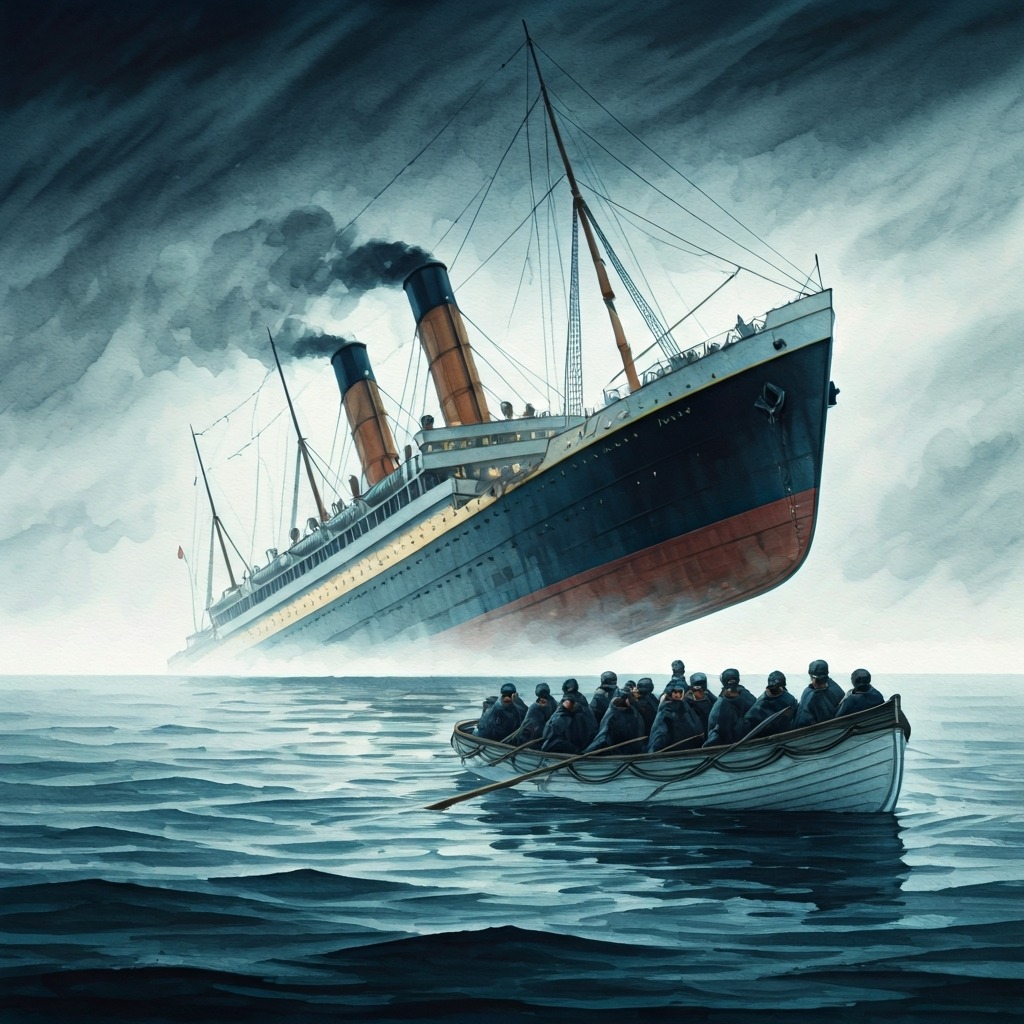
As the Arctic began her final descent into the abyss, a terrifying reality set in: there were only six lifeboats for the approximately 400 people on board. They could hold, at most, half the passengers.
In a crisis, you expect the crew to maintain order. You expect leadership and sacrifice. Instead, discipline on the Arctic completely evaporated. Panic took the wheel. Rather than assisting the terrified passengers, the crew of the Arctic decided that their own lives were the only ones that mattered.
They armed themselves. In a horrific display of raw, violent self-preservation, the crew—joined by a handful of strong, able-bodied male passengers—ruthlessly commandeered the ship’s lifeboats. When desperate passengers tried to board, the crew actively beat them back, using whatever weapons they could find to protect their stolen seats.
The Silence of the Doomed
The sheer brutality of the crew’s mutiny resulted in a grim, stomach-churning statistic. When the Arctic finally slipped beneath the freezing waves, she took hundreds of innocent people with her.
Out of the approximately 400 people on board, only about 85 survived. Every single one of them was a man, and the vast majority were the very crew members who had stolen the boats.
Consequently, every single woman and child on board perished in the freezing waters. Among the victims were the wife and children of Edward Knight Collins, the very founder of the shipping line that built the doomed vessel. Captain Luce, who had chosen to go down with his ship, miraculously survived by clinging to the splintered wreckage of a wooden paddle-box that bobbed to the surface.
The Unpunished Crime
When news of the disaster reached the shores of the United States and Europe, the public reaction was one of profound shock and intense, white-hot fury.
The press vilified the crew for their cowardice. They had blatantly abandoned the chivalric protocol of “women and children first”—a moral expectation that had been deeply ingrained in the public consciousness following the famous HMS Birkenhead sinking just two years prior.
But here is the most infuriating mystery of the whole ordeal: despite the public outcry, not a single crew member was ever formally prosecuted. At the time, there were simply no specific maritime laws dictating lifeboat boarding order or criminalizing the abandonment of passengers. The crew had committed a profound moral atrocity, but legally, they had broken no codified laws.
The disaster severely damaged the reputation of the Collins Line, leading to its eventual and total collapse. Today, the sinking of the SS Arctic remains a dark, chilling reminder of just how fragile social order really is when humanity is faced with imminent death.