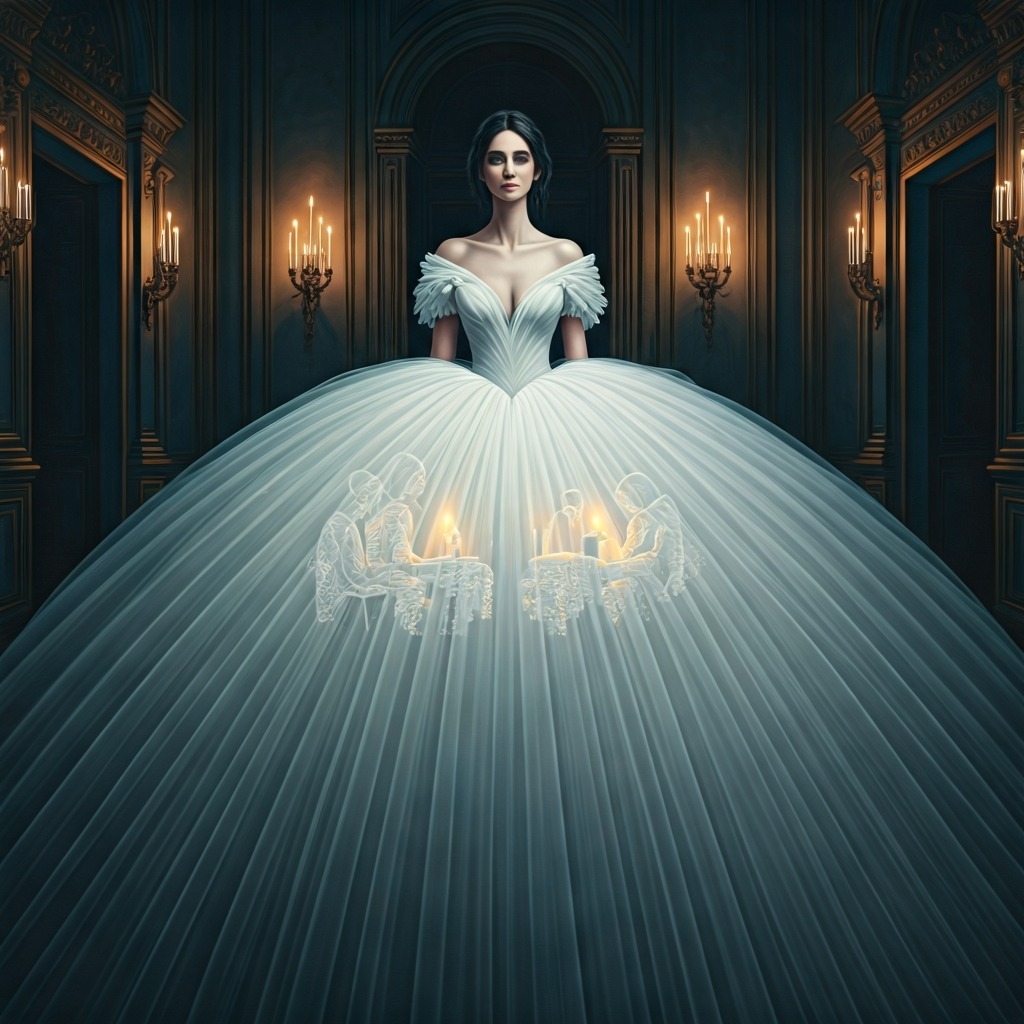
We are conditioned to believe the white wedding gown is an ancient, sacred tradition. We’re sold a story of innocence, virginity, and a pure start, wrapped in layers of pristine tulle. But behind the blindingly white facade of today’s multi-billion-dollar bridal industry lies one of the greatest PR stunts in history.
The white wedding dress wasn’t born out of religious piety. It was forged in the fires of a 19th-century economic crisis, weaponized by a young queen who knew exactly how to manipulate her own image.
The Ultimate Aristocratic Flex
Step into a wedding before the mid-19th century, and you wouldn’t find a sea of white. You’d find a parade of ruthless practicality.
For the vast majority of human history, there was no universal bridal uniform. Women simply wore their best dress—often brown, gray, or even black—knowing they would need to wear it again to church or formal dinners. In an era of muddy, unpaved streets and choking coal dust, practicality was the rule of the day.
If a bride truly wanted to project purity and piety, she didn’t wear white. She wore blue. Thanks to centuries of religious iconography, blue was the undisputed color of the Virgin Mary.
So, did anyone wear white? Rarely. And when they did, it had absolutely nothing to do with innocence. It was an obscene, unapologetic display of wealth. When aristocrats like Mary, Queen of Scots walked down the aisle in white in 1558, it was the ultimate flex. It signaled to the world: My family is so unimaginably rich that I can afford to ruin this dress after a single wearing.
But the moment that permanently altered the DNA of bridal fashion didn’t arrive until a chilly winter morning in 1840.
The Secret Agenda of a Royal Bride
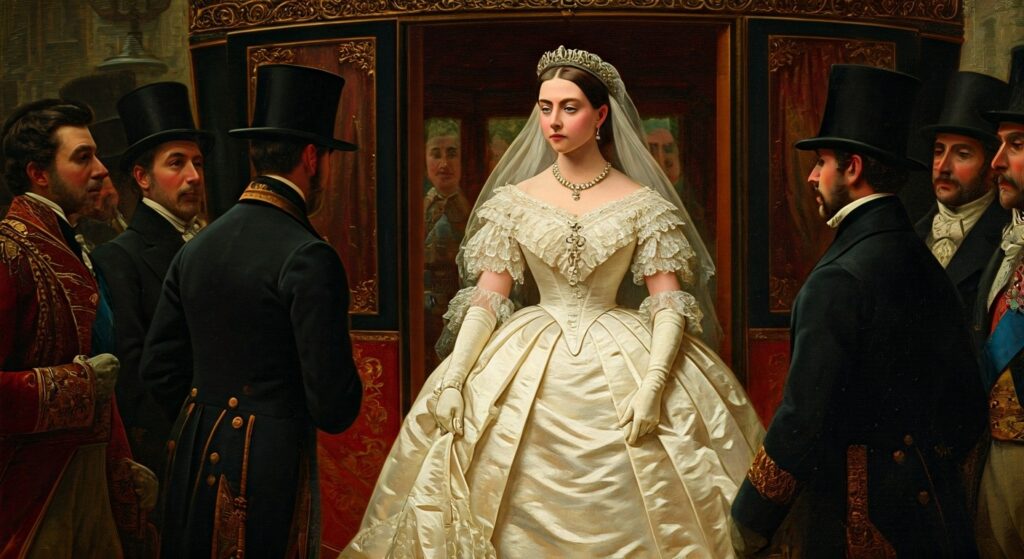
On February 10, 1840, Queen Victoria married Prince Albert of Saxe-Coburg and Gotha. The public expectation was clear: the young monarch would adhere to the suffocating tradition of royal brides, donning heavy brocaded gowns woven with literal silver and gold thread, topped with a velvet robe and a crown.
Victoria, however, had a secret agenda.
At the time, the British machine-made textile industry was booming, a triumph of the Industrial Revolution. But this modernization had a dark side: it was decimating the traditional, handmade lace industry. Thousands of skilled lace-makers were starving in the streets. Victoria, ever the strategic mastermind, decided to use her highly publicized wedding as a covert economic stimulus package.
She commissioned a massive, exquisite piece of handmade Honiton lace from Devon. But she faced a sartorial dilemma: if she pinned delicate white lace to heavy gold brocade or dark velvet, the masterful craftsmanship would be lost. She needed a blank canvas. She needed a stark, contrasting background that would make the lace absolutely pop.
She chose a simple white satin gown.
Beyond economics, Victoria was a woman deeply in love. She wanted to make her vows not as a reigning monarch demanding fealty, but as a devoted partner. She ditched the crown, the heavy jewels, and the velvet robes. When she stepped out of her carriage, she looked less like an untouchable queen and more like a glowing, romantic heroine.
The Greatest Spin in Fashion History
The reaction was immediate and explosive. Engravings and reports of the wedding circulated wildly across Europe and America in influential publications. Wealthy elites, desperate to mimic the chic young queen, immediately adopted the white gown as the ultimate status symbol.
But here is where the history gets truly sinister. The Victorians, who loved a good moralistic narrative, retroactively changed the meaning of the dress. They stripped away Victoria’s savvy economic motives and aggressively spun a new narrative: that white had always been the color of maidenhood, innocence, and purity.
It was a brilliant, sweeping piece of cultural gaslighting.
As the Industrial Revolution marched on, manufacturing advancements made white textiles affordable for the masses, allowing the royal trend to trickle down to the middle classes. By the post-World War II era, fueled by glamorous Hollywood depictions and a booming consumer culture, the white dress was no longer a trend. It was cemented as an essential, deeply ingrained tradition.
So, the next time you see a bride walking down the aisle in a pristine white gown, remember the truth. You aren’t just looking at a symbol of romance. You are looking at the legacy of a 19th-century influencer who just wanted to save the lace-makers—and accidentally spawned a global empire of tulle and silk in the process.