There is a specific kind of madness required to look at the terrifying, unpredictable expanse of the ocean and decide to build an empire on its edge. For centuries, sailors have braved the deep, knowing the sea is an unforgiving master. But what happens when the sea doesn’t wait for you to set sail? What happens when the ocean comes for you?
Grab a seat. We need to talk about the day the earth liquefied and swallowed the most wicked city in the world.
The Wickedest City on Earth
By the late 17th century, Port Royal, Jamaica, had earned a reputation that would make even the most hardened sailor blush. Famously dubbed the ‘Wickedest City on Earth,’ it was the bustling epicenter of piracy, privateering, and unimaginable wealth.
If you had stolen Spanish gold burning a hole in your pocket, Port Royal was where you went to spend it. The city was a chaotic, thriving commercial hub packed to the brim with taverns, brothels, and heavy brick storehouses. It served as a strategic British base where legendary figures like Sir Henry Morgan operated, launching devastating raids across the Spanish Main. The streets were flooded with merchants, sex workers, and buccaneers living as if there was no tomorrow.
As it turned out, for many of them, there wouldn’t be.
A Foundation of Sand and Sin
For all its wealth and military might, Port Royal harbored a fatal flaw. The city was built on a 16-mile sand spit at the mouth of Kingston Harbour.
To accommodate the booming population and the endless influx of pirate gold, developers constructed massive, multi-story English-style brick buildings. But they were building these heavy, rigid structures on water-saturated, loose sand. It was a catastrophic geographical miscalculation—a ticking time bomb waiting for a spark.
On the morning of June 7, 1692, the Caribbean sun was beating down on the peninsula. The taverns were already full, the docks were bustling with trade, and the harbor was packed with wooden ships.
Then, the ground began to roar.
11:43 AM: The Earth Opens Its Jaws
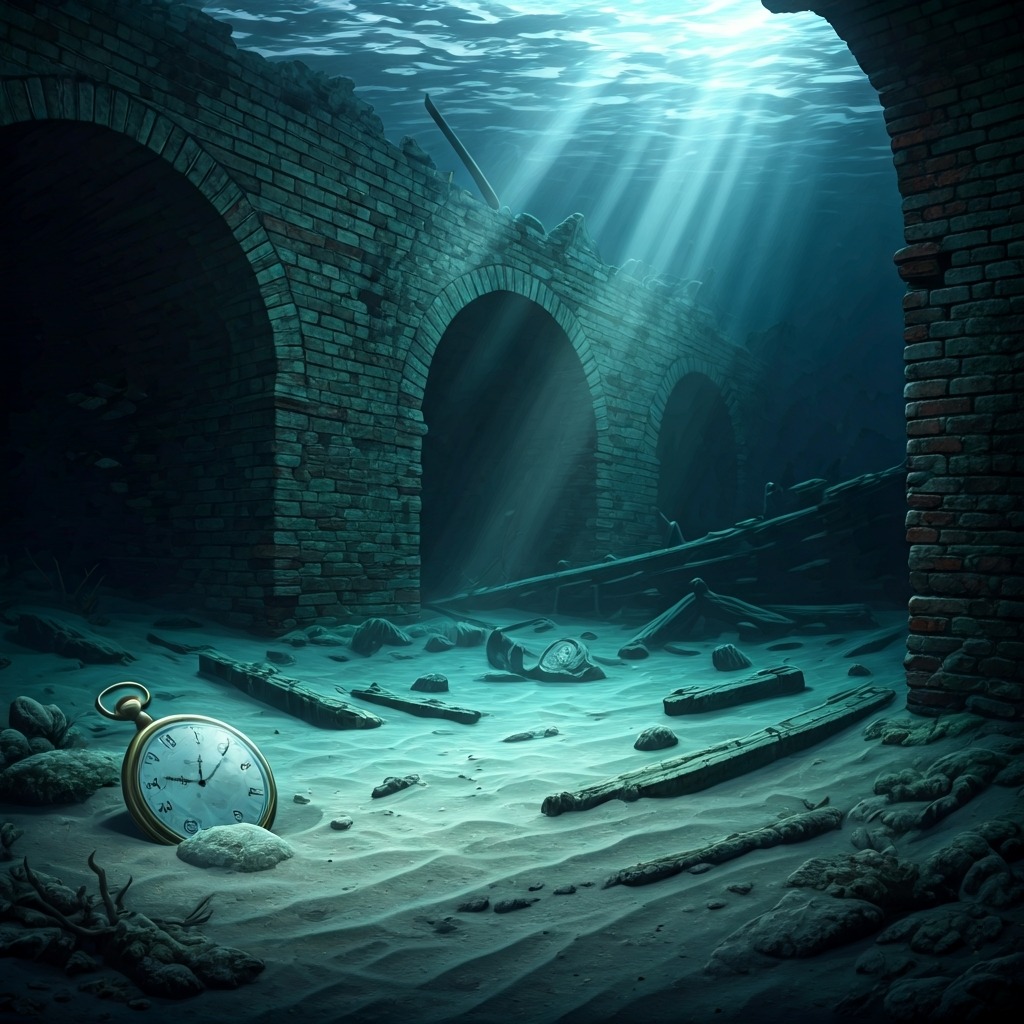
We know the exact moment the nightmare began: 11:43 AM. We know this because centuries later, divers recovered a pocket watch from the murky depths, its hands permanently frozen at the moment of disaster.
A massive earthquake, estimated at a magnitude of 7.5, violently shook the peninsula. But it wasn’t just the shaking that doomed the pirates of Port Royal. It was a terrifying geological phenomenon known as soil liquefaction.
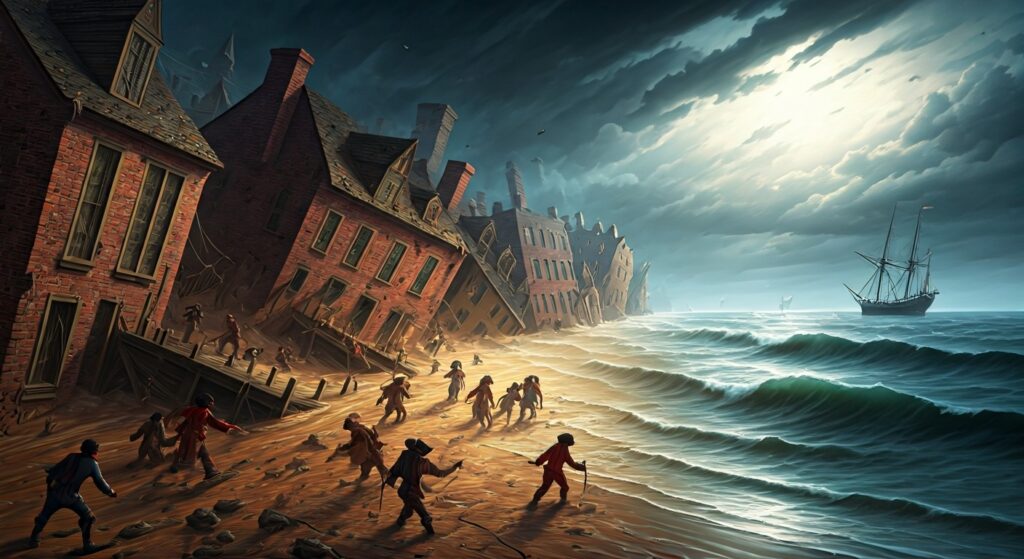
Because the city was built on a water-logged sand spit, the intense tremors caused the groundwater to mix with the loose sand. In a matter of seconds, the solid ground beneath the wickedest city on earth literally turned to liquid. The earth lost all its structural integrity, behaving more like quicksand or a thick soup.
The heavy brick buildings didn’t just collapse—they sank vertically into the sea. Entire streets, taverns, and homes were swallowed whole in minutes, taking screaming residents down with them as the ground closed back up when the shaking stopped.
The Wrath of the Sea
As if the earth turning to liquid wasn’t enough, the sudden subsidence of the land triggered a massive tsunami. A towering wall of water swept over the remaining structures, dragging hundreds of desperate survivors into the harbor.
The immediate death toll was staggering. An estimated 2,000 people perished in the initial collapse and drowning. But the horror was far from over. In the aftermath, bodies floated in the harbor and rotted in the blistering tropical heat. This grim reality led to severe outbreaks of disease, including yellow fever and cholera, claiming an additional 1,000 to 3,000 lives in the subsequent weeks.
Contemporary clergy and moralists didn’t look at the disaster as a geological event. To them, it was clear: this was divine retribution. The destruction was widely interpreted as God’s wrath against a modern-day Sodom and Gomorrah, punishing the city for its rampant debauchery and piratical sins.
The Pompeii of the New World
The disaster permanently altered the geopolitical and economic landscape of Jamaica. Those who survived the nightmare fled across the harbor to establish a new, safer settlement—a place that would eventually become the modern capital city of Kingston. While a few stubborn attempts were made to rebuild Port Royal, subsequent fires and hurricanes eventually relegated it to a modest British naval station.
But beneath the waves, the wicked city lived on.
Today, the sunken portion of Port Royal is a marine archaeological treasure, widely known as the ‘Pompeii of the New World.’ Because the city sank so incredibly fast and was quickly encased in an oxygen-depleted layer of mud, everyday 17th-century artifacts were perfectly preserved. Archaeologists have found untouched taverns, intact architectural features, and even organic materials that offer an unparalleled, frozen-in-time look at colonial maritime life.
It is a haunting reminder that no matter how much gold you hoard, or how many ships you command, you are always at the mercy of the earth beneath your feet.