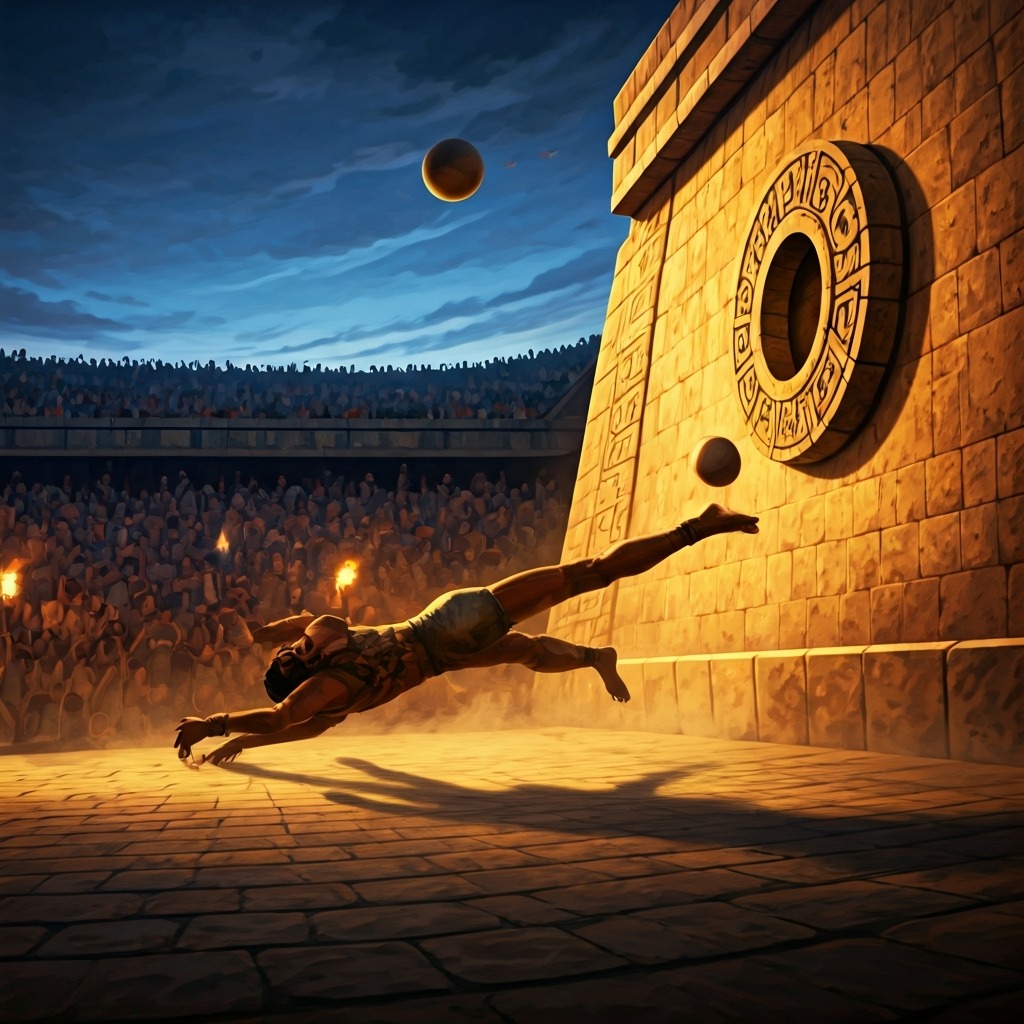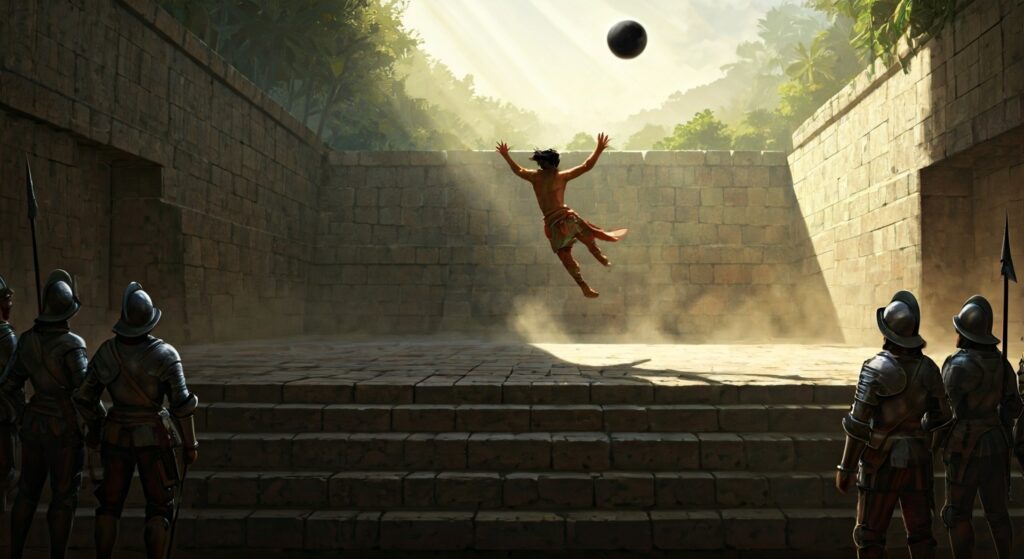
When Spanish conquistadors marched into Mesoamerica in the 16th century, they witnessed a spectacle that shattered their understanding of the natural world. On a massive, I-shaped stone court, indigenous athletes were hurling a heavy, solid sphere that rebounded off walls with terrifying speed and impossible height.
To the European mind, this was borderline witchcraft. Back home, sports were played with limp leather sacks stuffed with hair or feathers—objects that hit the ground with a dull, lifeless thud. Yet here was a sphere that seemed alive, possessing a bouncy, stretchy magic Europe had never seen.
It was the Old World’s first encounter with rubber.
If you ask a modern history buff who invented this world-changing material, they will likely point to Charles Goodyear and his 1839 patent for vulcanization. But the true pioneers of polymer chemistry didn’t wear 19th-century top hats. They lived in the lush, sweltering rainforests of Mesoamerica over 3,000 years ago.
The Secret of the “Rubber People”
Long before the Aztec or Maya empires reached their zenith, the Gulf Coast of Mexico was ruled by the Olmecs. Flourishing from roughly 1200 to 400 BCE, they are widely considered the mother culture of Mesoamerica. Their mastery over their environment was so profound that centuries later, the Aztecs referred to them in Nahuatl as the Olmeca—literally translating to “the Rubber People.”
But harvesting rubber was not as simple as tapping a tree and walking away. Raw latex, bled from the Panama rubber tree, is a highly unstable nightmare. Left untreated, it turns into a sticky, melting puddle in the jungle heat and shatters like fragile glass in the cold.
To transform this useless sap into a durable material, these ancient innovators had to look past the rubber tree and unlock a chemical secret hidden in the surrounding foliage.
The Morning Glory Miracle
The Mesoamericans were masters of their botanical domain, and their solution to the latex problem was a stroke of sheer genius. They noticed that a specific type of morning glory vine conveniently grew right alongside the rubber trees.
Through trial, error, and brilliant deduction, they discovered that mixing raw latex with the juice of this morning glory vine stabilized the material. In the late 1990s, researchers at MIT reverse-engineered this ancient recipe and made a stunning discovery: the morning glory juice contains sulfur-bearing amino acids. When mixed with raw latex, these compounds cross-link the polymer chains.
In other words, the Mesoamericans had invented vulcanization three millennia before Charles Goodyear was even born.
Even more astonishing, they were active polymer engineers. By manipulating the chemical ratios, they created bespoke materials for specific uses. A 50/50 blend created maximum bounciness. Altering the ratio yielded tough, durable rubber for sandal soles, or a sticky, resinous compound used to haft sharp weapons. They even used it to waterproof fabrics and mold hollow effigies for religious ceremonies.
The Deadliest Game in History
The most famous application of this ancient 50/50 bouncy blend was the colossal, solid balls used in the Mesoamerican ballgame—known as Ōllamaliztli to the Aztecs and Pitz to the Maya.
Played in towering stone arenas, this was an intense, high-stakes sport with profound religious and cosmological significance. The solid rubber balls were terrifyingly heavy, weighing anywhere from six to nine pounds. A direct hit could cause severe injury or even internal bleeding.
The bouncing sphere represented the sun and celestial bodies moving across the sky. Matches were not mere entertainment; they were sometimes used as proxy battles to settle political disputes without full-scale warfare. In certain ritualistic contexts, the game ended with the ultimate penalty: the losing (or sometimes the winning) team captain was subjected to human sacrifice.
So, the next time you stretch a rubber band, lace up your sneakers, or watch your dog gleefully tear apart a rubber chew toy, take a moment to look past the modern factory. The true architects of that indestructible magic were the ancient, brilliant chemists of the Mesoamerican jungle.