In the sweltering heat of July 751 AD, the earth trembled beneath the boots of two unstoppable empires. On the sweeping plains near the Talas River, the undisputed superpowers of the 8th century—the Tang Dynasty and the newly minted Abbasid Caliphate—were on a collision course. This was not just a battle for territory; it was a fight for the very arteries of global wealth. But what began as a brutal clash for control of the Silk Road would end in a devastating betrayal, leaking a heavily guarded state secret that would completely rewire human history.
The Collision of Titans
At the absolute zenith of its territorial reach, the Tang Dynasty was a juggernaut. Leading their vanguard was General Gao Xianzhi, a brilliant and ruthless tactician with a flawless track record across unforgiving terrains. He was the emperor’s ultimate weapon.
Standing in his way were the Abbasids. Having violently overthrown the Umayyad Caliphate just a year prior, they were riding a tidal wave of momentum, desperate to lock down their eastern frontiers.
The prize between them was the strategic Syr Darya region and absolute dominance over the Silk Road. Controlling this network wasn’t just about collecting tolls—it was the absolute center of global power, and neither side was willing to share.
The Ultimate Betrayal
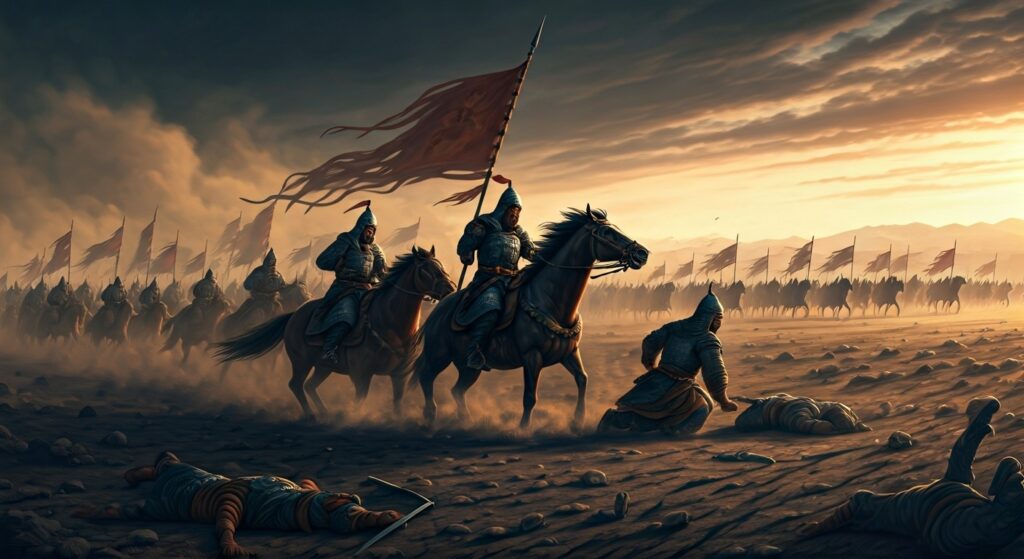
When the two massive armies finally clashed at the Battle of Talas, the violence was catastrophic. For five agonizing days, the plains ran red. General Gao’s heavily armored infantry slammed into the battle-hardened Arab cavalry in a grinding, suffocating stalemate. Neither side would yield an inch.
Then came the knife in the back.
Fighting as mercenaries for the Tang Dynasty was a powerful federation of Turkic tribes known as the Karluks. Right in the chaotic heart of the bloodbath, the Karluks made a fatal, calculated choice. They flipped allegiances. Without warning, they turned their weapons on the Chinese forces, attacking from the rear while the Abbasids surged forward.
It was a tactical nightmare. The Tang army was utterly decimated in a vicious, inescapable pincer movement. Out of tens of thousands of elite Chinese troops, General Gao barely managed to hack his way out, escaping with his life and a shattered army.
The Secret in the Blood
The immediate shockwave of Talas was a geopolitical earthquake. The defeat permanently shattered China’s westward expansion, ensuring Central Asia would fall under the cultural and religious sphere of Islam for centuries to come.
But the most profound legacy of the Battle of Talas wasn’t the land that changed hands. It was what the Abbasids found in the wreckage of the Chinese baggage train.
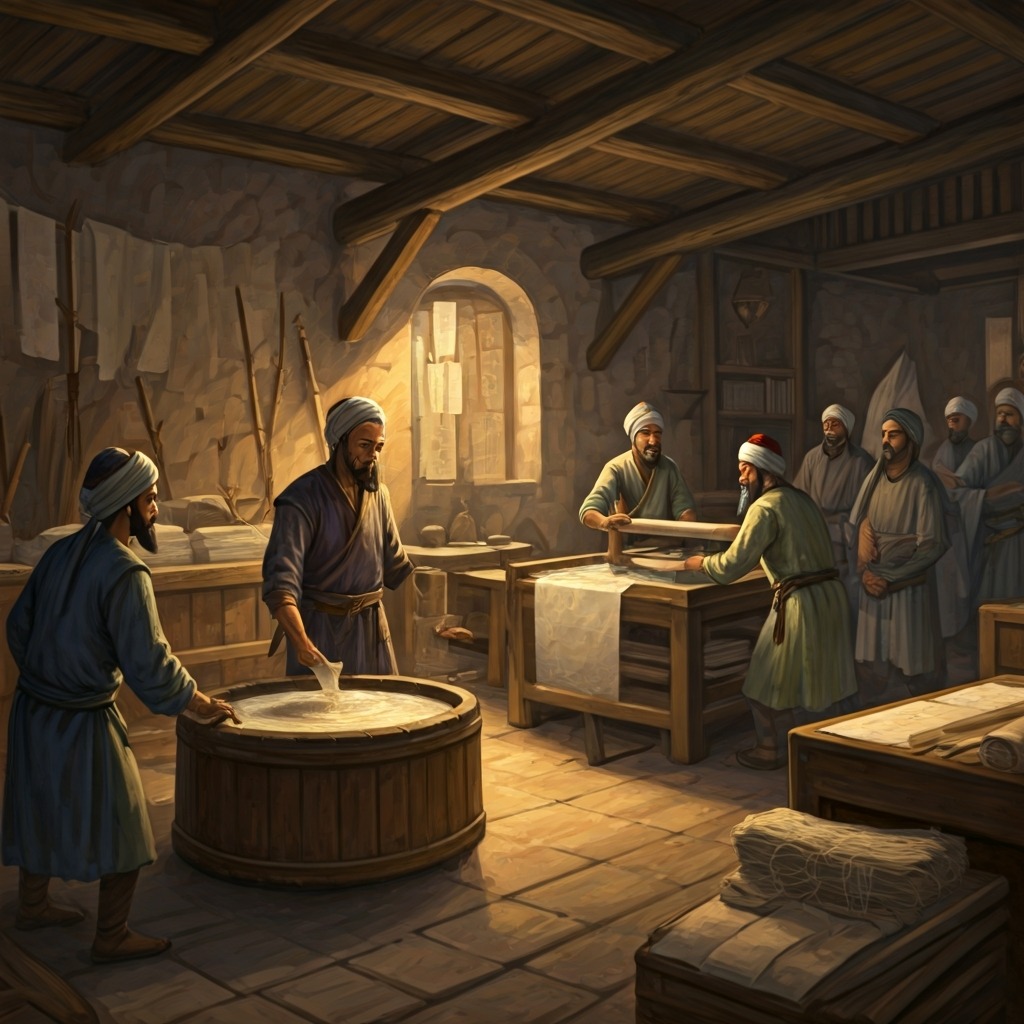
Among the thousands of prisoners of war hauled away by the victorious Abbasid army were highly skilled artisans. These men were not mere foot soldiers; they were the keepers of a heavily guarded, centuries-old state secret. Under the watchful eyes of their captors in the city of Samarkand, they were forced to reveal a complex, closely held manufacturing process.
They were forced to make paper.
The Spark That Rewrote the World
While finished paper had trickled across the Silk Road as a rare luxury commodity before 751 AD, the actual manufacturing process was a fiercely protected monopoly. The Battle of Talas was the violent catalyst that broke the vault.
Samarkand, with its abundant water supply and local flax, was rapidly transformed into a massive industrial center for paper production. From there, the technology exploded. It spread like wildfire to Baghdad, Damascus, Cairo, and eventually across North Africa into Islamic Spain and Christian Europe.
This stolen technology was the ultimate game-changer. Cheap, durable paper replaced expensive animal parchment and fragile papyrus. It directly fueled the Islamic Golden Age, enabling the mass production of books, the translation of ancient Greek and Persian texts, and the establishment of vast, world-renowned libraries.
In one of history’s greatest ironies, a devastating military blindside inadvertently sparked an intellectual revolution. The Abbasids may have won the battlefield, but the true victor of the Battle of Talas was human knowledge.