The Desperate Search for a Smart Bomb
It is the height of World War II. The skies over Europe and the Pacific are choked with flak, the stakes are existential, and hitting a target from the air is a desperate, deadly game of chance. The Allied military urgently needed a “smart bomb” to strike enemy ships and bunkers with pinpoint accuracy. There was just one massive problem: the electronic guidance systems of the era were highly unreliable. They were fragile, glorified paperweights that routinely failed under the immense pressure of combat.
The military needed a guidance system that wouldn’t short-circuit, jam, or freeze. What they got was a proposal so utterly ridiculous, it almost changed the course of military history.
The Mad Scientist of the Mind
If you were looking to build a state-of-the-art missile guidance system in the 1940s, you would typically call an aeronautical engineer. Instead, the military found themselves listening to B.F. Skinner, the famous American behaviorist.
Skinner didn’t care about gyroscopes, radar, or copper wiring. He cared about operant conditioning. He believed he could train an animal to act as an organic pilot, processing visual data faster and more reliably than any vacuum tube ever could. His biological processor of choice? The humble street pigeon. Welcome to Project Pigeon.
The Cockpit Inside the Warhead
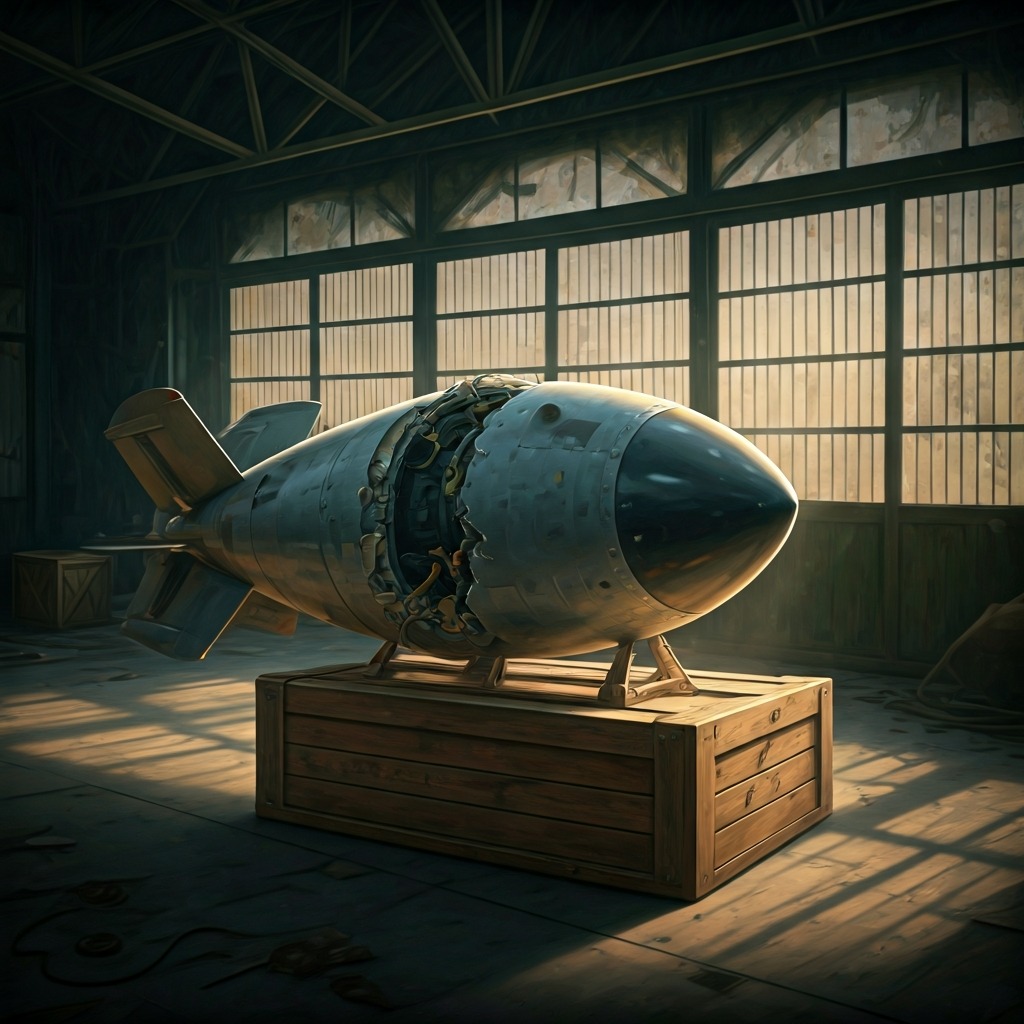
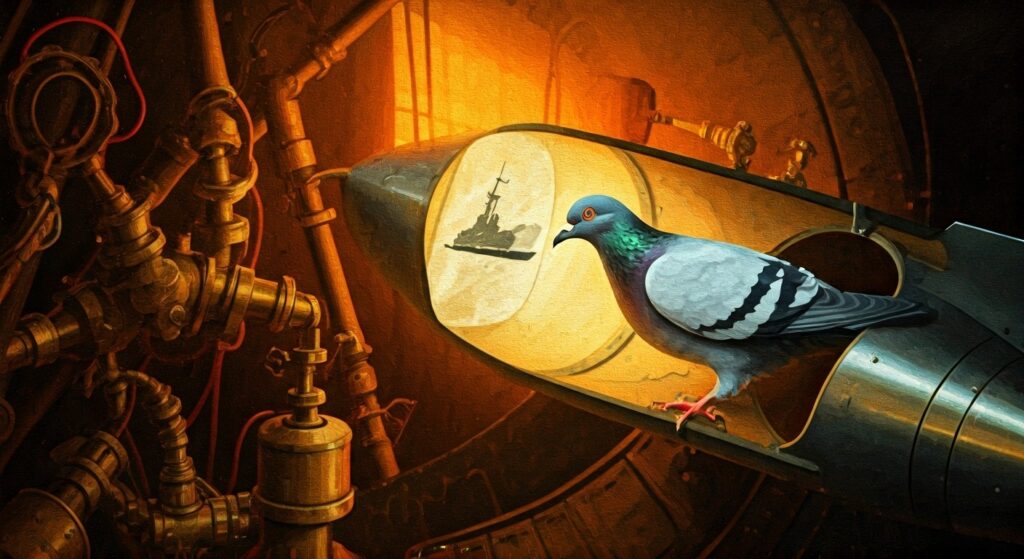
Imagine the nose cone of a Pelican guided bomb. Now, imagine cracking it open to find a tiny, custom-built flight harness.
Skinner placed his birds inside these harnesses, facing a specialized screen that projected the target ahead. Using food reinforcement, he trained the pigeons to peck at the image of the target. If the enemy ship or bunker drifted from the center of the screen, the pigeon would relentlessly peck at the edges to “chase” it.
These pecks weren’t just a parlor trick. The screen was mechanically linked to the missile’s steering. The pigeon’s beak would actuate pneumatic valves and send electrical signals to the missile’s control surfaces, physically steering the high-explosive shell back on course. It was a cybernetic weapon—living tissue driving a metal machine of death.
Nerves of Steel, Fueled by Birdseed
You would think a bird would absolutely panic during a screaming, high-speed dive toward a battleship. But Skinner’s pigeons were ice-cold.
These feathered navigators proved to be incredibly reliable. They were trained to peck up to four times per second, maintaining laser-like focus despite simulated engine noise, flashing lights, and rapid, violent descents. They didn’t short-circuit. They didn’t jam. They were the ultimate Top Gun pilots, fueled entirely by birdseed and behavioral psychology.
Grounded by the Brass
Despite wildly successful demonstrations proving this biological guidance system actually functioned, the military brass just couldn’t wrap their heads around it.
To the National Defense Research Committee, relying on a flock of pigeons to win the war sounded like a complete joke. They found the concept too bizarre to fund long-term and unceremoniously canceled Project Pigeon in 1944, choosing instead to gamble on the eventual maturation of electronic guidance.
But a truly mad science project never really dies. In 1948, the Navy briefly revived the endeavor under the name Project Orcon (standing for “organic control”). The pigeons were back in the cockpit for a new era of testing. However, by 1953, electronic guidance systems had finally caught up to the processing power of Skinner’s birds, and the project was permanently shelved.
Today, Project Pigeon stands as a brilliant, bizarre intersection of behavioral psychology, early cybernetics, and military engineering. It remains a perfect historical reminder that sometimes the craziest ideas are technically sound—even if they look completely ridiculous to the establishment.