Ask anyone to name the creators of the world’s first mummies, and they will inevitably point to the golden sands of ancient Egypt. They would be wrong by thousands of years.
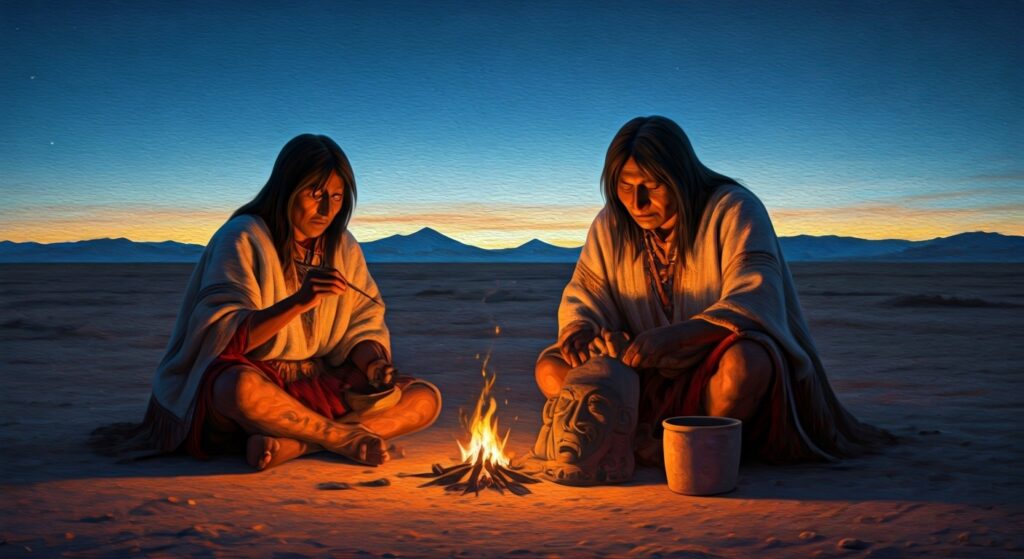
Long before the first stone was laid for the Great Pyramid of Giza, a society of maritime hunter-gatherers on the edge of the world was already mastering the art of cheating death. They were the Chinchorro, a pre-Columbian people who clung to the coasts of modern-day northern Chile and southern Peru. Their astonishing preservation techniques are the oldest known examples of artificial mummification in human history, predating the Egyptian pharaohs by over two millennia.
But the story of the Chinchorro is not just a tale of ancient engineering. It is a haunting, deeply intimate mystery of survival, communal grief, and a modern ticking clock.
A Macabre Masterpiece in the Driest Place on Earth
The Chinchorro thrived between 7000 and 1500 BCE in the hyper-arid Atacama Desert. At first, the mercilessly dry climate did the work for them; the earliest natural mummies in the region date back to 7000 BCE, simply baked and preserved by the blistering sand. But around 5050 BCE, something shifted in the culture. The Chinchorro decided they could no longer leave the preservation of their loved ones up to nature.
They began to take the process into their own hands, initiating a practice that was incredibly complex, undeniably gruesome, yet carried out with a startling level of tenderness.
Embalmers would carefully peel back the skin of the deceased, meticulously stripping away the organs and muscles. The bare skeleton was then cleaned, dried, and reinforced with sticks and reeds bound tightly with plant fibers. To breathe volume back into the hollowed frame, the body cavities were stuffed with clay, camelid hair, sea lion skin, and feathers.
Then came the most delicate part: the original skin was sewn back onto the frame like a tailored suit. If pieces of human skin were missing or damaged, the embalmers would patch the gaps with pelican or sea lion skin. Finally, the skull was packed with ash and clay, and a sculpted clay mask was placed over the face, often crowned with a wig made from human hair.
The Colors of Death
As centuries passed, the Chinchorro refined their macabre art, leaving behind distinct chronological styles that anthropologists now use to date the remains.
The earliest and most complex were the ‘Black Mummies’ (c. 5050–3000 BCE), which were completely coated in a paste made of black manganese. As time marched on, a new aesthetic emerged. The ‘Red Mummies’ (c. 2500–2000 BCE) featured bodies painted with vibrant red ochre that struck a sharp, eerie contrast against their black clay masks. Eventually, the practice evolved into the ‘Mud-Coated Mummies,’ a simpler technique where the body was encased in a thick layer of mud and sand that acted as a natural, protective cement.
An Egalitarian Afterlife Born of Tragedy
When we envision mummies, we picture god-kings and elites hoarding their wealth to ensure a prosperous afterlife. The Chinchorro flipped this script entirely. They practiced a remarkably egalitarian form of mummification. Men, women, children, and even unborn fetuses were preserved with the exact same painstaking care.
But why? Why dedicate such immense time and resources to preserving everyone in a hunter-gatherer society where survival was already a daily struggle?
Bioarchaeologists have proposed a chilling and compelling theory: environmental poisoning. The rivers in the Camarones Valley, where the Chinchorro lived, harbored a silent killer—naturally high levels of arsenic. Over time, chronic arsenic exposure inevitably led to devastatingly high rates of miscarriages and infant mortality.
The archaeological record backs this up. The absolute earliest Chinchorro mummies are almost exclusively fetuses and infants. This labor-intensive preservation process wasn’t about securing a golden afterlife for a king; it was a profound expression of communal grief. It was a way for heartbroken parents to keep their deceased children physically present within the community, transforming death and loss into an enduring form of art.
The Awakening of a Microscopic Threat
For over 7,000 years, the Chinchorro mummies rested safely in the hyper-arid embrace of the Atacama Desert. But today, these ancient marvels face a terrifying existential threat.
Climate change is driving up humidity levels in the once-bone-dry Atacama. This sudden influx of moisture has acted as an alarm clock for dormant microbes living within the mummies’ ancient skin. Awakened and hungry, this bacterial activity is causing some of the mummies to rapidly degrade, literally melting them into a black ooze.
The race to save them is on. In 2021, the Chinchorro settlement and their artificial mummification process were officially added to the UNESCO World Heritage list. This designation has sparked a desperate international effort to build specialized, climate-controlled facilities to house the remains.
We are now fighting a microscopic war to save the Chinchorro. If we lose, we don’t just lose ancient artifacts; we lose the oldest surviving testament to human love, ingenuity, and the extraordinary lengths a community will go to hold onto those they have lost.