Deep in the perilous, mist-shrouded peaks of Colombia’s Sierra Nevada de Santa Marta, the jungle keeps its secrets. It is an unforgiving landscape that can swallow a man whole. But for nearly four centuries, this dense, mountainous rainforest hid something much larger than a misplaced explorer. It hid an entire civilization.
Forget El Dorado. Forget Machu Picchu. Hidden in these perilous mountains lies a sprawling metropolis that predates the famous Inca citadel by roughly 650 years. Its story is one of apocalyptic conquest, a bloody modern gold rush, and a staggering secret kept hidden in plain sight.
The “Green Hell” and the Gold Rush
The modern “rediscovery” of this ancient marvel didn’t begin with a noble academic expedition. It began with greed, machetes, and blood.
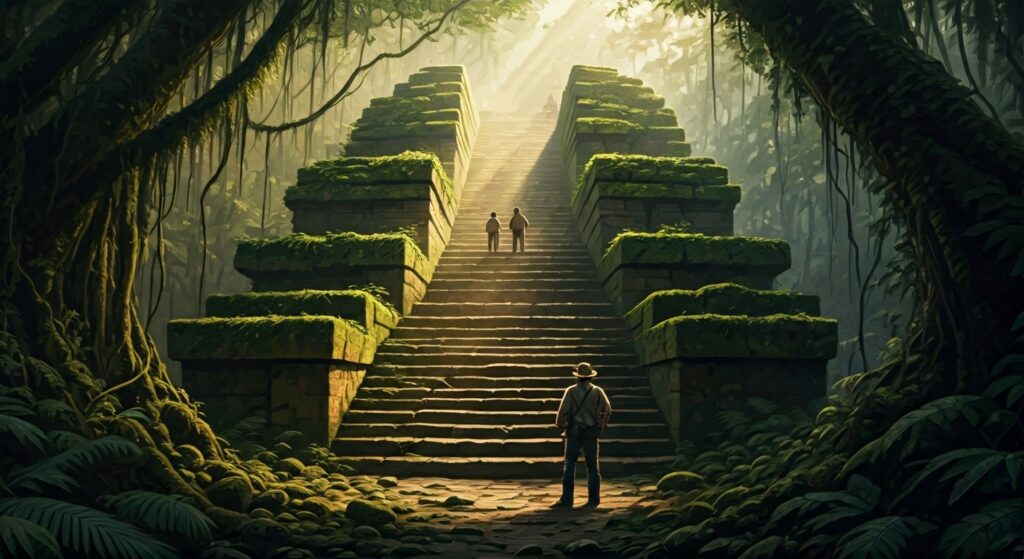
In 1972, a group of local treasure hunters—known as guaqueros—were bushwhacking through the suffocating overgrowth in search of exotic birds. Instead, they stumbled upon a series of moss-covered stone steps leading up the mountain. Curiosity overcoming caution, they climbed.
At the summit, they didn’t find birds. They found treasure. The guaqueros began unearthing priceless gold figurines, intricate jade ornaments, and ancient ceramic urns. They dubbed their discovery the “Green Hell.”
Word of the mountain’s hidden riches quickly trickled down to the black market, sparking a frantic and violent gold rush. Rival gangs of guaqueros descended upon the ruins. The looters fought lethal skirmishes over the spoils, turning sacred ancient terraces into a battleground where several men were slaughtered for a handful of gold.
A Metropolis in the Clouds
What these looters had stumbled upon was Teyuna, an absolute marvel of ancient engineering built around 800 CE by the Tairona civilization.
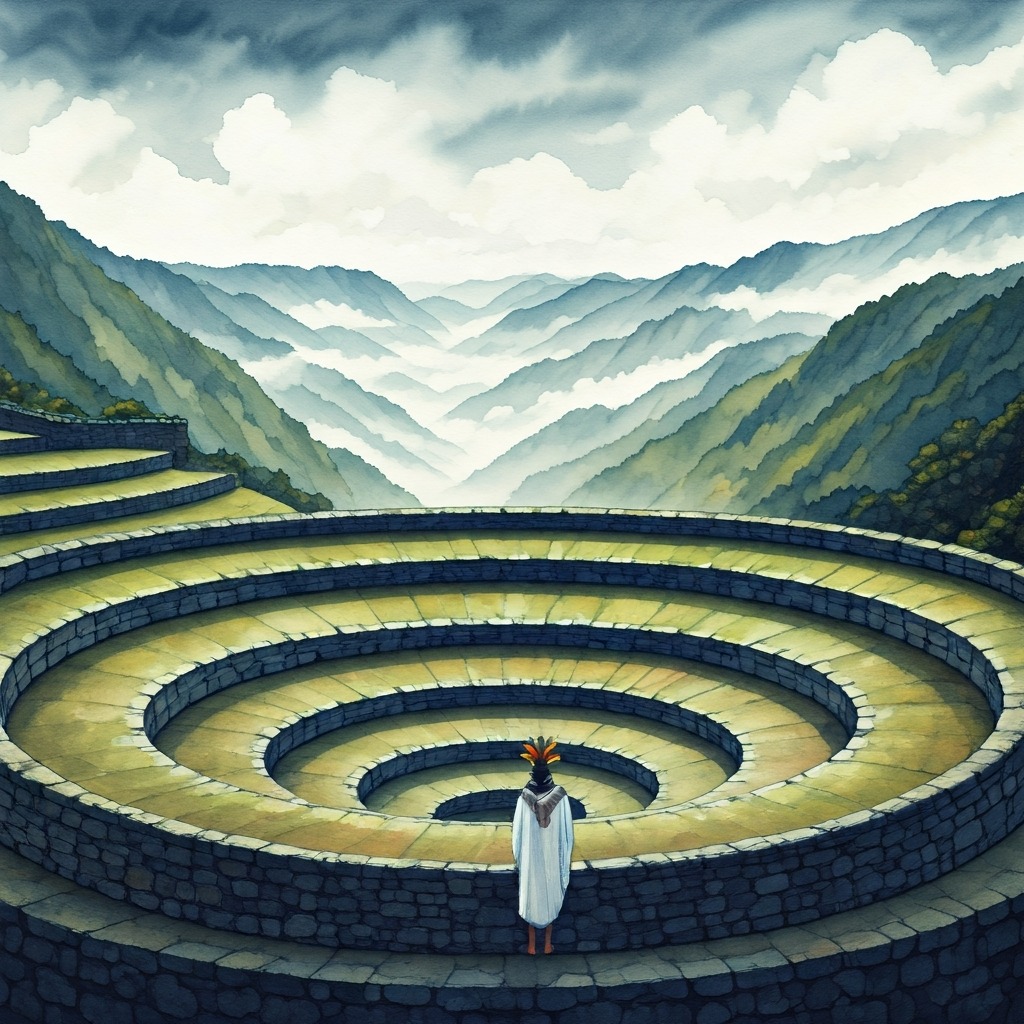
The Tairona didn’t just survive in this hostile, rain-drenched environment; they conquered it. High in the unforgiving mountains, they carved over 160 circular stone terraces directly into the steep mountainsides. These terraces were interconnected by a dizzying, complex web of tiled roads and stone staircases. Even more impressively, they designed a highly sophisticated drainage system that prevented the torrential tropical rains from washing their mountaintop capital away.
For centuries, Teyuna thrived as the beating heart of a vast network of Tairona villages. But in the late 16th century, the Spanish conquistadors arrived. The encounter was apocalyptic. Decimated by newly introduced European diseases and relentless, brutal conflict, the surviving Tairona were forced to flee.
Teyuna was abandoned. Almost immediately, the voracious jungle began to reclaim the stone metropolis, wrapping it in thick vines, burying its terraces under dense moss, and erasing it entirely from the maps of the outside world.
Reclaiming the Ruins
It took four years of rampant looting and violence before the Colombian government finally caught wind of the massive black-market operation bleeding the mountain dry.
In 1976, the Colombian Institute of Anthropology dispatched an official expedition led by archaeologists Álvaro Soto Holguín and Bernardo Valderrama. Because of the lingering danger from the ruthless guaquero gangs, the archaeologists didn’t dare go alone—they were flanked by heavily armed military escorts.
When they arrived, they officially mapped and claimed the site on behalf of the government, famously renaming it Ciudad Perdida—the Lost City. The excavation that followed was monumental, requiring teams to hack away massive amounts of jungle overgrowth just to reveal the stunning, sweeping scale of the city.
The City That Was Never Lost
But here is where the story takes a fascinating turn. The entire narrative of a “lost” city is actually a myth.
To the local indigenous populations—the Kogi, Wiwa, Arhuaco, and Kankuamo peoples, who are the direct descendants of the Tairona—Teyuna was never lost at all.
Their spiritual leaders, known as Mamos, had always known exactly where the city was. For four hundred years, they had continued to visit the site in absolute secrecy to perform sacred rituals. When the archaeologists arrived in the 1970s, the indigenous communities revealed a heartbreaking truth: they had intentionally kept the city hidden from the outside world to protect it from the exact kind of destruction, greed, and looting that the guaqueros had just unleashed.
1,200 Steps into the Past
Today, Ciudad Perdida is a protected archaeological park, standing as a breathtaking testament to ancient engineering and indigenous resilience.
It remains incredibly remote. There are no trains or buses to the summit. To see it, you must endure a grueling multi-day trek through the sweltering jungle, crossing rushing rivers and battling the elements, culminating in a steep, breathless climb up 1,200 ancient stone steps.
It is a place where history isn’t just observed; it is felt in the humidity, the stone, and the silence of the trees. Teyuna is a stark reminder that sometimes, the best way to preserve the past is to let the jungle keep its secrets.