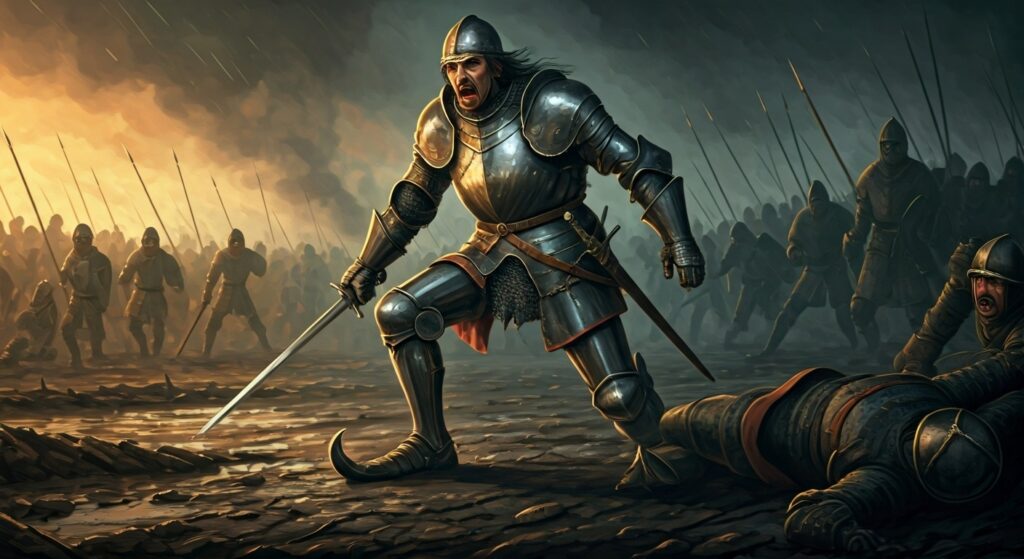
Imagine a heavily armored knight, dismounted in the chaotic heat of a medieval battle. The enemy charges. He draws his broadsword, shifts his weight to strike—and immediately trips over his own feet. He is slaughtered not because of inferior tactics, but because his shoes are two feet long.
Welcome to the scandalous era of the Crakow, a medieval fashion trend so dangerously dramatic it caused military disasters, enraged the Catholic Church, and required literal royal intervention to stop. If you think modern haute couture is unwearable, you haven’t seen the footwear that brought 15th-century Europe to its knees.
The Anatomy of a Scandal
If you were anyone of importance in the late 14th to the late 15th century, sensible leather boots were out of the question. You wore the Crakow (also known as the Poulaine). Named after the city of Krakow, Poland, where this bizarre trend supposedly originated, these shoes became the ultimate medieval status symbol.
The defining feature of a Crakow was the “pike”—an absurdly elongated, pointed toe that could extend over two feet beyond the wearer’s actual foot. Because a hollow leather point of that length would flop around like a deflated balloon, shoemakers stuffed them with moss, wool, or animal hair to keep them rigidly erect. In the most extreme cases of fashion victimhood, the toes were so long they allegedly had to be tied to the wearer’s knees with delicate gold or silver chains just to allow a single step.
The Ultimate Flex
Why would anyone willingly wear shoes that made walking normally, let alone running or working, a physical impossibility?
That was precisely the point.
In an era where survival required grueling physical labor for the vast majority of the population, wearing a shoe that completely incapacitated you was a massive flex. By donning Crakows, the European nobility were loudly broadcasting a singular message to the world: I am so unimaginably wealthy that I do not have to lift a single finger—or foot—to survive.
A Deadly Step
But this vanity came with a steep, sometimes fatal, price. The sheer impracticality of the Crakow turned everyday life into a hazard. Wearers were constantly tripping down stairs and stumbling through royal courts.
The drama soon spilled onto the battlefield. These shoes were blamed for several military disasters, leading to frantic moments where knights had to literally hack off the ends of their own shoes with their swords just to flee or fight effectively. Fashion had officially become a liability.
The Devil Wears Poulaines
Naturally, if people are having too much fun with a trend, the medieval clergy is going to try and ruin it.
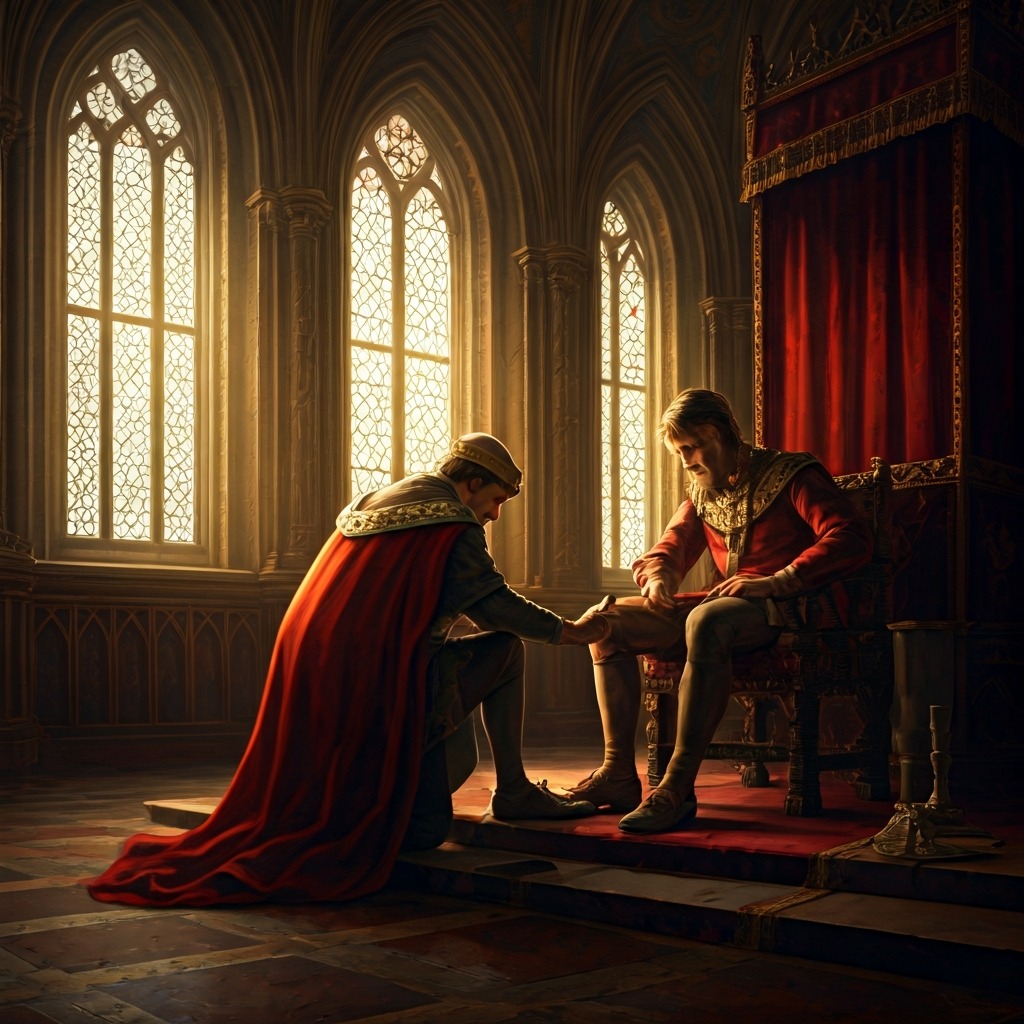
The Church vehemently opposed the Crakow, officially labeling the elongated toes as “devil’s fingers.” They condemned the footwear as highly phallic, disgustingly vain, and—perhaps most practically—a literal hindrance to kneeling in prayer. You simply couldn’t bow before God if your shoes were hitting the altar before your knees hit the floor.
The Royal Crackdown
The trend eventually spiraled so far out of control that monarchs had to step in and legally mandate fashion sense. In England, King Edward IV passed a sumptuary law in 1463 that strictly regulated the length of the pikes. Under this new legislation, anyone below the rank of a lord was forbidden from wearing a shoe with a toe extending more than two inches.
Just like that, the trend was killed for the middle classes, and the Crakow’s days were numbered. By the end of the 15th century, the elongated points vanished, replaced by a new, equally bizarre trend: wide, absurdly broad, square-toed shoes affectionately known as “duckbills.”
The next time you see a runway model struggling to walk in bizarre, avant-garde footwear, just remember—we have been suffering for the aesthetic for over six hundred years.