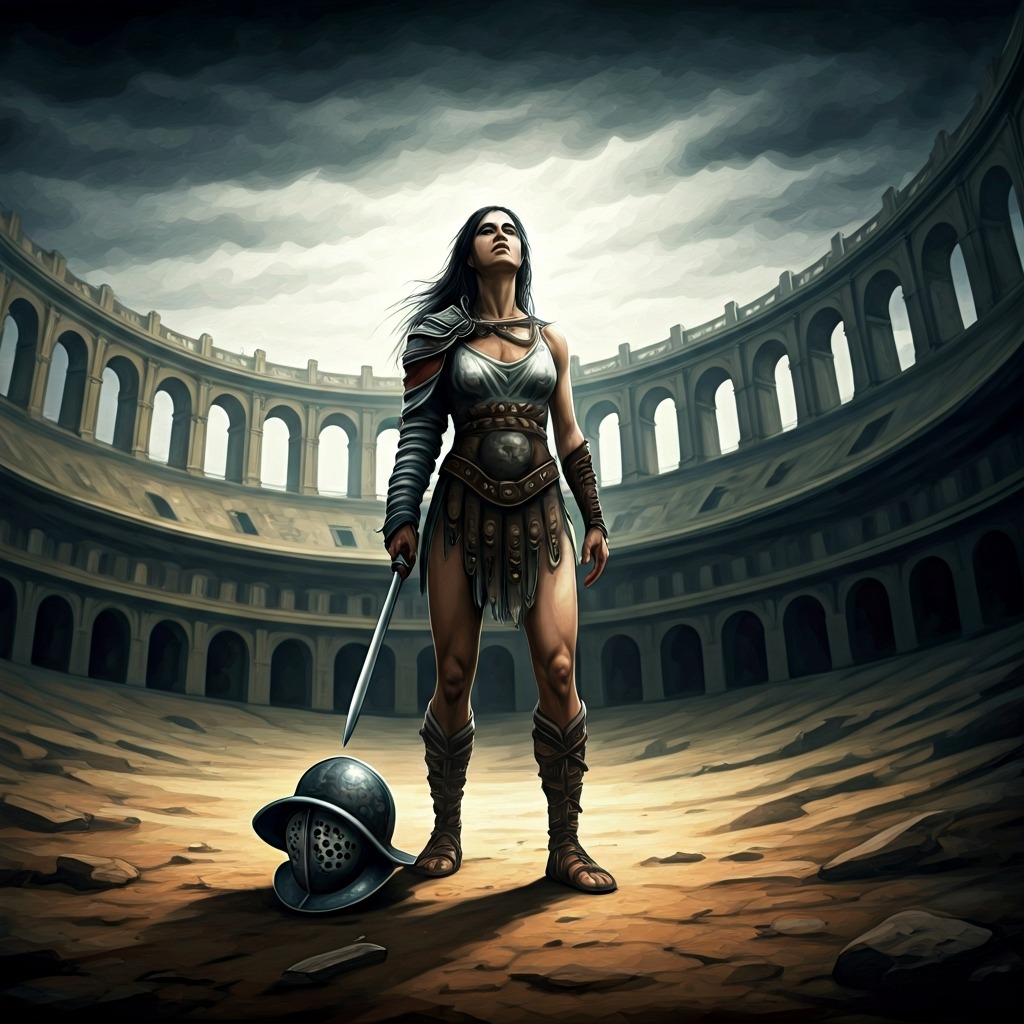
Shadows and Sand: The Colosseum’s Greatest Secret
Picture the Roman Colosseum plunged into darkness. The massive, looming architecture is illuminated only by the chaotic, flickering flames of thousands of torches. The roar of the elite crowd is deafening. They have seen every brutality the empire has to offer, but tonight, Emperor Domitian has promised them a spectacle that borders on a hallucinatory fever dream.
The iron gates groan open. The figures that step onto the blood-soaked sand are not the sweat-drenched, condemned men the masses are accustomed to. They are women.
In a society where women were strictly confined to the domestic sphere and expected to embody pudicitia (modesty), the sight of a woman wielding a gladius was the ultimate subversion of everything Rome held sacred. Enter the gladiatrix—a historical reality so scandalous that, for centuries, modern historians dismissed them as pure myth.
Carved in Stone: The Myth That Bled
For hundreds of years, the idea of female gladiators was brushed off as an exaggerated rumor or a bizarre male fantasy. But the dirt of the ancient world always holds on to its secrets, and eventually, undeniable proof clawed its way to the surface.
The smoking gun emerged in the form of a marble relief from Halicarnassus in modern-day Turkey. Dating back to the 1st or 2nd century AD, the carving clearly depicts two heavily armored women locked in mortal combat. Below their feet, their stage names are immortalized: Amazon and Achillia. The inscription notes that their brutal match ended in a stantes missi—a standing draw. Both women fought with such ferocious bravery that their lives were spared, and they were declared equal victors.
The evidence didn’t stop there. In 1996, archaeologists unearthed a grave in Southwark, London. Dubbed the Great Dover Street Woman, her burial was a bizarre, high-status mix of feast remnants and oil lamps decorated with fallen gladiators. Experts now believe she was a highly respected gladiatrix who fought in Roman Britain. In Ostia, a boastful magistrate’s inscription proudly claims he was the very first to supply “women for the sword” in the town’s local games.
The gladiatrix was undeniably real. But the truth of who these women were is even more shocking than their existence.
Patrician Blood: The Ultimate Rebellion
While the vast majority of male gladiators were enslaved people, prisoners of war, or condemned criminals fighting for survival, the historical record reveals a stunning twist about the women in the arena. A significant number of them were wealthy, upper-class patrician women.
These elite ladies abandoned their dignity and traded their silk for iron, training in secret at the ludus (gladiator school). The Roman satirist Juvenal absolutely shredded these women in his scathing writings, vividly describing them grunting as they struck wooden training posts, wrapping their legs in heavy greaves, and wearing massive helmets to hide their identities from their peers in the stands.
These women weren’t fighting for money or to win their freedom. They already had both. They were fighting for glory, fame, and an extreme, thrill-seeking rebellion against the stifling, patriarchal constraints of their daily lives. They were the ancient world’s ultimate adrenaline junkies, seeking a twisted immortality in the dirt.
The Emperor’s Panic and the Final Strike
Of course, the patriarchy can only handle so much subversion before it strikes back.
The spectacle of the gladiatrix eventually became too disruptive to the Roman social order. Around 200 AD, Emperor Septimius Severus attended a grueling athletic contest in Greece. While watching, he noticed a disturbing trend: the crowds weren’t just cheering for the female fighters; they were shouting bawdy insults and making lewd, highly public jokes about the elite families these women belonged to.
Severus panicked. He realized that this bloodsport was breeding a culture of widespread disrespect toward upper-class women, threatening the very fabric of the Roman elite’s dignity. To put the genie back in the bottle and reinforce traditional gender boundaries, Severus issued a sweeping decree officially banning all women from fighting in the arena.
Just like that, the era of the gladiatrix was legally extinguished. But the ban couldn’t erase the legacy of the women who deliberately traded the quiet safety of the loom for the brutal, intoxicating edge of the sword.