For generations, we were sold a neat, comforting story about the dawn of human civilization. The textbook timeline was simple: first, our ancestors discovered agriculture. Then, they settled into permanent farming villages. Finally, once they had secured a reliable food supply and developed complex social hierarchies, they began to build monumental architecture and organize religions. It was a logical, linear progression.
It was also completely wrong.
To understand the true, startling spark that ignited human civilization, we have to rewind to a time before pottery, before metallurgy, and long before the wheel. We must travel to a sun-baked ridge in southeastern Turkey, near Şanlıurfa, where an impossible structure lay buried in the dust for millennia.
Welcome to Göbekli Tepe.
An Anomaly in the Dust
Dating back to approximately 9600 BCE, during the Pre-Pottery Neolithic A period, Göbekli Tepe is unfathomably old. To put its age into perspective, this site predates Stonehenge by over 6,000 years. It makes the Great Pyramids of Giza look like modern architecture, beating them to the punch by a staggering seven millennia.
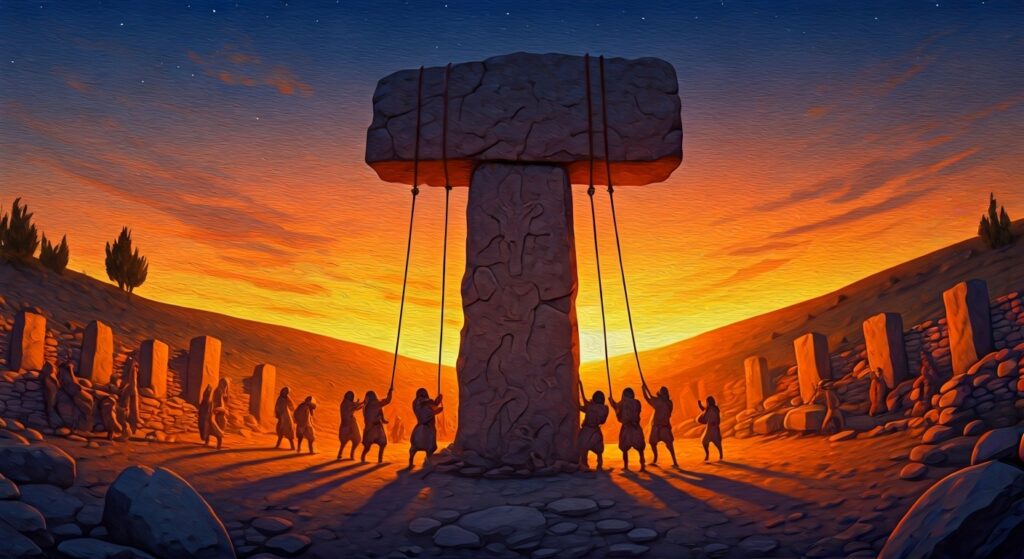
When you stand before the sheer scale of the site, its age becomes almost frightening. How did scattered bands of semi-nomadic hunter-gatherers, armed with nothing but stone tools and their bare hands, pull off a masterclass in monumental engineering?
The Faceless Watchers
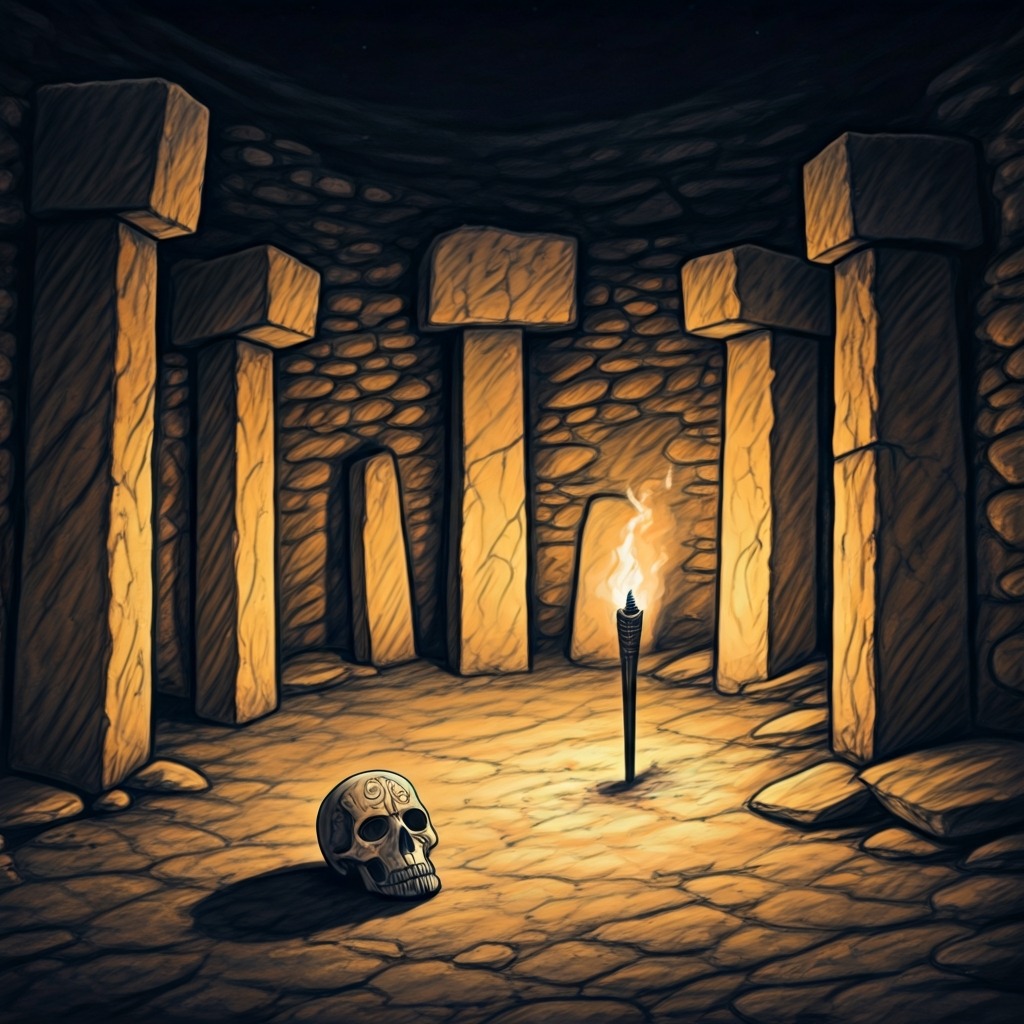
At the center of Göbekli Tepe lie several massive circular and oval enclosures, some stretching up to 30 meters across. But it is what stands inside these rings that sends a shiver down the spine.
Rising from the earth are colossal, T-shaped limestone pillars. Some of these monoliths tower 18 feet tall and weigh up to 20 tons. They are not merely blank stones; they are canvases of the ancient mind, covered in intricate, high-relief carvings of wild, dangerous animals. Snarling boars, leaping foxes, scorpions, vultures, lions, and slithering snakes seem to writhe in the stone.
But the most unsettling detail is the shape of the pillars themselves. They are not just columns—they are abstract representations of humans. Carved into the sides of the stone, you can clearly make out long arms, hands with elongated fingers resting on bellies, and intricately detailed loincloths. They are faceless, silent giants, gathering in the dark to watch over a world we can barely comprehend.
First Came the Temple
The builders of Göbekli Tepe did not have farms. To construct this prehistoric cathedral, they had to feed a massive, exhausted workforce of stone-haulers using only what they could hunt and gather. Excavations have unearthed tens of thousands of wild animal bones—primarily gazelle, wild boar, and aurochs. This was not mere subsistence; these were massive, roaring feasts.
These feasts acted as the social glue that motivated scattered, diverse bands of hunter-gatherers to cooperate on a colossal scale. The desperate need to generate massive amounts of food for these sacred gatherings likely pushed humans toward domesticating wild cereals. As the site’s chief excavator, the late Klaus Schmidt, famously observed: First came the temple, then the city.
We didn’t settle down because we learned to farm. We learned to farm because we were driven by an overwhelming urge to gather, worship, and build.
Whispers of the Skull Cult
For years, the mystery of Göbekli Tepe was defined by its isolation. It was believed to be a purely ritualistic center—a lonely temple on a hill with no permanent inhabitants. But history rarely settles for the simplest answer.
Recent archaeological work has introduced a new, fascinating layer to the mystery. Digging deeper, teams have found evidence of domestic structures, rainwater harvesting systems, and the processing of wild cereals. Göbekli Tepe wasn’t just a remote sanctuary; it may have been a vibrant, year-round settlement where the sacred and the mundane were inextricably intertwined.
And then, there is the darker side of this ancient life. Archaeologists have uncovered fragments of modified human skulls at the site, pointing to the existence of a “skull cult.” This macabre practice, somewhat common in the early Neolithic Near East, involved either the deep veneration of ancestors or the grisly display of severed enemy heads.
Göbekli Tepe proves that the human mind was capable of profound abstract thought, monumental ambition, and complex social organization long before we ever planted a single seed. It whispers a thrilling, haunting truth from across the millennia: humanity has always been driven, first and foremost, by the desperate need to find meaning in the dark.