Forget the hooded figures of video games and the exaggerated myths of crazed, drugged killers. The true story of the Hashashin—the ancient order that gave us the word assassin—is infinitely more fascinating, ruthless, and brilliantly calculated than any fiction. They were not a cult of mindless murderers, but masters of a terrifyingly patient game of psychological warfare.
The Fortress Taken by Whispers
Our story begins in the late 11th century with a charismatic and brilliant strategist named Hassan-i Sabbah. Sabbah was a leader of the Nizari Isma’ili state, a minority Shi’a sect facing brutal persecution from the dominant, fiercely Sunni Seljuk Empire.
Sabbah was a pragmatist. He knew his small band of followers could never survive a conventional, open war against the massive Seljuk army. So, he changed the rules of engagement, pioneering a ruthless form of asymmetric warfare.
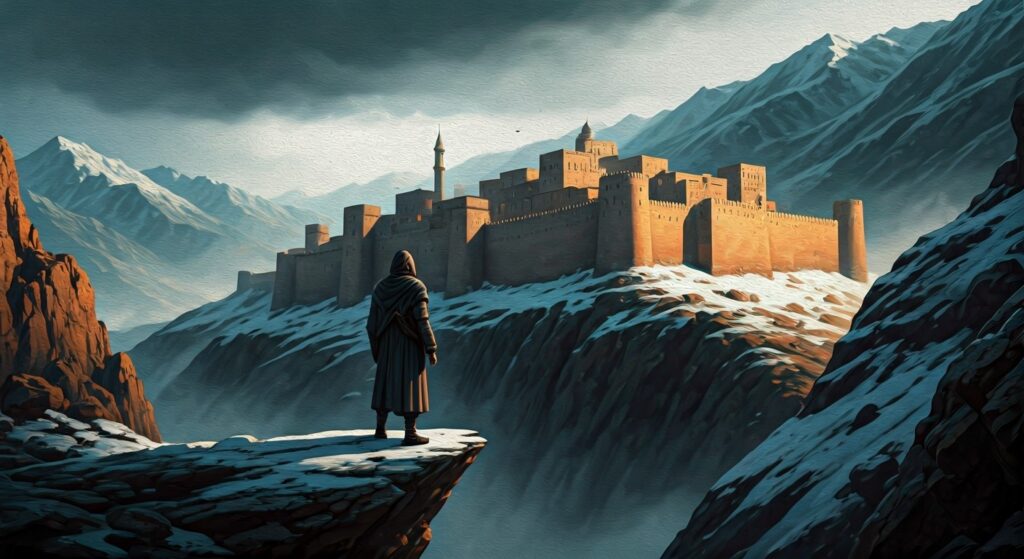
Around 1090 CE, Sabbah set his sights on Alamut Castle, a supposedly impenetrable fortress perched high in the jagged Alborz Mountains of modern-day Iran. But he didn’t bring siege engines or battering rams. Instead, he brought words. Through a meticulous, quiet campaign of infiltration and conversion, Sabbah flipped the castle’s garrison to his side. He walked through the gates and took the ultimate geopolitical high ground without spilling a single drop of blood.
Alamut became the nerve center of a sprawling network of mountain strongholds across Persia and Syria. The Hashashin had their stage; now, they needed their weapons.
The Ultimate Sleeper Cells
The order’s primary weapon was not an army, but a highly trained, deeply devoted covert operative known as a fida’i (plural: fida’iyin, meaning “those who sacrifice themselves”).
These agents were the ultimate sleeper cells. A fida’i would embed himself in an enemy court, sometimes waiting for years. They learned the local languages, adopted the customs, and memorized the daily routines of their targets. They became trusted guards, quiet servants, and invisible fixtures in the halls of power.
And then, when the time was perfectly right, they would strike.
Unlike modern assassinations, which usually prioritize a clean getaway, the Hashashin’s killings were highly theatrical. They almost always struck in crowded, public spaces—like royal courts or the middle of Friday prayers at the mosque—using a simple dagger. The goal wasn’t just to eliminate a political threat; it was to inflict maximum psychological terror on the enemy establishment.
Crucially, the fida’iyin rarely attempted to escape. They viewed their capture and inevitable execution as a glorious martyrdom. Their most famous early victim was the incredibly powerful Seljuk vizier Nizam al-Mulk, struck down in 1092. His sudden, violent death sent shockwaves through the empire, proving that no one—no matter how powerful or heavily guarded—was safe.
The Old Man of the Mountain
As the sect expanded into Syria, they built new fortresses, most notably at Masyaf, and ran headlong into a new chaotic variable: the Crusaders.
Under the leadership of Rashid ad-Din Sinan—immortalized in Western lore as the “Old Man of the Mountain”—the Syrian Hashashin played a breathtakingly complex geopolitical game. Sinan was a master manipulator, shifting alliances to maintain the balance of power. He would ally with Crusaders one day and Muslim leaders the next, assassinating anyone who threatened the survival of his people.
His agents famously assassinated Conrad of Montferrat, the de facto King of Jerusalem, in 1192, just days before his coronation. Even the legendary Muslim commander Saladin wasn’t immune; after the Hashashin made multiple terrifyingly close attempts on his life, Saladin wisely decided to leave them alone.
Gardens of Illusion and Stolen History
If you’ve heard of the Hashashin, you’ve likely heard the legend popularized by European chroniclers, most notably Marco Polo. The story goes that the Old Man of the Mountain drugged his followers with hashish and placed them in a lush, secret garden filled with earthly delights to simulate Islamic Paradise, thereby ensuring their blind, fanatic obedience.
It makes for a great story. It is also entirely made up.
Modern historians, such as Farhad Daftary, have thoroughly debunked this myth. Hassan-i Sabbah was a notoriously strict ascetic. He was so uncompromising in his religious adherence that he reportedly executed his own son for drinking wine. The use of intoxicating drugs like hashish would have been strictly forbidden.
The truth behind the name is much more grounded in political mudslinging. The term hashashiyyin was a derogatory epithet used by their Sunni Muslim enemies. It didn’t mean “hashish eaters”; it meant “rabble,” “outcasts,” or “people of loose morals.” When European Crusaders heard the local insults, they misunderstood the context, and a centuries-long myth was born.
The Storm from the East
The downfall of the Hashashin didn’t come from the Seljuks they defied or the Crusaders they manipulated. It came from a force that couldn’t be intimidated by a dagger in the dark: the Mongol Empire.
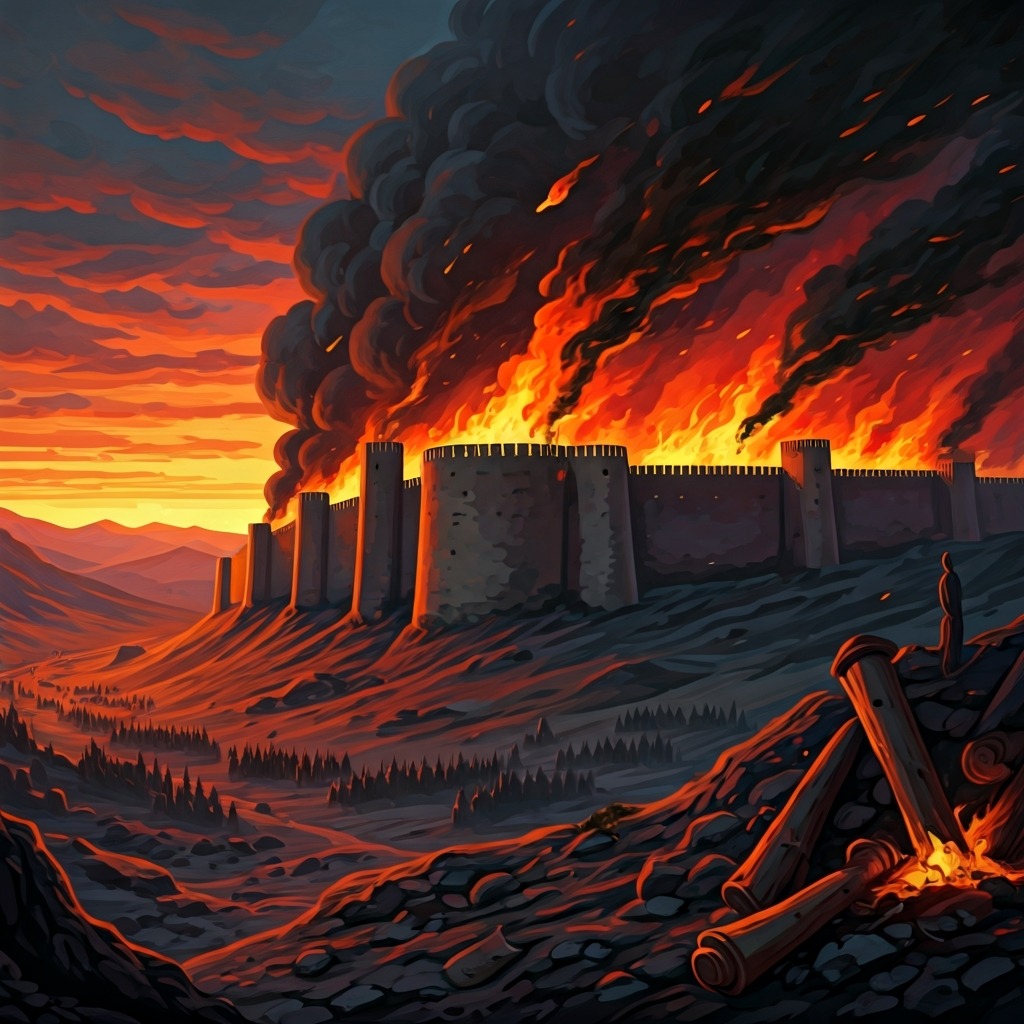
In 1256, Hulagu Khan swept through the region. Recognizing the strategic threat posed by this network of impenetrable fortresses, he besieged and utterly destroyed Alamut Castle. In a devastating blow to history, the Mongols burned Alamut’s legendary library, wiping out the vast majority of the sect’s own historical records and leaving their story to be told primarily by their enemies.
By 1273, the Mamluk Sultan Baibars had systematically dismantled the remaining Syrian strongholds, bringing the era of the Hashashin to a close.
The Hashashin were not a cult of crazed, drugged-up killers. They were a pragmatic, highly disciplined religious minority who looked at a deeply hostile geopolitical landscape and invented a new, terrifying way to survive. And they did it so well that, nearly a thousand years later, we still use their name every time a shadow falls across the halls of power.