Every morning, millions of people perform a ritual that would have terrified our ancestors: they casually press a piece of plastic directly onto their eyeballs. Today, contact lenses are a painless, invisible miracle. But the journey to that breathable little disc is a nightmare of agonizing pain, temporary blindness, and desperate measures. It is a story of mad science, glorious accidents, and a rogue chemist who changed the world using a bicycle part and a children’s toy.
A Madman’s Sketch in a Renaissance Notebook
The obsession with altering human vision didn’t begin in a sterile modern laboratory. It started in 1508, inside the brilliant, restless mind of Leonardo da Vinci. In his Codex of the Eye, da Vinci sketched a bizarre theory: human vision could be corrected by submerging the open eye in a bowl of water. It was wildly impractical, but the physics were flawless.
Over a century later, in 1636, René Descartes pushed the envelope further, proposing a liquid-filled glass tube pressed directly against the cornea. It was a genius concept on paper, but physically impossible to blink. For centuries, the idea of a wearable lens lay dormant, waiting for someone brave—or crazy—enough to build it.
The Agony of Glass and the Cocaine Solution
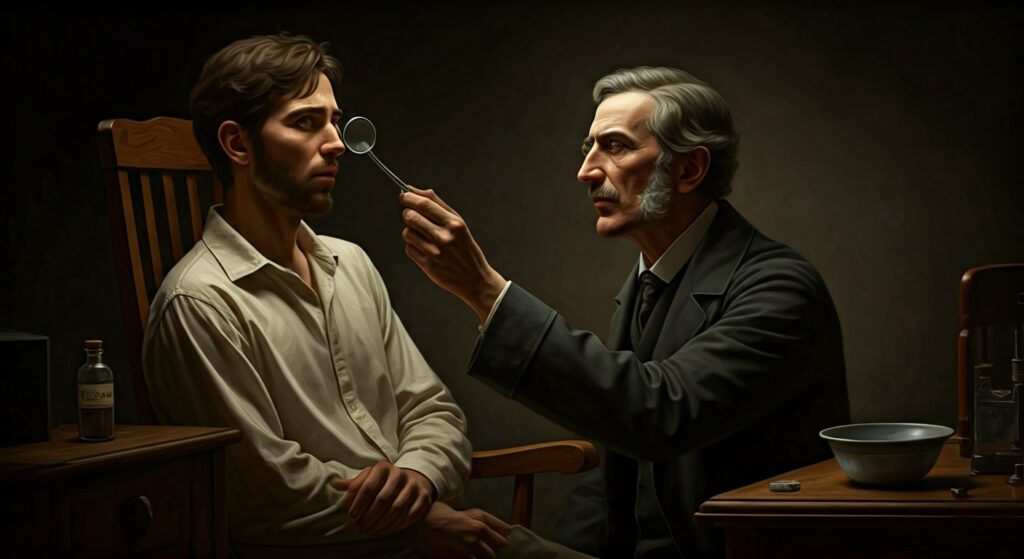
By 1888, the wait was over. German ophthalmologist Adolf Gaston Eugen Fick, alongside a handful of daring contemporaries, finally brought Descartes’ terrifying concept to life. They successfully constructed the world’s first wearable contact lenses. There was just one horrifying catch: they were made of heavy, blown glass.
These early devices, known as “scleral shells,” didn’t just cover the iris. They blanketed the entire front of the eyeball, trapping the sensitive cornea beneath a thick, unyielding glass dome. Because glass is entirely impermeable to oxygen, the eye was instantly suffocated. This condition, corneal hypoxia, triggered rapid, excruciating pain. Within hours, the wearer’s vision would cloud over completely—a terrifying bout of temporary blindness known as “Sattler’s veil.”
To endure this medieval torture, patients resorted to extreme measures. The insertion process was so agonizing that wearers frequently relied on cocaine eye drops just to numb their eyes enough to tolerate the glass. Even then, the lenses could only be worn for short, terrifying intervals.
The Clumsy Mistake That Changed Everything
For decades, the contact lens remained an expensive, painful medical novelty. Even when lightweight plastics were introduced in the 1930s, the lenses remained massive, eye-choking shells. The true breakthrough didn’t come from a calculated clinical trial. It came from a glorious, clumsy mistake.
In 1948, a California optician named Kevin Tuohy was sanding down a plastic scleral lens when he accidentally chipped it. Instead of tossing the ruined, shrunken piece of plastic into the trash, Tuohy paused. A radical thought struck him: What if the lens didn’t need to cover the entire eye?
Tuohy realized that a smaller lens, covering only the cornea, would naturally float on the eye’s layer of natural tears. With every blink, fresh tears would circulate beneath the plastic, allowing the eye to finally “breathe.” This accidental discovery drastically reduced the physical footprint of the lens, sending wear times skyrocketing from agonizing minutes to comfortable hours.
A Bicycle Dynamo, a Toy, and a Medical Marvel
Tuohy’s hard plastic lenses were a massive leap forward, but they still felt like having a permanent eyelash trapped in your eye. The modern miracle of the soft, comfortable contact lens required one final act of rogue genius.
Enter Otto Wichterle, a Czech chemist operating in the late 1950s. Wichterle had invented hydrogel, a revolutionary water-absorbing plastic. He knew it was the perfect material for a contact lens, but the technology to manufacture it simply didn’t exist.
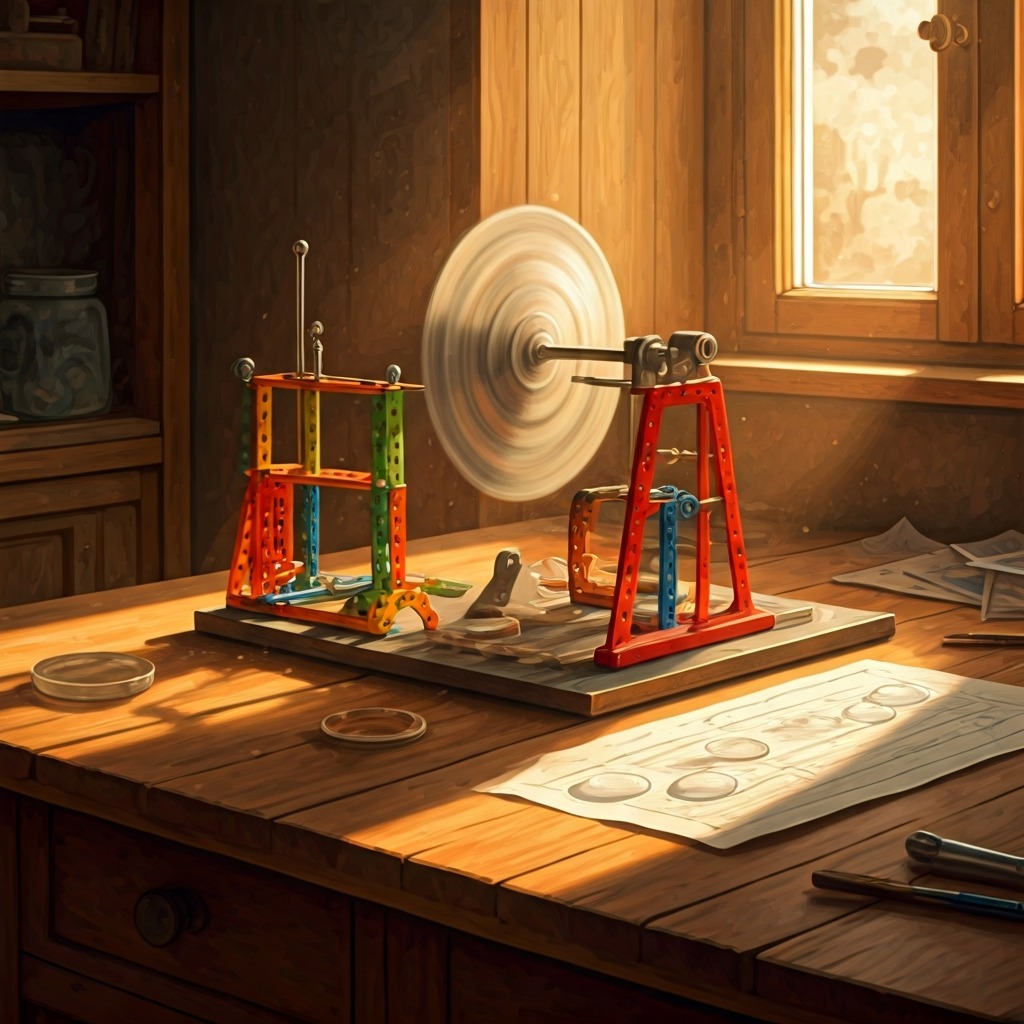
Undeterred, Wichterle retreated to his home. Sitting at his kitchen table, he built a rudimentary spin-casting machine to mold the hydrogel. His materials? A children’s metal building set called Merkur and a dynamo salvaged from a bicycle.
As the makeshift contraption whirred to life, spinning the liquid hydrogel into perfectly shaped, soft, breathable discs, Wichterle successfully manufactured the world’s first soft contact lenses.
From da Vinci’s bowl of water to cocaine-numbed glass eyes, it took centuries of pain and bizarre experimentation to perfect human vision. But ultimately, it was a rogue chemist in his kitchen with some bicycle parts and a kid’s toy who paved the way for the daily-wear lenses used by millions today.