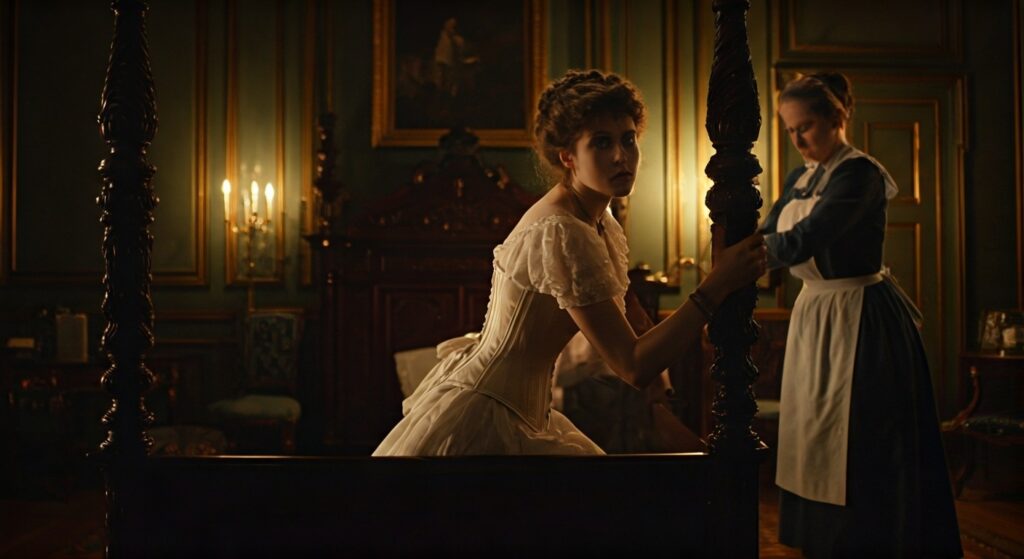
Picture the scene: a young, gasping aristocratic woman grips a mahogany bedpost. Her maid violently yanks the laces of her corset, restricting her breath until she inevitably faints into the arms of a brooding duke. For decades, pop culture has sold us a compelling narrative: the corset was a patriarchal torture device, a gilded cage designed to subjugate women and crush their internal organs.
There is just one problem. Almost everything we think we know about this infamous garment is a complete fabrication.
The Architectural Marvel of the Aristocracy
To uncover the truth, we must strip away centuries of sensationalism. While precursors to the corset existed as far back as the ancient Minoan civilization, the garment we recognize truly emerged in the 16th century. Back then, they weren’t even called corsets. They were known as a “pair of bodies,” and later, simply “stays.”
If you examine surviving garments from this era, a shocking reality emerges: they were never designed to cinch the waist into a microscopic hourglass. Instead, the goal was to mold the torso into a rigid, conical shape. Constructed from layers of heavily stiffened linen and reinforced with paste, reed, and eventually whalebone, these stays were architectural marvels. They provided a completely smooth foundation so that the incredibly heavy, jewel-encrusted gowns of the era wouldn’t wrinkle or sag. More importantly, they provided vital bust support and enforced the upright, shoulders-back posture that was the absolute hallmark of aristocratic decorum.
The Secret Weapon of the Working Class
Here is where the mystery deepens. If stays were merely vanity pieces for wealthy women with fainting couches, why did milkmaids, tavern keepers, and farmers wear them, too?
By the 18th century, stays were worn by women across the entire socioeconomic spectrum. While the aristocracy wore heavily boned, silk-embroidered versions, working-class women wore highly practical, front-lacing stays made of durable linen or leather. For a woman doing grueling physical labor, stays were not a prison. They functioned exactly like a modern ergonomic back brace.
Women in this era wore heavy wool skirts and multiple petticoats tied tightly around their waists. Without stays, those heavy strings would dig painfully into their skin. The rigid structure of the stays distributed the tremendous weight of their clothing evenly across the torso, protecting their lower backs while they scrubbed floors, churned butter, or hauled water. Far from an instrument of oppression, the corset was a brilliant piece of wearable technology.
Missing Ribs and the Victorian Moral Panic
So, how did the corset become the ultimate villain of women’s history? Enter the 19th century, the era of the Victorian hourglass silhouette—and the birth of the tabloid moral panic.
In 1828, a seemingly innocent technological advancement changed everything: the invention of the metal eyelet. Before this, pulling laces too tight would simply tear the fabric of the corset. Metal eyelets allowed the laces to be pulled tighter than ever before.
Suddenly, the press became obsessed with “tight-lacing,” the practice of cinching the waist to extreme, unnatural proportions. Doctors wrote furious treatises blaming corsets for everything from hysteria to tuberculosis. Urban legends ran wild, including the still-repeated myth that women routinely had their lower ribs surgically removed to achieve a smaller waist. This claim is entirely fabricated. Surgery in the 19th century was a horrific, un-anesthetized gamble with gangrene; absolutely no one was having elective rib removals for fashion.
The truth is that extreme tight-lacing was a fringe fetish practice—the Victorian equivalent of extreme body modification. The vast majority of women wore their corsets comfortably, reducing their waists by only an inch or two. For the everyday Victorian woman, the corset felt much like a modern underwire bra or a snug pair of shapewear.
A Medical Betrayal and the Battleships That Killed the Corset
The irony of the corset’s history peaks at the turn of the 20th century with the introduction of the “health corset,” or the S-bend silhouette. Designed by medical professionals who claimed it would relieve pressure on the abdomen, this new corset forced a woman’s hips backward and her bust forward. It created a bizarre, pigeon-breasted look that actually caused far more severe back strain than the Victorian corsets ever did.
But the corset’s days were numbered. As the 1920s approached, the cultural desire for a boyish, active silhouette led to the rise of elastic girdles and the modern brassiere. However, the final nail in the corset’s coffin wasn’t just changing tastes—it was global warfare.
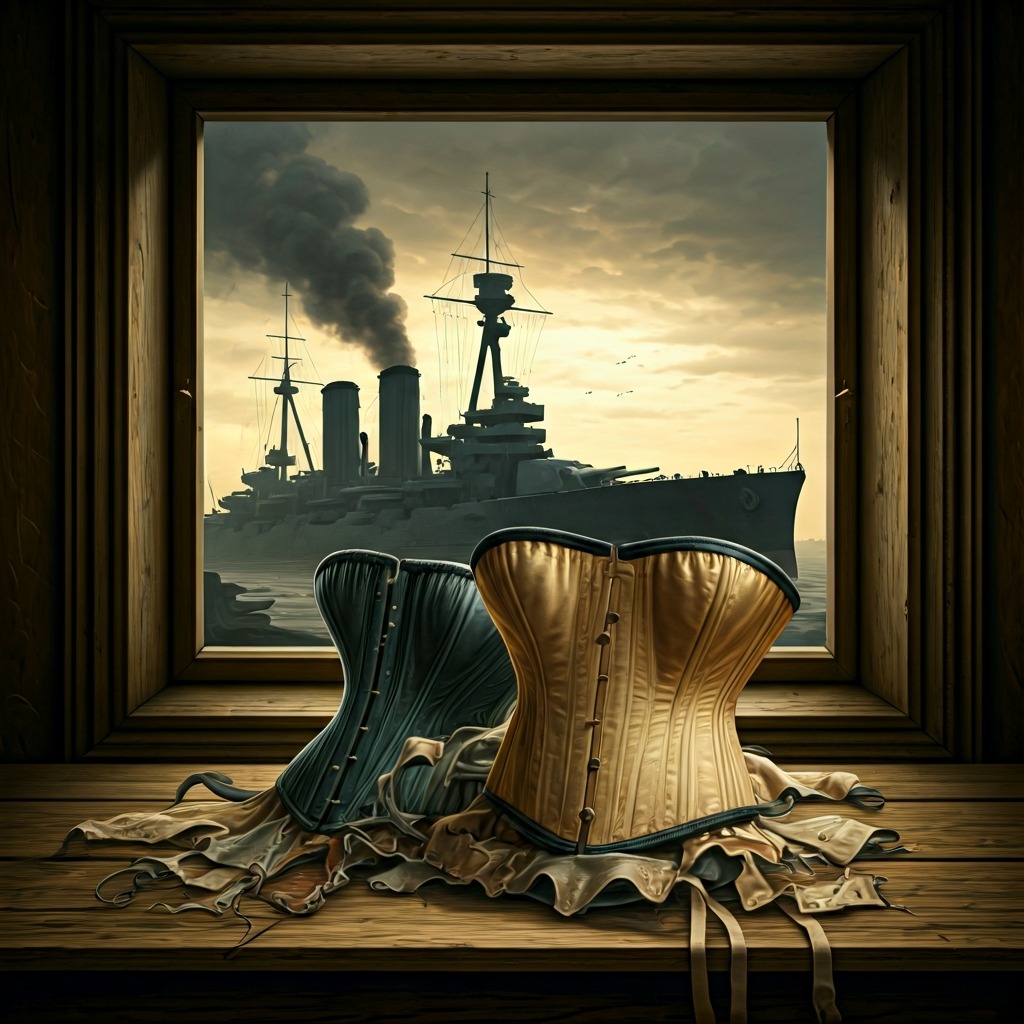
During World War I, the United States faced a massive metal shortage. In 1917, the U.S. War Industries Board officially asked American women to stop buying corsets. Women gladly complied, and the move freed up a staggering 28,000 tons of steel—enough to build two entire battleships. The rigid corset never truly returned.
When we look back at the history of the corset, it is time we stop viewing the women of the past as helpless victims of their own wardrobes. They were not foolish, and they were not passive. They actively engaged with, adapted, and utilized the corset as a tool for physical support, respectability, and survival. The next time a period drama heroine gasps for air, you’ll know the real history—and it is a far more empowering story.