High in the Andes Mountains, the air grows dangerously thin. At 15,000 feet, the landscape is a jagged, unforgiving expanse of barren rock, plagued by sudden frosts and scorching solar radiation. By all logic, this environment should have been a death sentence for human civilization.
Yet, it was here that the Incan Empire built an absolute juggernaut. They fed massive armies, constructed dizzying suspension bridges, and erected monumental stone cities across some of the most treacherous terrain on Earth.
How did they conquer a landscape that promised only starvation? The secret to their sweeping expansion wasn’t forged in gold or sharpened into steel. It was a weapon buried deep in the freezing dirt.
The Mystery at 15,000 Feet
To understand the unstoppable rise of the Incas, you have to look back millennia before their empire even existed. Between 8000 and 5000 BC, near the icy waters of Lake Titicaca, early Andean peoples achieved a quiet agricultural miracle: the domestication of the wild potato.
But it was the Incas who transformed this humble tuber into an imperial science.
Farming in the brutal extremes of the Andes meant battling arid soils and deep freezes that could wipe out a harvest overnight. To survive, the Incas practiced a ruthless, ingenious form of selective breeding. They didn’t just plant a crop and pray to the sun god; they engineered a staggering genetic arsenal. By breeding specific potatoes for highly distinct microclimates, they created strains that could resist local pests, survive sub-zero temperatures, and thrive in rocky crevices.
Today, the Andes boast over 4,000 native potato varieties. This mind-boggling genetic diversity was the ultimate insurance policy. If a sudden blight or climate anomaly wiped out one strain, thousands of others survived. The empire’s food supply was practically bulletproof.
Alchemy of the Frost
But growing the food was only half the battle. In a world devoid of electricity, refrigerators, or chemical preservatives, how do you stockpile enough calories to feed a sprawling empire?
The Incas answered this with a prehistoric innovation that borders on alchemy. They invented a freeze-drying process to create a nearly indestructible staple known as chuño.
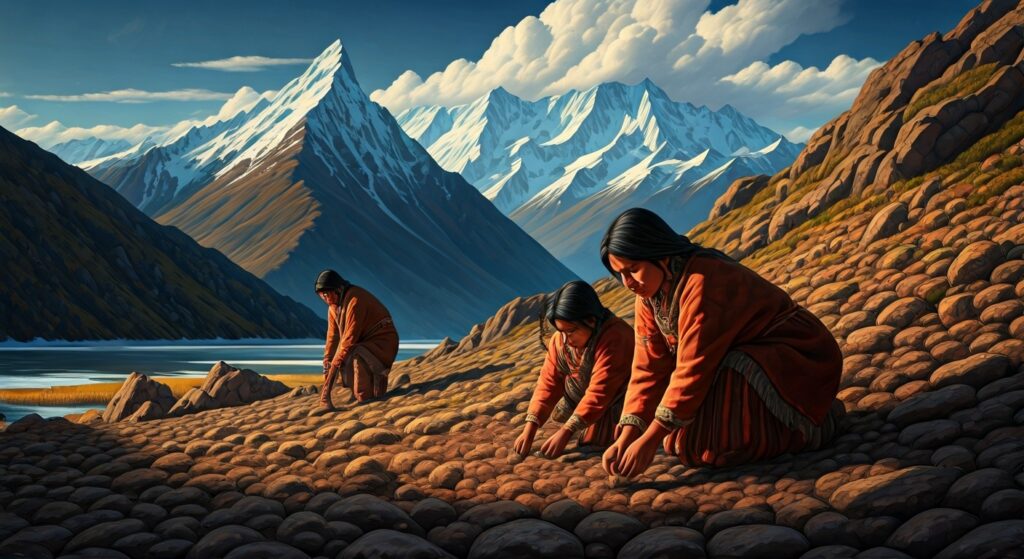
The brilliance of chuño lay in weaponizing the harsh environment itself. The high Andes are defined by dramatic temperature shifts—blistering sun during the day, and bone-chilling freezes at night. During the winter harvest, Incan families spread their potatoes across the frozen earth, leaving them completely exposed to the night air.
When the intense, high-altitude sun emerged the next morning, the frozen potatoes thawed. Then came the grueling physical labor. Families rhythmically trampled the thawed potatoes with their bare feet, squeezing out the bitter water and separating the skins. They repeated this punishing cycle of freezing, thawing, and crushing over several days until the potatoes were entirely dehydrated.
The resulting chuño was incredibly lightweight, highly nutritious, and possessed a shelf life that defies logic. It could be stored for up to ten years—sometimes much longer—without ever spoiling.
The Caloric Engine of Conquest
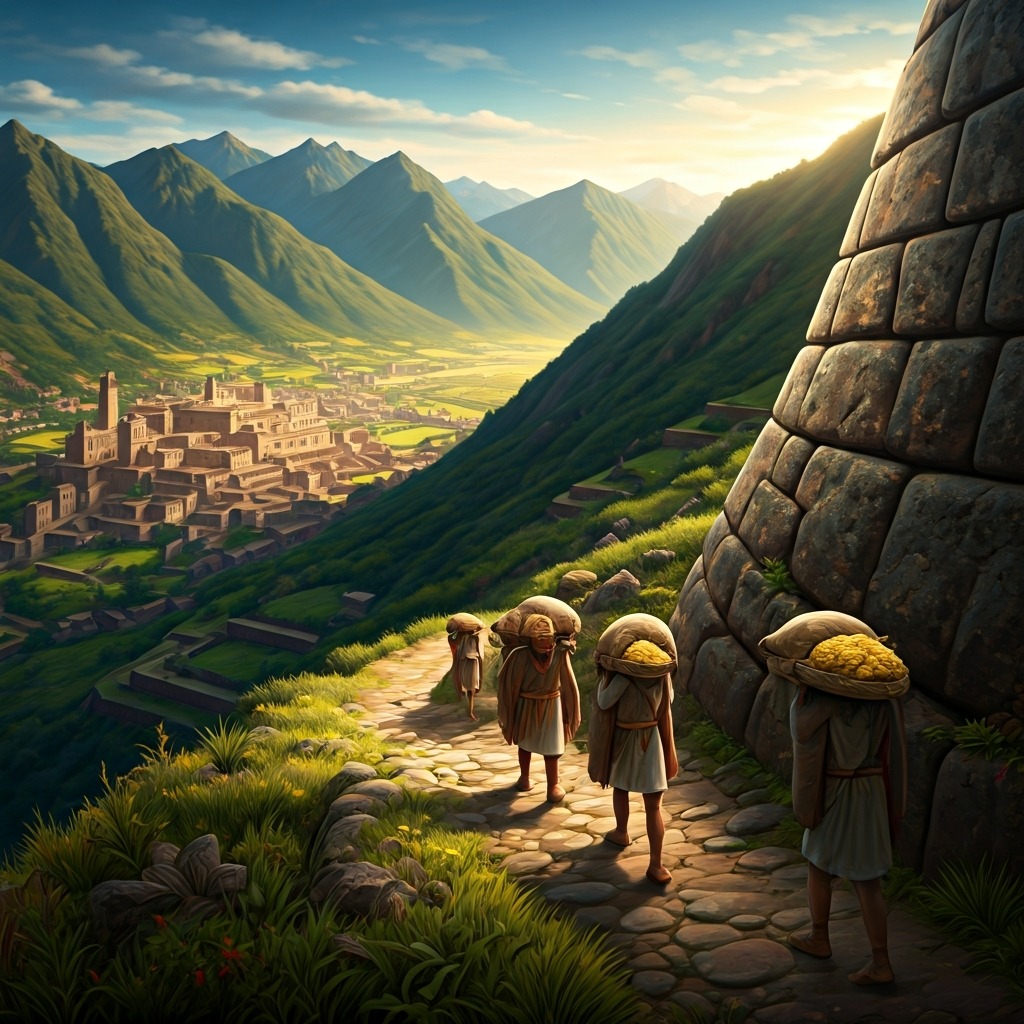
Chuño became the caloric engine of the Incan war machine. Because it was so light and durable, it could be easily transported across the empire’s vast, winding road network. The state stockpiled this superfood in thousands of massive, government-run storehouses known as qullqas.
This endless reserve of energy served vital imperial purposes. When the Incas launched extensive military campaigns, it was chuño that marched with their armies, feeding soldiers in barren, hostile territories. When the state demanded mandatory public service—a labor system known as the mit’a—it was chuño that fueled the workers hauling massive stones to build their monumental cities. And when regional famines struck, the qullqas were thrown open, preventing mass starvation.
Without the meticulous genetic engineering of the potato and the back-breaking invention of chuño, the Incas could never have sustained their rapid, sweeping conquest. They looked at a frozen wasteland and engineered a way to conquer the world.
So, the next time you look at a potato, give it the respect it deserves. You aren’t just looking at a side dish—you’re looking at the indestructible engine of an empire.