The Morning Minefield
Before 1919, preparing a simple piece of toast was a high-stakes game of thermal roulette. Early electric toasters were little more than exposed wire and raw voltage. They existed only thanks to a 1905 breakthrough—fire-resistant Nichrome wire—which allowed electrical elements to glow red-hot without melting into a puddle of slag. But these primitive contraptions lacked a crucial feature: an off switch.
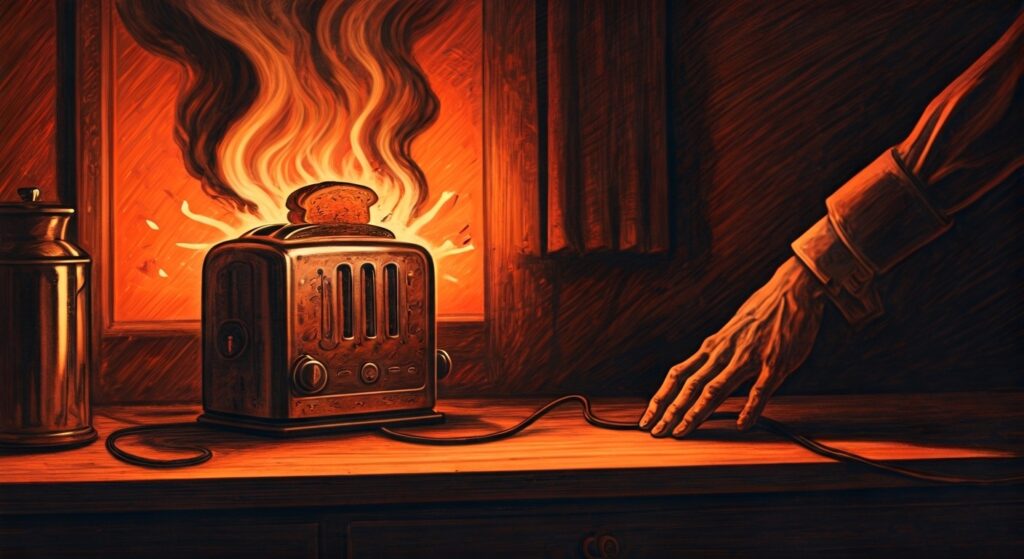
Toasting bread required the vigilance of a sentry. You had to watch the slice intently, manually flip it to brown the reverse side, and physically yank the plug from the wall at the precise nanosecond before total incineration. A single blink or a momentary distraction didn’t just ruin breakfast; it threatened to burn the house down.
The Cafeteria Crisis
During the height of World War I, this culinary danger reached a boiling point in a manufacturing plant cafeteria in Stillwater, Minnesota. Charles Strite, a master mechanic at the plant, was a man who demanded precision. Yet, day after day, he sat down to a meal that offended his sensibilities: pitch-black, rock-hard charcoal masquerading as bread.
The cafeteria cooks were overwhelmed. Juggling a dozen tasks to feed a massive wartime workforce, they simply couldn’t stand guard over the manual toasters. The bread burned, the smoke billowed, and Strite grew increasingly infuriated.
Strite recognized a fundamental engineering flaw: relying on a distracted human to monitor a red-hot electrical element was a recipe for disaster. He resolved to build a machine that would eliminate the human element entirely.
The Clockwork Savior
Retreating to his workshop, Strite dismantled the very concept of the toaster. He envisioned a completely autonomous system, a mechanical marvel that could think for itself.
His breakthrough was a masterpiece of mechanical synergy. Strite integrated two revolutionary components into a sleek metal chassis: a variable clockwork timer and a spring-loaded basket. The brilliance lay in its simplicity. A user could set the timer based on their desired level of browning. Once the clockwork ticked down to zero, the machine executed a flawless, simultaneous two-step maneuver: it killed the power to the heating element and released the spring catch.
Pop.
Perfectly browned toast launched into the air, safe from the searing heat. No watching, no turning, no frantic unplugging. Strite had successfully automated breakfast. He filed for his groundbreaking patent, which was officially granted as U.S. Patent No. 1,394,450 on October 18, 1921.
The Countertop Revolution
Initially, Strite underestimated the magnitude of his own invention. Assuming this complex contraption was strictly for commercial use, he formed the Waters-Genter Company to supply restaurants.
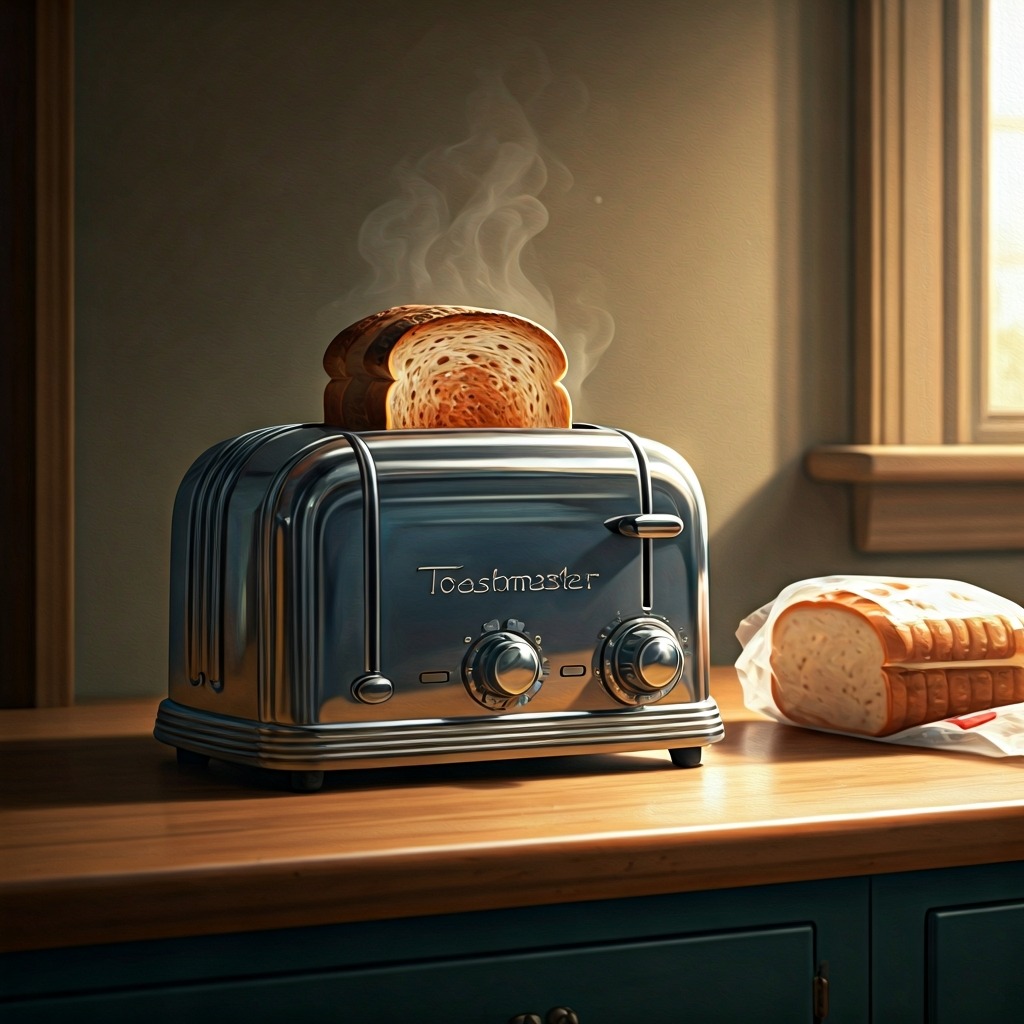
But the sheer genius of the pop-up mechanism could not be confined to industrial kitchens. The consumer market was a sleeping giant, and in 1926, Strite’s company woke it up. They released the Toastmaster 1-A-1, the world’s first automated, pop-up toaster designed specifically for the home. Marketed with the bold promise of “Perfect toast every time,” it eradicated the danger and drudgery of the morning meal.
Yet, the toaster still faced one final, fatal vulnerability.
The Ultimate Culinary Crossover
The Toastmaster was an engineering marvel, but it was at the mercy of human knife skills. People were still hacking away at loaves by hand, producing jagged, uneven slices that frequently jammed the beautiful new machine.
Then came the greatest technological team-up in breakfast history. In 1928, Otto Rohwedder invented the first commercial bread-slicing machine. By 1930, pre-sliced loaves had swept across America.
It was a match made in heaven. Uniform, perfectly parallel slices of bread slid effortlessly into the standardized slots of Strite’s Toastmaster. Together, sliced bread and the pop-up toaster didn’t just change breakfast—they revolutionized the American morning, transforming a hazardous chore into a seamless, modern ritual. Charles Strite didn’t just invent an appliance; he pioneered the automation of domestic life. And he did it all because he refused to eat burnt bread.