The late 17th century in France was a world of powdered wigs, suffocating corsets, and rigid rules. It was an era when a woman’s life was charted from birth to death, confined to the drawing room, the convent, or the nursery. And then there was Julie d’Aubigny.
To call her a rebel is a catastrophic understatement. In a single, breathtakingly brief lifetime, she executed a flawless convent heist, became a celebrated opera star, and won a three-on-one sword fight in the dead of night. Better known to history as La Maupin, Julie did not just break the rules of her time—she skewered them.
Raised Among the Blades
Born around 1670, Julie was the daughter of Gaston d’Aubigny, secretary to the Master of the Horse for King Louis XIV. Growing up surrounded by the rough-and-tumble pages of the royal court, she received an education virtually unheard of for a young girl. She didn’t just learn to read; she learned to ride, to gamble, and to master the rapier.
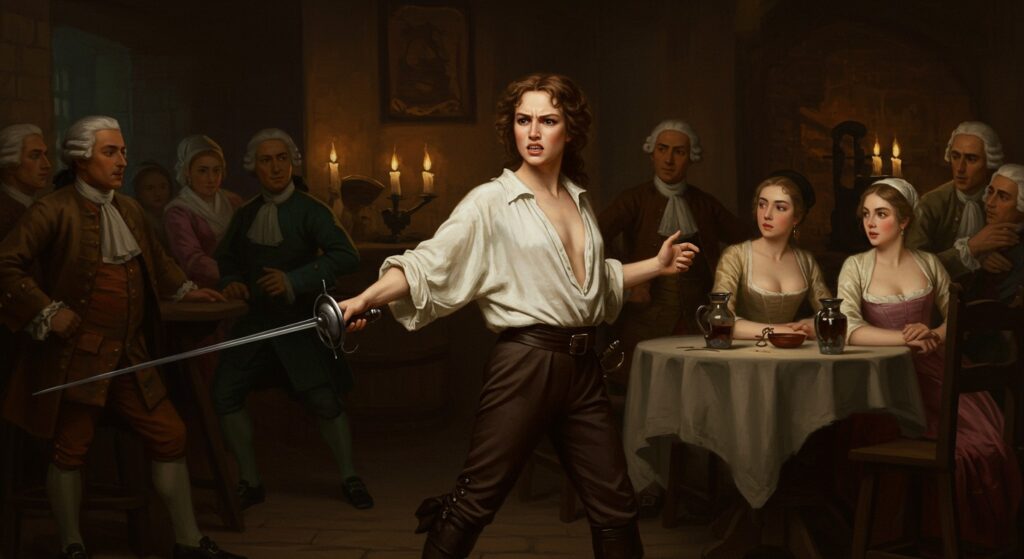
To secure her social standing, she was married off in her early teens to a clerk named Sieur de Maupin. The ink on the marriage contract was barely dry before her new husband was dispatched to a provincial administrative post. Utterly uninterested in a quiet country life, Julie stayed in Paris. She soon eloped with an assistant fencing master, fleeing the authorities and surviving by giving fencing exhibitions in taverns. Dressed in men’s clothing, she effortlessly bested male challengers who dared to test her blade.
Ashes in Avignon
The most cinematic—and dangerous—chapter of her youth began with a scandalous romance. Julie fell deeply in love with a young noblewoman. The girl’s parents, horrified by the affair, forcibly removed their daughter and locked her away in an isolated convent in Avignon.
For most, this would be the tragic end of a forbidden romance. For Julie, it was merely a tactical obstacle.
Hatching a plot that rivals any modern thriller, Julie traveled to Avignon, took holy orders, and infiltrated the convent as a novice nun. She patiently bided her time until an elderly nun passed away. In the dead of night, Julie stole the deceased nun’s body, placed it in her lover’s bed, and set the room ablaze. In the ensuing chaos, the two women slipped out into the darkness.
The lovers lived on the run for months before the young woman was eventually returned to her family. The authorities, however, were not forgiving. For the crimes of kidnapping, body snatching, and arson, the parliament of Aix sentenced Julie to death in absentia. Intriguingly, her disguise had been so convincing that the decree condemned her to be burned at the stake under the assumption she was a man.
The Prima Donna with a Rapier
Julie managed to secure a pardon from the King and pivoted to a completely different stage. Despite possessing an untrained voice, she had a rich, powerful contralto. In 1690, she debuted at the Paris Opéra under the name Mademoiselle Maupin.
She was an overnight sensation. Starring in major works by legendary composers, Julie captivated audiences with her intense stage presence, occasionally even performing in male roles. Her off-stage life was just as theatrical; she fiercely protected her colleagues, once severely beating a male singer who had harassed the chorus girls.
Blood on the Cobblestones
If Paris thought Julie had settled down, they were proven wrong in 1695 at a royal ball hosted by the King’s brother at the Palais-Royal.
Dressed impeccably in men’s clothing, Julie confidently approached a beautiful young noblewoman on the dance floor and kissed her. Three different noblemen, outraged by the perceived insult to their honor, challenged Julie to a duel.
She calmly accepted all three challenges. Stepping out into the cool night air, Julie drew her rapier and systematically defeated every single one of them in armed combat.
Because dueling was strictly outlawed in France, Julie was forced to flee to Brussels to escape the executioner’s block. Yet, her legend had grown so vast that King Louis XIV was highly entertained by the incident. He eventually pardoned her, reportedly persuaded by the clever legal loophole that his strict anti-dueling edicts applied only to men, not women.
A Quiet Curtain Call
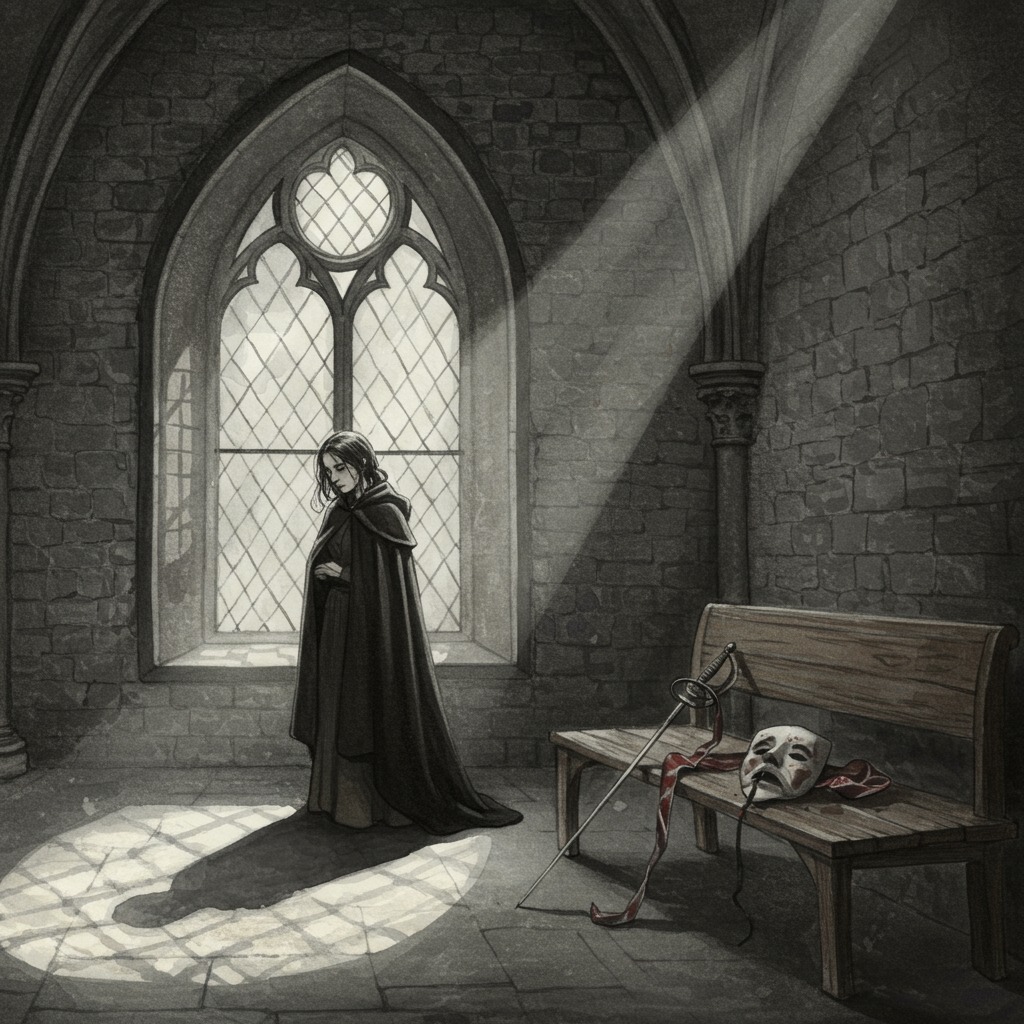
Behind the swashbuckling bravado, Julie’s later years were marked by a profound search for peace. She found a deep, stable love with Madame la Marquise de Florensac, celebrated as one of the most beautiful women in France. The two lived together happily until tragedy struck in 1705. When Florensac died of a sudden fever, Julie was utterly devastated.
Heartbroken, the great duelist and opera star retired from the stage. In a poignant echo of her youth, she entered a convent—this time, not for a heist, but for solace. She died there in 1707 at the tragically young age of 37.
Today, verifiable court records, her celebrated opera career, and her royal pardons leave no doubt: Julie d’Aubigny was a spectacularly real force of nature. She remains a mesmerizing historical anomaly, a pioneering icon who loved fiercely, fought brilliantly, and lived entirely on her own terms.