An Impossible Blueprint Buried in the Earth
Imagine an architect presenting a blueprint for a towering, multi-story cathedral. But instead of building it from the ground up, the crew is ordered to start at the roof and dig their way down into the solid earth. They would be called madmen. Yet, in the mountainous Amhara Region of Ethiopia, someone pulled off this exact, impossible feat.
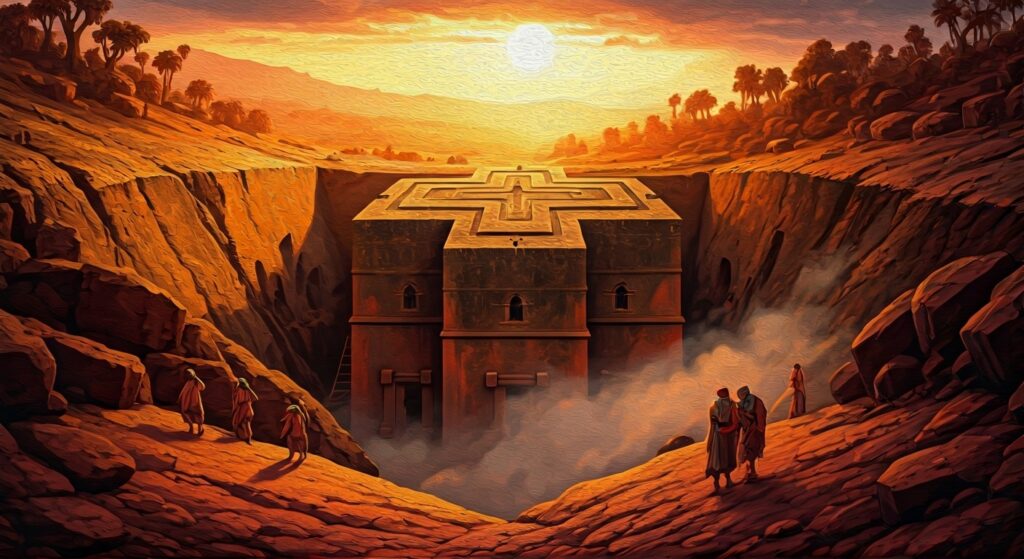
Welcome to Lalibela, home to 11 monolithic churches carved entirely out of solid red volcanic tuff. These aren’t buildings constructed from quarried blocks hauled across the desert. They are architectural magic tricks hidden below the earth—sculptures of epic proportions chiseled directly out of the bedrock. In the 12th and 13th centuries, artisans excavated massive trenches to isolate giant blocks of stone, then meticulously hollowed them out to create vaulted ceilings, columns, doors, and windows. The story behind this subterranean marvel is dripping with political intrigue, divine mystery, and ancient secrets.
The Fall of a Holy City and a King’s Audacious Gamble
To understand the why of Lalibela, you have to look at the geopolitical earthquake of the 12th century. In 1187, the capture of Jerusalem by Muslim forces under Saladin sent shockwaves through the Christian world. Suddenly, making the holy pilgrimage to the Middle East became an incredibly dangerous, sometimes fatal, endeavor for Ethiopian Orthodox Christians.
Enter King Gebre Mesqel Lalibela of the Zagwe dynasty.
King Lalibela needed a solution that was equal parts spiritual salvation and absolute power move. If his people couldn’t safely travel to Jerusalem, he would simply build a “New Jerusalem” on African soil. He didn’t just build churches; he terraformed a sacred geography. He even designated a carved trench as the “River Jordan,” perfectly dividing the churches into Northern and Eastern groups. It was a monumental gamble designed to cement his legacy and protect his people.
Defying the Deluge: A Subterranean Labyrinth
Building underground in the Ethiopian highlands presents a terrifying problem: the intense rainy season. If you carve a 40-foot-deep pit and put a church in it, you haven’t built a sanctuary—you’ve built a very ornate bathtub.
The mystery of how these structures survived centuries of torrential downpours lies in an engineering marvel that rivals the carving of the churches themselves. The builders designed a highly effective, invisible drainage system of trenches, sloped roofs, and artesian wells that still functions perfectly today.
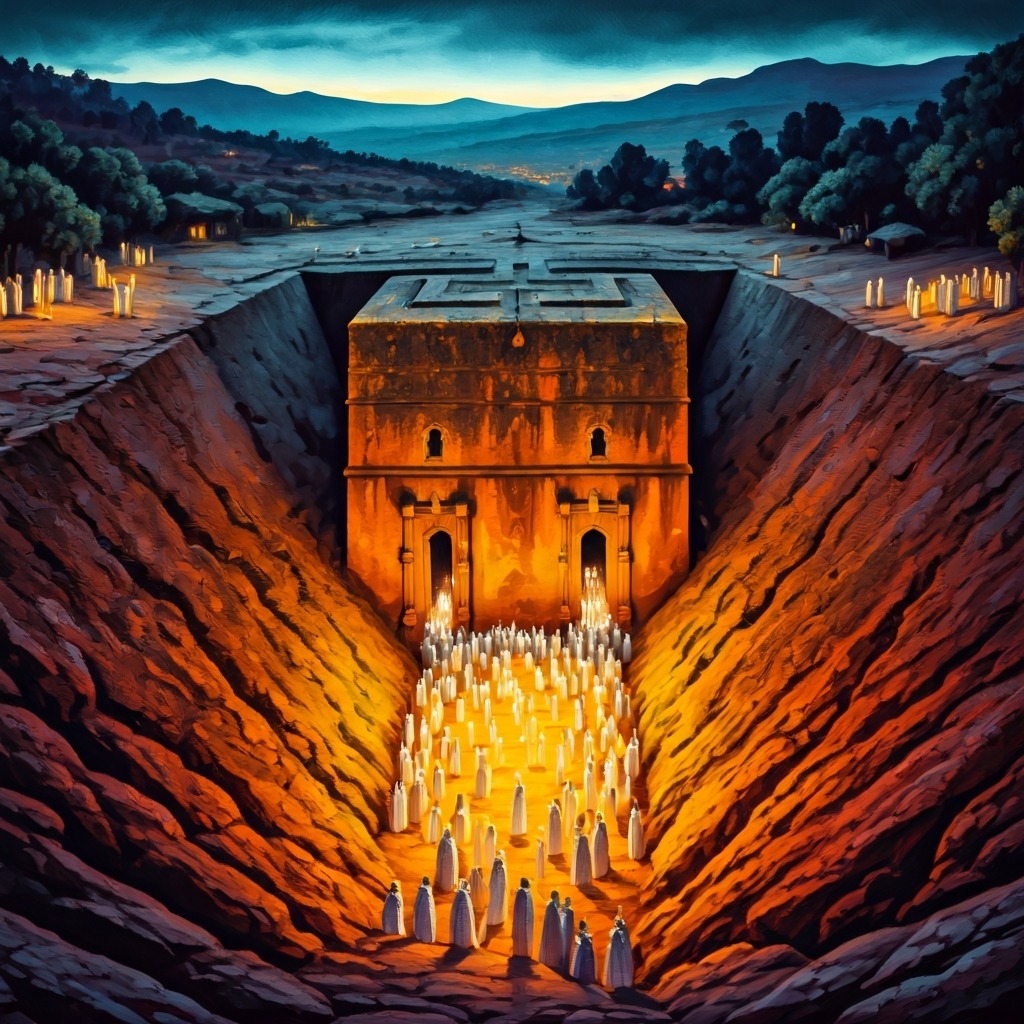
But the mystery deepens when you step into the shadows. The churches are connected by a labyrinthine network of subterranean tunnels and catacombs. Walking through them feels like navigating the underworld. At the end of one tunnel, you might find Biete Medhane Alem (House of the Savior of the World), an absolute behemoth that resembles a massive Greek temple and is widely considered the largest monolithic church in the world. Wander slightly apart from the main clusters, and the earth opens up to reveal Biete Giyorgis (Church of St. George), plunging 40 feet into the rock in the shape of a striking, perfect Greek cross.
The Midnight Shift: Men, Myths, or Angels?
Here is where the history gets wonderfully blurry. How long would it take to carve 11 intricate, multi-story buildings out of volcanic rock using only hand tools?
If you ask the Ethiopian Orthodox tradition, it took exactly 24 years. The legend claims that King Lalibela had some otherworldly contractors. While human laborers swung their chisels under the scorching daytime sun, an army of angels allegedly took over the night shift, carving the rock at impossible speeds while the mortals slept.
Modern historians and archaeologists, however, are locked in a heated debate over the true timeline. Some scholars look at the distinct, varied architectural styles across the 11 churches and argue that this complex couldn’t possibly be the work of a single king in a few decades. They whisper that the excavations might have begun centuries earlier, during the twilight of the Aksumite Empire. The juiciest historical theory? Some of these subterranean marvels may have originally been secular buildings or fortified palaces, only later expanded, hijacked, and consecrated as churches by King Lalibela to rewrite history.
The Heartbeat in the Stone
The most beautiful thing about Lalibela isn’t the volcanic rock, the subterranean tunnels, or the mystery of its origins. It is the fact that it isn’t a museum.
Unlike the ruins of ancient Greece or Rome, Lalibela is a living, breathing entity. For over 800 years, it has been a continuous, unbroken site of devotion. If you visit during the festival of Timkat (Epiphany), you won’t find quiet, empty ruins. You will find tens of thousands of white-robed pilgrims gathered around the sunken churches. You will hear the rhythmic chanting and smell the incense billowing out of the earth, just as it has for centuries.
The Zagwe dynasty may have faded into the history books, and the true identities of the midnight carvers—be they angels or ancient stonemasons—might remain buried in the dust. But the heartbeat of Lalibela is as loud as ever.