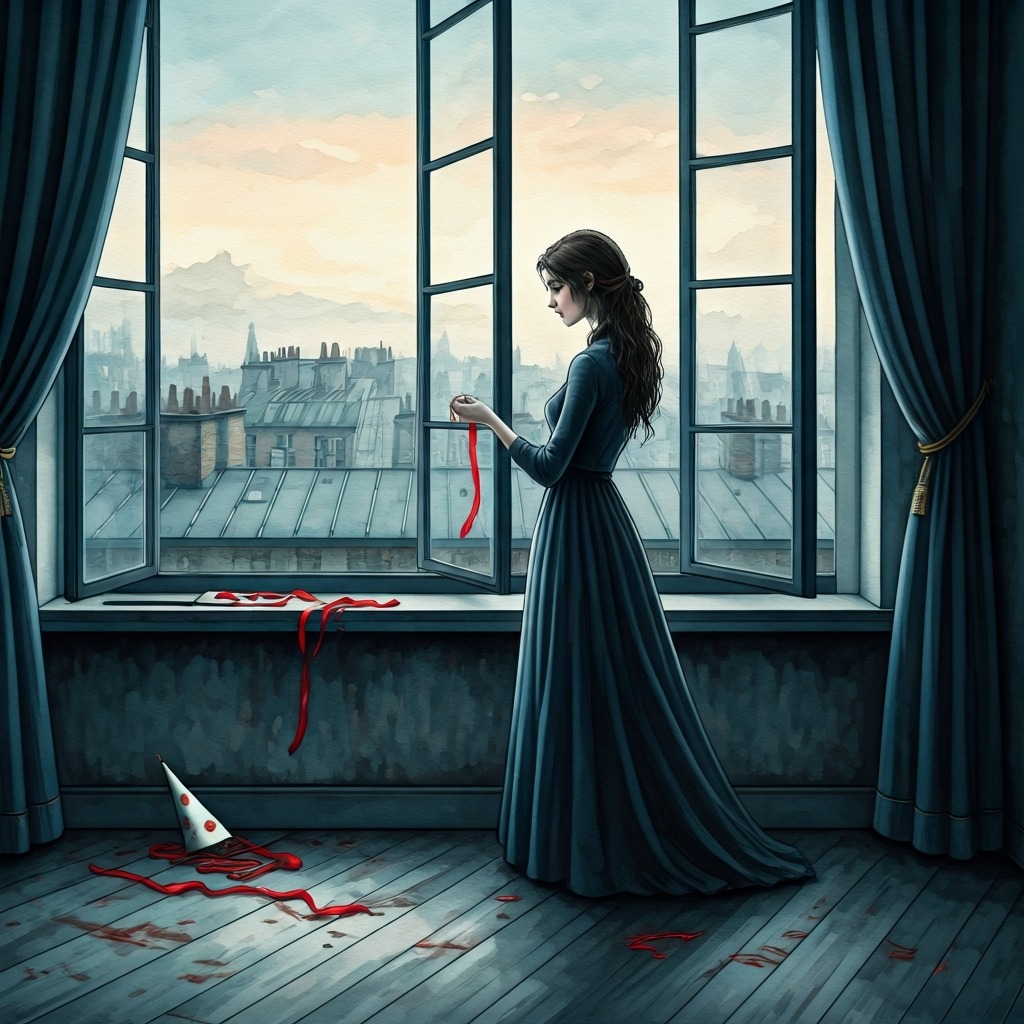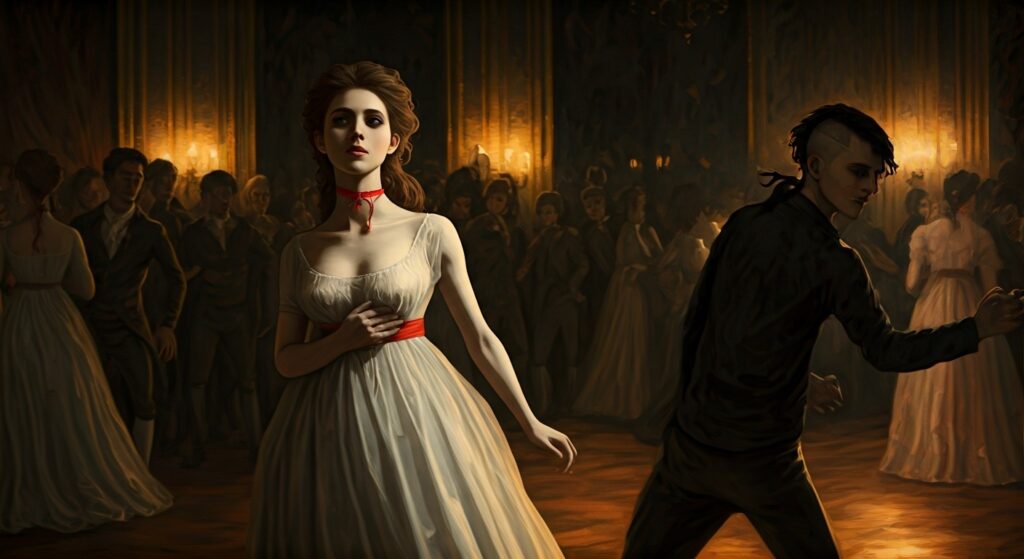
Imagine stepping into a dimly lit Parisian dance hall in 1795. The music is frantic, the air thick with sweat and perfume. The guests are young, wealthy, and dripping in sheer, clinging fabrics. But as you look closer, a chilling detail emerges: every woman in the room wears a single, thin red ribbon tied tightly around her bare neck. And the men? The backs of their heads are shaved completely bald.
This isn’t just a bizarre fashion statement. It is a desperate, macabre trauma response.
Welcome to the world of Les Incroyables et Merveilleuses—the surviving youth of the French Revolution who threw massive, underground raves and made decapitation the hottest trend of the season.
The Bloody Hangover of Paris
To understand the sheer absurdity of this subculture, you have to look at the nightmare they had just survived.
For years, Paris had been drowning in the Reign of Terror. Maximilien Robespierre’s regime was rigid, austere, and soaked in blood. Under his paranoid watch, thousands of aristocrats, moderates, and ordinary citizens were carted to the public squares and guillotined. One wrong word, one overly opulent dress, and you were taking a one-way ride to the executioner’s block.
But in July 1794, the Terror abruptly ended when Robespierre himself met the blade. Suddenly, the surviving youth of the upper-middle and aristocratic classes crept out of the shadows. They had spent their formative years watching their parents, siblings, and friends beheaded. Dripping in collective survivor’s guilt, they didn’t seek quiet reflection.
They sought absolute, unhinged hedonism.
The Original Edgelords of Men’s Fashion
The young men of this movement called themselves Les Incroyables (The Incredibles), and they dressed like fever dreams. If the revolutionaries had demanded modest, egalitarian clothing, the Incroyables rebelled by looking as aggressively grotesque and lavish as possible.
They roamed the streets in coats with absurdly oversized lapels, trousers so tight they left nothing to the imagination, and massive, chin-swallowing cravats. But their hair was where the true morbid genius lay. They styled their locks in oreilles de chien (dog ears)—long, unkempt, and floppy on the sides. The back, however, was shaved completely bare at the nape of the neck. This style, known as the coiffure à la victime, was a direct, chilling homage to the way executioners sheared the hair of the condemned so the guillotine blade could slice cleanly through flesh and bone.
They even altered their speech. Because the letter ‘R’ was the first letter of ‘Révolution’ and ‘Robespierre’, they flat-out refused to pronounce it. Adopting a deliberate lisp, they would strut through the Parisian streets exclaiming, “Ma pa’ole d’honneu’!” (My word of honor!).
But they weren’t just harmless fashion victims. They were violently anti-revolutionary, carrying heavy, knotted wooden cudgels they ironically dubbed their “executive power,” using them to beat up any remaining left-wing sympathizers they found in the alleyways.
Naked, Freezing, and Marvelous
If the men were grotesque, their female counterparts—Les Merveilleuses (The Marvelous Women)—were scandalous. Led by prominent, trend-setting socialites like Thérésa Tallien and the future Empress of France, Joséphine de Beauharnais, these women completely discarded the restrictive corsets and heavy silks of the past.
Instead, they embraced a hyper-sexualized, Greco-Roman aesthetic. They wore diaphanous, sheer gowns made of the thinnest muslin or linen. To make the fabric cling to their bodies like a second skin, they would intentionally dampen their dresses before going out. Paris in the winter is not forgiving, and this commitment to the aesthetic occasionally led to fatal cases of pneumonia, which the public grimly dubbed “muslin disease.”
They walked barefoot with toe rings or wore flat sandals, crowning their heads with extravagant blonde wigs. But the pièce de résistance—the most chilling accessory of all—was that single, thin red ribbon tied tightly around their bare necks. It was a stark, unmissable visual representation of the bloody slice of the guillotine.
They were wearing their trauma as jewelry.
A VIP List Written in Blood
The absolute climax of this bizarre subculture took place behind closed doors, in the underground dance halls of Paris. These were the Bals des Victimes (Victim Balls), and they had the most exclusive, macabre door policy in human history.
You couldn’t buy your way in. You couldn’t charm the bouncer. The only way to gain entry was to present official paperwork proving that you had lost a direct relative to the guillotine.
Inside, the atmosphere was a manic blend of grief, lust, and liberation. Attendees danced wildly into the early hours of the morning, purging their nightmares through motion. When a new guest arrived, they didn’t bow or curtsy. Instead, they offered the salut à la victime—a sharp, sudden dropping of the head to mimic a decapitated skull tumbling heavily into the executioner’s wicker basket.
It was dark comedy at its absolute peak, a way to look the very thing that had destroyed their families in the eye and laugh at it.
The Fade to Black
To the lower classes, the Incroyables and Merveilleuses were offensive, spoiled reactionaries flaunting their wealth. But looking back, it’s hard not to see them for what they truly were: a generation of traumatized kids trying to dance away the scent of blood.
The party couldn’t last forever. In 1799, Napoleon Bonaparte seized power. With his arrival came a swift return to military discipline, social order, and much more conservative moral standards. The sheer muslin was replaced by structured empire waists; the wild, shaved haircuts were traded for neat, classical curls.
The Incroyables and Merveilleuses vanished into the shadows of history. But for one brief, wild moment, they proved that sometimes, when the world is completely falling apart, the only thing left to do is put on a sheer dress, tie a red ribbon around your neck, and dance.