The Unstoppable Force Meets the Immovable Object
In the 16th century, the Spanish Empire was a global juggernaut. Armed with steel, gunpowder, and devastating pathogens, conquistadors swept across the Americas, toppling the mighty Aztec and Inca empires in a matter of years. Millions of citizens and massive standing armies fell with shocking speed. The Spanish war machine seemed invincible.
But in the dense, rugged forests of south-central Chile, that unstoppable force slammed headfirst into an immovable object: the Mapuche.
While other centralized empires collapsed overnight, the Mapuche successfully defended their sovereignty for over three centuries in a grueling, generations-spanning conflict known as the Arauco War. Their secret weapon wasn’t a magical technology or an impenetrable fortress. It was a social structure that turned the Spanish playbook against them.
The Hydra of the Andes
The golden rule of imperial conquest is simple: capture the capital, capture the king, and you win the war. The Spanish had decapitated centralized empires by doing exactly this. But the Mapuche didn’t play by those rules.
They lived in autonomous, kin-based communities. There was no single emperor to overthrow, no glittering capital to besiege. In times of peace, they were beautifully decentralized. But the moment a threat appeared, these disparate groups fluidly united under a democratically elected military leader known as a toqui (axe-bearer).
This made it impossible for the Spanish to deliver a single, decisive blow. Every time the conquistadors thought they had cut off the head of the snake, the Mapuche simply grew another one.
The Boy Who Memorized the Monster
The early years of the Arauco War were defined by a deadly game of espionage, orchestrated by a legendary toqui named Lautaro.
Captured by the Spanish as a teenager, Lautaro was forced to serve as a page to Pedro de Valdivia, the ruthless conqueror of Chile. For most, this would be a life of subjugation. For Lautaro, it was a masterclass in enemy tactics.
He didn’t just serve Valdivia; he studied him. Lautaro watched how the Spanish loaded their firearms, noting the agonizingly slow reload times. He observed their terrifying horses and realized a crucial flaw: the massive animals tired easily in Chile’s rugged terrain. Most importantly, he learned that the “god-like” Spaniards bled and died just like anyone else.
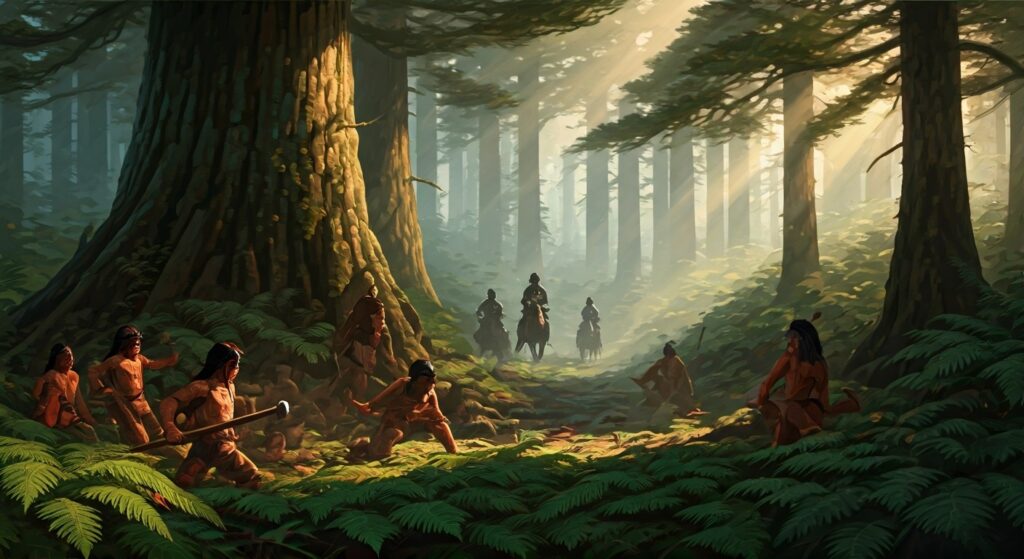
When the time was right, Lautaro escaped back to his people and revolutionized Mapuche warfare. He organized warriors into disciplined squadrons. Instead of charging all at once, he employed successive waves of fresh fighters to exhaust the heavily armored Spaniards. He used the dense Araucanía forests to neutralize the dreaded Spanish cavalry.
In 1553, Lautaro lured his former captor into a trap at the Battle of Tucapel. The Spanish forces were annihilated, and Pedro de Valdivia was killed. The boy forced to carry the conqueror’s weapons had become the architect of his demise.
The Man With Knives For Hands
If Lautaro provided the tactical genius, another warrior provided the sheer, terrifying psychological resilience that would define the Mapuche resistance. Enter Galvarino.
During a brutal clash, Galvarino was captured. To send a horrific warning to other rebels, the Spanish amputated both of his hands and sent him back to his people. The conquistadors expected him to serve as a walking testament to Spanish cruelty, cowing the indigenous population into submission.
They severely miscalculated.
Galvarino didn’t beg for peace. He demanded vengeance. Returning to the Mapuche forces, he strapped long blades to his severed stumps and demanded to be put on the front lines of the next major battle. He fought furiously, his knife-hands a terrifying blur of retribution, proving to the Spanish that no amount of brutality could break the Mapuche spirit.
A Masterclass in Rapid Evolution
The Mapuche didn’t just survive; they adapted with a speed that still baffles military historians.
Initially terrified of Spanish horses—animals they had never seen before—the Mapuche quickly realized their tactical value. They began stealing them, breeding them, and training their own riders. Within just a few decades, this forest-dwelling society transformed into some of the most elite light cavalry in the world, executing devastating hit-and-run attacks before the Spanish could even raise their muskets.
They also upgraded their arsenal. Scavenging iron from defeated conquistadors, they crafted steel-tipped lances capable of piercing European armor and fashioned protective gear from tough, multi-layered animal hides. The Spanish had inadvertently handed the Mapuche the exact tools needed to destroy them.
The Line in the Sand
The breaking point for the Spanish Empire came in 1598. Under the leadership of the toqui Pelantaro, the Mapuche launched a massive, coordinated offensive known as the Great Uprising.
They ambushed and annihilated a Spanish column at the Battle of Curalaba. Then, with terrifying efficiency, they systematically burned and destroyed all seven Spanish cities south of the Bío Bío River. It was a catastrophic defeat that sent shockwaves across the Atlantic.
Realizing they were bleeding money and men into an unwinnable war, the Spanish Crown did something unprecedented. In 1641, they signed the Parliament of Quilín, formally recognizing the Bío Bío River as the border between Spanish territory and the fiercely independent Mapuche nation.
The Inevitable Tide of Industrialization
For the rest of the Spanish colonial period, the Mapuche remained free. They had done the impossible, holding off the greatest superpower of the age.
It wasn’t until the late 19th century that their borders were finally breached. It wasn’t the Spanish Empire that defeated them, but the newly independent Republic of Chile. And it wasn’t a victory of superior tactics, but of overwhelming industrialization.
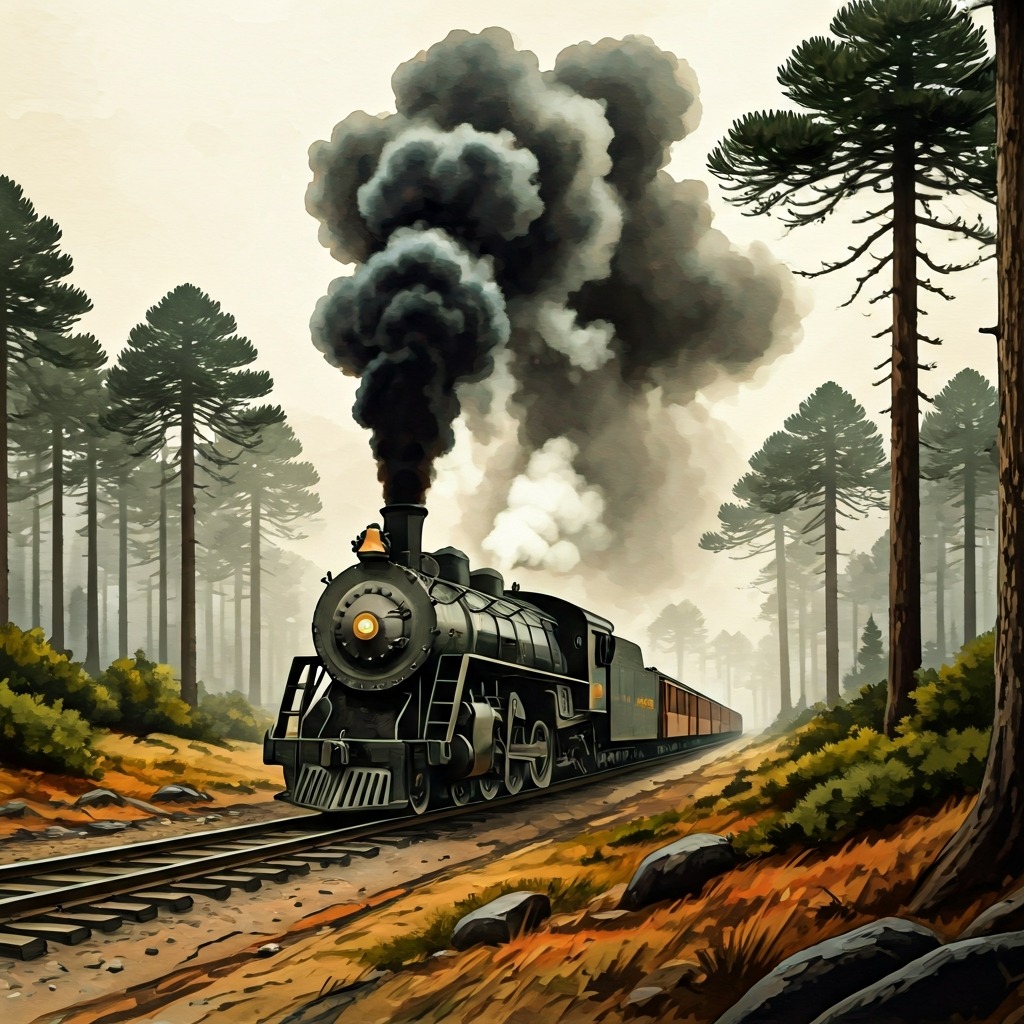
Using the brutal technological advancements of the modern era—telegraph lines to coordinate troops, railroads to transport massive armies, and the devastating rapid fire of repeating rifles—the Chilean army conducted a campaign euphemistically called the “Pacification of Araucanía.”
It was a tragic end to an era. But the legacy of the Mapuche remains one of the most awe-inspiring chapters in human history. For over 300 years, they stared down the barrel of an expanding global empire, adapted to every weapon thrown at them, and held their ground.