It was the late summer of 1944. The world was already consumed by the horrors of a global war, but in the quiet, blue-collar town of Mattoon, Illinois, a completely different kind of terror was slipping through the bedroom windows. They called him the “Anesthetic Prowler.” History remembers him as the Mad Gasser of Mattoon.
A Sweet Scent in the Dark
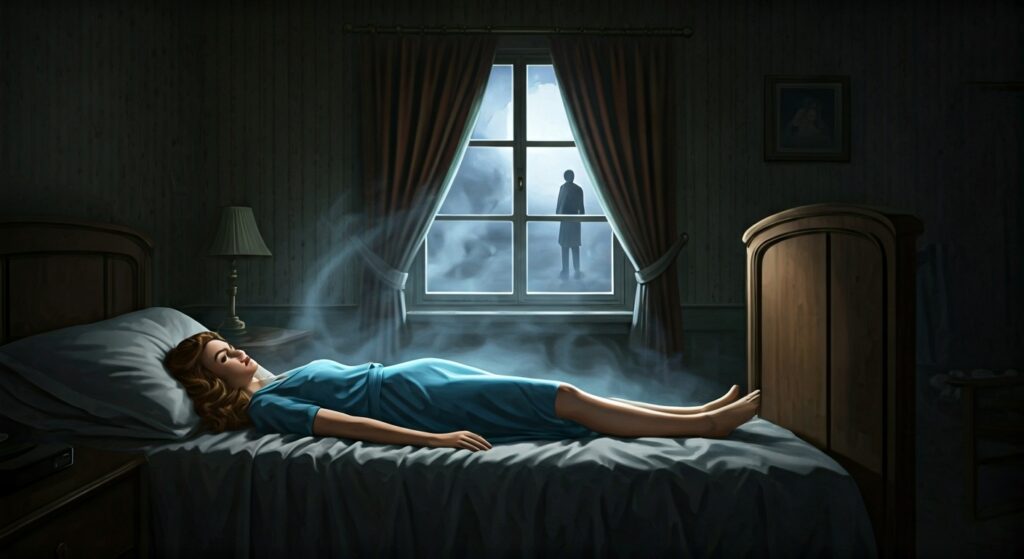
The nightmare officially began on September 1, 1944. Aline Kearney was lying in bed when she noticed something strange: a thick, sickeningly sweet odor drifting into her room. Before she could even process the strange perfume, the lower half of her body went completely numb. Her legs were paralyzed. Severe nausea washed over her.
When her husband returned home later that night, he spotted a dark, unidentified figure lingering near their bedroom window. The shadow quickly vanished into the night. It was the ultimate hit-and-run, and it set off a chain reaction that would bring the entire town to its knees.
The Phantom’s Impossible Supply Chain
As news of the Kearney incident broke, the local press threw gasoline on the fire. Fueled by sensationalist headlines in the Mattoon Journal-Gazette, the story of a phantom menace spraying paralyzing gas into innocent people’s homes exploded.
Suddenly, dozens of residents came forward. They all reported the same terrifying modus operandi: the sweet smell in the dead of night, followed by debilitating symptoms. Victims suffered from swollen lips, intense throat irritation, violent vomiting, and temporary paralysis.
But from a purely logistical standpoint, the attacks made no sense. To systematically gas dozens of homes across a sprawling neighborhood requires a steady, hidden inventory of a highly volatile chemical, a flawless dispersal mechanism, and the stealth of a ghost to evade detection. For a lone wolf operating in 1944 Illinois, pulling off a coordinated, multi-target chemical attack without leaving a single trace was practically impossible. Yet, the town was convinced they were under siege.
Shotguns, Shadows, and Zero Evidence
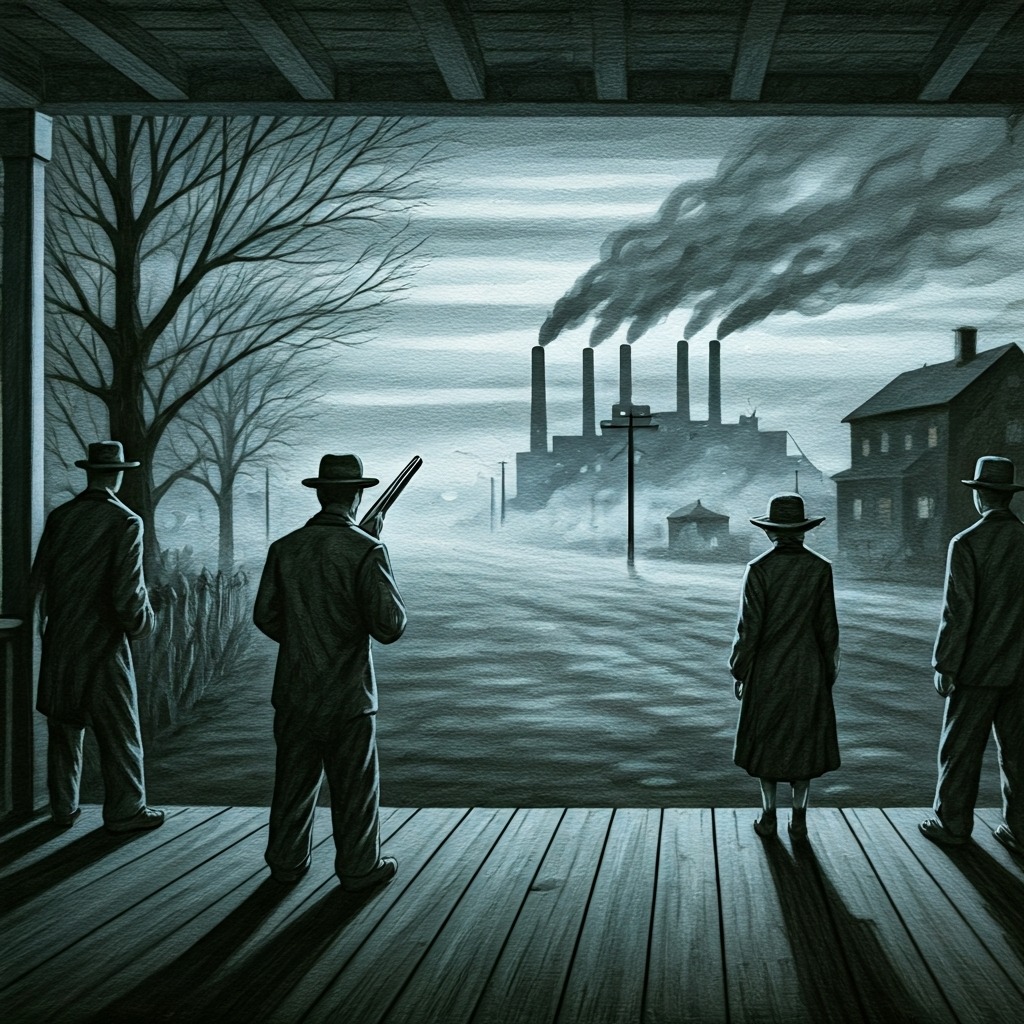
The local police, led by Chief C.E. Cole, scrambled to mount a defense against an invisible enemy. Cole launched a massive, town-wide investigation. Police set up roadblocks and deployed armed patrols to sweep the streets at night. Terrified citizens armed themselves with shotguns, sitting on their porches in the dark, waiting for the prowler to strike.
Despite the sheer volume of reports and the heavy police presence, authorities found absolutely zero concrete physical evidence of a gasser. They discovered a few ambiguous footprints in the dirt and a single torn window screen. That was it. No gas canisters, no chemical residue, no suspects.
By mid-September, just as quickly as the attacks had started, the reports abruptly ceased. The police began actively downplaying the incidents, suggesting that the “gasser” was nothing more than a phantom created by the town’s own mind.
The Enemy Within
So, who—or what—was the Mad Gasser?
In 1945, psychologist Donald M. Johnson published a seminal study on the Mattoon panic. After reviewing the timeline, the lack of physical evidence, and the nature of the symptoms, Johnson classified the entire event as a textbook case of mass hysteria, or mass psychogenic illness.
Consider the psychological state of the country in 1944. The anxiety of World War II was at a boiling point. Families were receiving telegrams about lost sons, the fear of chemical warfare was a lingering global threat, and nerves were frayed. Johnson argued that this intense wartime anxiety, combined with the highly suggestible nature of the public and sensationalized media reporting, created a physical manifestation of fear. The mind literally paralyzed the body.
While most modern scholars agree with Johnson’s diagnosis, a few alternative theories still linger. Mattoon was an industrial hub. It is entirely possible that the town experienced accidental exposure to toxic chemicals blowing over from nearby manufacturing plants, like the Atlas Imperial Diesel Engine Company. A shift in the wind could have pushed sweet-smelling, noxious fumes into residential neighborhoods, triggering real physical symptoms that a panicked populace blamed on a boogeyman.
Whether it was a cloud of industrial exhaust or a masterclass in psychological contagion, the Mad Gasser remains one of the most fascinating mysteries in American history. It proves that sometimes, the most dangerous enemy isn’t a brilliant tactician or a well-supplied army. Sometimes, the enemy is just us.