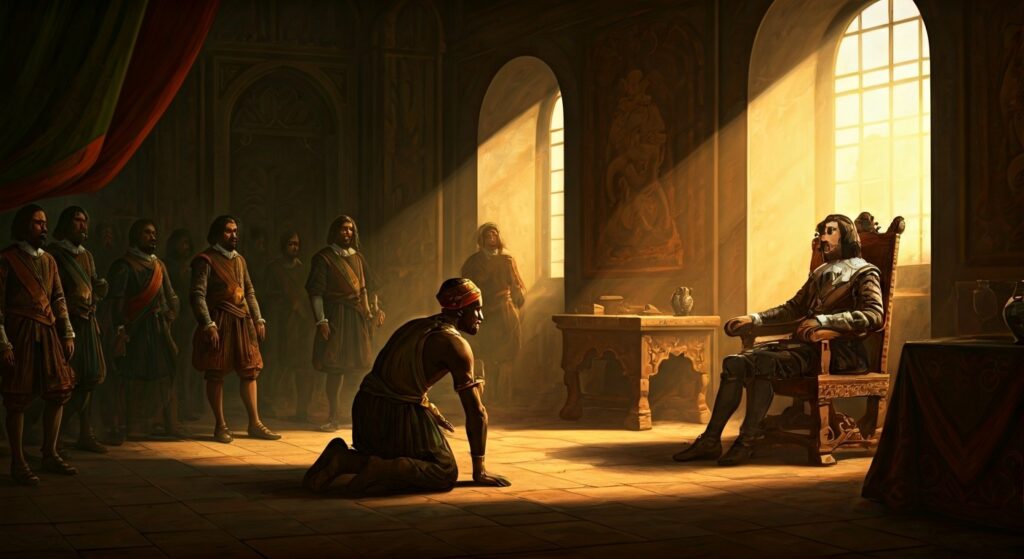
Luanda, 1622. Inside a sun-baked negotiation room, a geopolitical trap was set. The Portuguese Governor, João Correia de Sousa, lounged in a massive, ornate chair. Before him lay a simple woven floor mat. It was a calculated insult designed for the arriving ambassador of the Ndongo kingdom: Sit on the floor. Acknowledge your submission to a European superpower.
But the ambassador, a royal named Nzinga, did not blink. She did not argue. Instead, she offered a silent, piercing glance to one of her attendants. Without a word, the attendant dropped to their hands and knees. Nzinga calmly lowered herself onto their back, transforming her servant into a human throne. Suddenly, she was sitting eye-to-eye with the governor.
In a single, breathless moment of psychological warfare, Nzinga flipped the script on an empire. She wasn’t just an ambassador; she was a sovereign equal. And she was about to become the Portuguese empire’s ultimate nightmare.
A Crown Forged in Blood and Betrayal
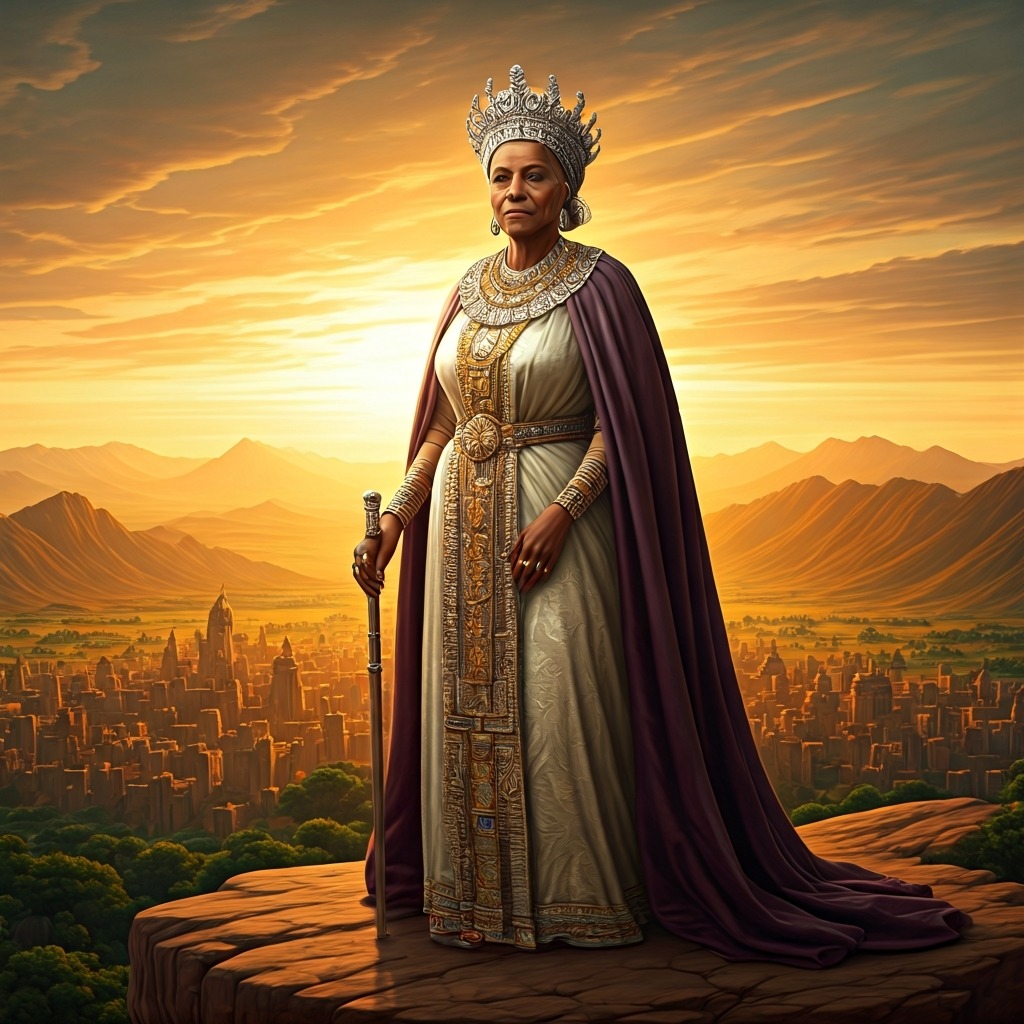
Born around 1583 into the royal family of the Ndongo kingdom (in modern-day Angola), Nzinga came of age in an era of apocalyptic violence. The Portuguese had entrenched themselves in Luanda, aggressively expanding their territorial grip and fueling the horrors of the transatlantic slave trade.
Nzinga’s audacious power play in 1622 secured a temporary peace treaty, one that recognized Ndongo’s sovereignty and limited the slave trade. As a diplomatic masterstroke, she even agreed to be baptized as Dona Ana de Sousa, with the governor himself acting as her godfather. But colonial promises were written in sand. The Portuguese soon reneged, resuming their violent incursions.
In 1624, Nzinga’s brother, King Ngola Mbandi, died under highly mysterious circumstances. Whispers of suicide mingled with rumors of assassination—some even suggesting Nzinga orchestrated his demise to save the fracturing kingdom. Regardless of the truth, Nzinga seized the throne.
The Portuguese were furious. Refusing to recognize a female ruler, they backed a puppet rival and unleashed their military might. Outgunned and outmaneuvered, Queen Nzinga was forced to flee her homeland.
The Shadow Empire of Matamba
If the Portuguese believed exile would break her, they severely underestimated their adversary. Nzinga did not retreat to fade into obscurity; she pivoted to build a war machine.
Marching her loyalists into the neighboring kingdom of Matamba, she conquered the territory and established a formidable new base of operations. Nzinga understood that survival required an unstoppable military force. She enacted a brilliant, radical domestic policy: offering absolute sanctuary to runaway slaves and recruiting the fearsome Imbangala—battle-hardened, Portuguese-trained African mercenaries. Overnight, her ranks swelled with fiercely loyal fighters who harbored a deep, burning vendetta against the colonial invaders.
The Enemy of My Enemy
Nzinga was a master of realpolitik. When the Dutch West India Company seized Luanda from the Portuguese in the 1640s, the Queen saw her opening. She immediately forged a groundbreaking alliance with the Dutch, uniting African and European forces against a common enemy.
Together, this coalition unleashed a relentless, devastating guerrilla war against Portuguese forces. Nzinga was no armchair general; well into her sixties, the Queen personally led her soldiers into the bloodiest thick of battle, her tactical brilliance leaving European commanders baffled and broken.
The Undefeated Sovereign
The geopolitical tides shifted once more in 1648 when the Portuguese finally managed to reclaim Luanda from the Dutch. Forced to retreat to the impenetrable safety of Matamba, Nzinga refused to surrender. For years, she waged a grueling, shadow war that bled the Portuguese colonial forces dry.
Finally, in 1656, after decades of exhausting and financially ruinous conflict, the Portuguese empire blinked. Realizing they could never defeat the brilliant tactician, they sued for peace, signing a treaty that formally recognized her rule.
Queen Nzinga spent her final years rebuilding her war-torn nation, fostering lucrative trade routes, and solidifying Matamba’s ironclad independence. When she died peacefully in 1663 at the age of eighty, she left behind a kingdom that had successfully defied one of the world’s most aggressive superpowers.
Contemporary European accounts attempted to smear her as a bloodthirsty savage, a desperate bid to justify their own colonial greed. Yet, even in their vitriol, they could not hide their grudging awe of her military genius. Today, Queen Nzinga stands immortalized—not just as a towering figure of Angolan history, but as a masterclass in anti-colonial resistance who refused to sit on the floor, and in doing so, brought an empire to its knees.