It is a strange phenomenon of human memory that we can lose entire empires in the blind spots of history. When we speak of ancient superpowers, we immediately name-drop Rome, Persia, and China. But in doing so, we leave out the most enigmatic titan of the ancient world’s VIP list.
If you asked a geopolitical insider in the 3rd century AD to name the world’s greatest empires, they wouldn’t stop at three. They would name a fourth—a powerhouse of trade, wealth, and impossible engineering that has been hiding in plain sight.
The Fourth Giant
Back in the 3rd and 4th centuries AD, if you wanted to move luxury goods between the Roman Empire and Ancient India, you had to navigate the treacherous waters of the Red Sea. And if you sailed the Red Sea, you answered to the Kingdom of Aksum.
Located in modern-day northern Ethiopia, Aksum was far more than a wealthy trade hub; it was an absolute juggernaut. The Persian prophet Mani, arguably the ultimate geopolitical insider of his era, explicitly classified Aksum as one of the four great powers of the ancient world, standing shoulder-to-shoulder with Rome, Persia, and China.
But the Aksumite elite weren’t satisfied with merely being rich in life. They wanted to ensure their absolute dominance was immortalized in death. To do that, they built monuments that continue to baffle modern engineers.
Skyscrapers of the Dead
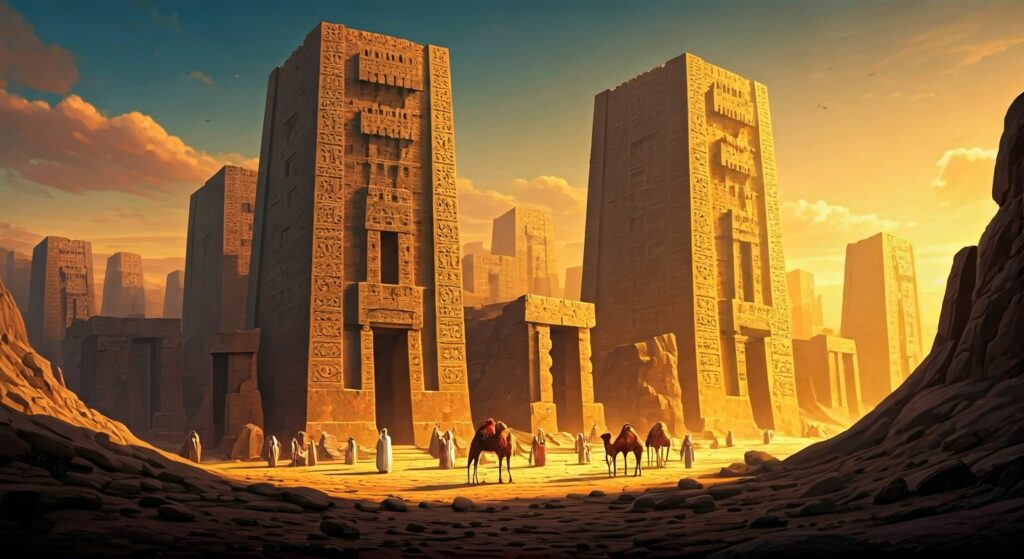
Imagine walking through an ancient African metropolis and looking up to see towering stone monoliths piercing the sky. These are the Obelisks of Aksum, more accurately known as stelae.
These were not your average tombstones. They were colossal markers for the sprawling, labyrinthine underground burial chambers of Aksumite royalty. But here is the truly mind-bending detail: they were intricately carved to look like multi-story palaces.
Hewn from single, massive pieces of nepheline syenite—a rock as stubbornly hard as granite, quarried miles away—these monoliths are architectural marvels. Ancient stonemasons carved false doors at the base, complete with meticulously detailed ring handles and locks. Above the doors, they chiseled rows of false windows separated by timber-like beams, perfectly mimicking the domestic architecture of the Aksumite elite.
It was an unparalleled display of ancient hubris. But as with all empires built on ambition, the relentless drive for supremacy eventually triggered a catastrophic collapse.
The 520-Ton Catastrophe
If you think today’s billionaires are overly competitive, they have nothing on the Aksumite kings. In a fierce architectural arms race, successive rulers kept trying to outdo one another by commissioning taller, heavier, and more impossible stelae.
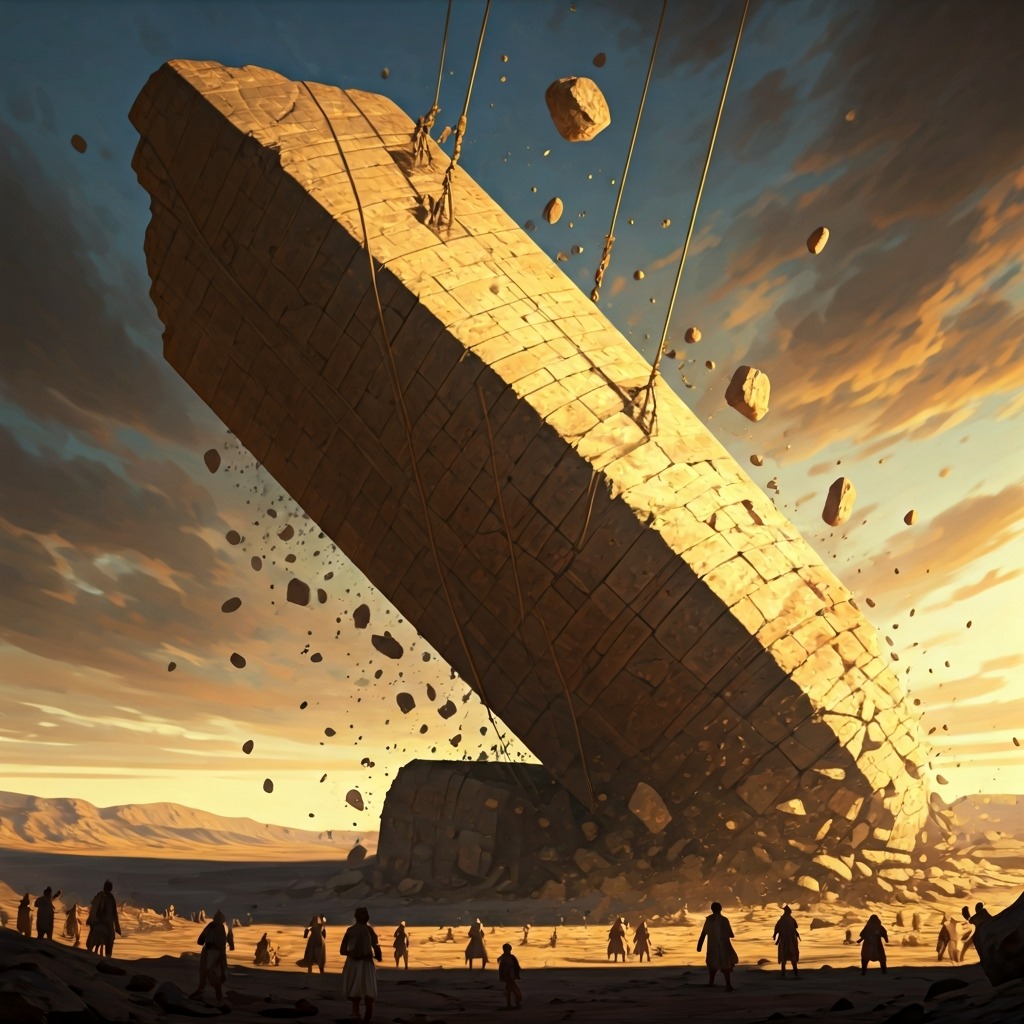
This obsession culminated in the Great Stele. Measuring over 33 meters (108 feet) tall and weighing a staggering 520 tons, it is believed to be the largest single piece of stone ever quarried and attempted to be erected in the ancient world.
Notice the word attempted.
The engineering required to extract and transport a 520-ton rock is staggering enough, but standing it upright? That was a bridge too far. During its erection, the colossal stone lost its balance. In a terrifying display of gravity, the monolith crashed into the earth and shattered into massive fragments.
This catastrophic failure was highly symbolic. Many historians believe the shattering of the Great Stele marked the abrupt end of the monumental stelae-building era. The empire was changing. Under King Ezana—whose own 24-meter (79-foot) stele remains the tallest still standing in its original position—the empire transitioned to Christianity, and the era of the giant false palaces was buried forever.
A Heist of Fascist Proportions
You would think the drama ended in antiquity, but these stones harbor a modern mystery, too.
For centuries, a third famous monument, the 24-meter Obelisk of Axum, guarded the secrets of the dead. But in 1937, Benito Mussolini’s fascist troops occupied Ethiopia. Desperate to project imperial glory, Mussolini ordered his soldiers to loot the massive obelisk. They cut the ancient monolith into pieces and shipped it off to Rome as a war trophy.
For decades, the stolen monument stood in Italy, a glaring, towering reminder of colonial theft. But Ethiopians never stopped fighting for their history. After decades of relentless diplomatic pressure and negotiations, the obelisk was finally returned to Ethiopia in 2005.
Re-erecting it was a monumental feat of modern engineering, finally completed in 2008. Today, it stands tall once again—not just as a tomb marker for a forgotten king, but as a towering symbol of national pride and the reclamation of African heritage.
The next time someone tries to tell you that ancient history was only made in Rome or Greece, point them toward the Horn of Africa. The Kingdom of Aksum carved their legacy into the hardest stone on earth, and despite gravity, time, and fascist dictators, their stories are still standing.