Imagine climbing to the absolute pinnacle of a blood-soaked empire, only to realize the very path you took is a fatal threat to your reign.
In the hyper-violent theater of 16th-century Japan, Toyotomi Hideyoshi pulled off the impossible. Born a landless peasant with no prestigious bloodline, he relied on sheer tactical genius, charisma, and a terrifying mastery of human psychology to fight his way to the top, ultimately becoming the supreme ruler of Japan.
But the view from the summit was terrifying. Hideyoshi looked down and realized he had a massive problem: he needed to destroy the ladder he had just climbed.
The Powder Keg in the Rice Paddies
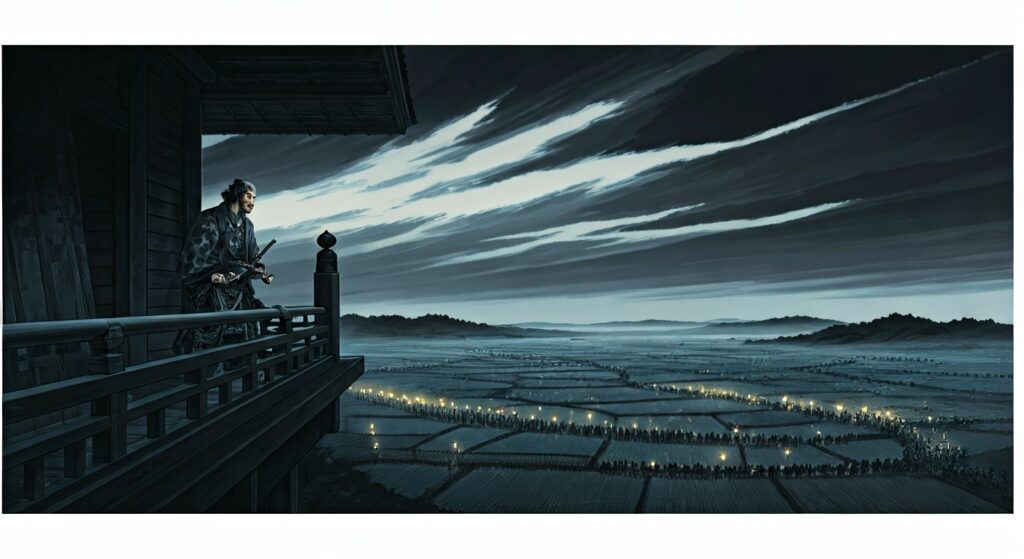
To understand the sheer panic keeping Hideyoshi awake at night, you have to grasp the chaotic social mobility of Japan’s Sengoku (Warring States) period. The line between a humble farmer and a lethal soldier was virtually non-existent. When they weren’t planting rice, commoners were stockpiling swords, spears, and matchlock firearms.
For over a century, these heavily armed peasants had formed devastating uprisings—known as ikki—and fanatical religious revolts that had literally toppled powerful warlords. Hideyoshi knew intimately how dangerous an armed peasant could be. After all, he used to be one.
He understood that as long as the rural population remained armed to the teeth, his fragile new government was sitting on a massive powder keg. He needed to close the door behind him and eliminate the exact social mobility that had allowed his own legendary ascent. But how do you disarm an entire country of hardened, battle-tested veterans without sparking the exact rebellion you’re trying to prevent?
The Divine Heist
Sending troops door-to-door to forcefully strip weapons from people who know how to use them is a guaranteed recipe for a bloodbath. Hideyoshi needed a softer touch. He needed the greatest public relations spin in military history.
In 1588, he issued the Sword Hunt Edict (Katanagari). The decree explicitly forbade farmers and non-samurai from possessing swords, bows, spears, firearms, or any other type of weapon.
But Hideyoshi didn’t frame this as the subjugation of the masses. He didn’t announce, “I’m taking your weapons so you can’t overthrow me.” Instead, he executed a psychological and religious manipulation of staggering brilliance.
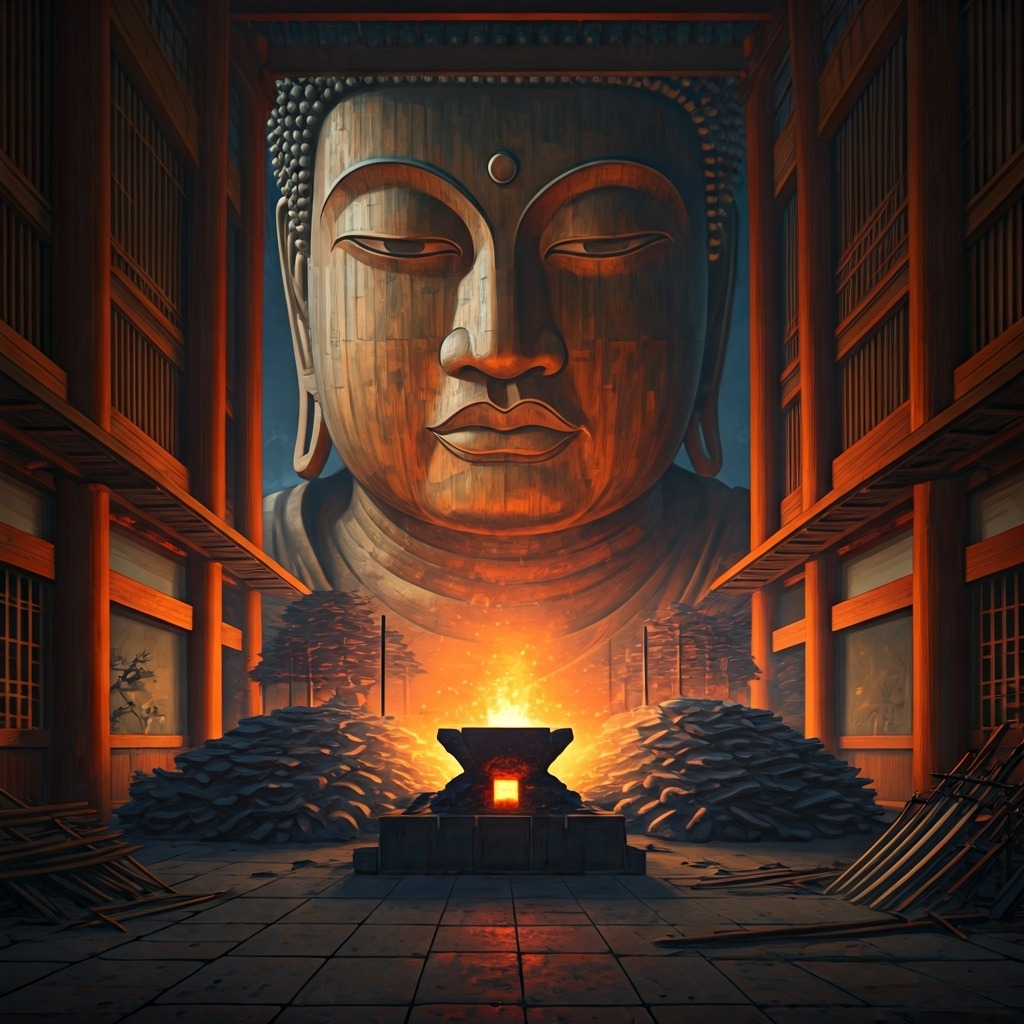
Hideyoshi proclaimed that the confiscated weapons weren’t going into his armories. Instead, they would be melted down and forged into nails and bolts for a colossal wooden statue of the Great Buddha at the Hōkō-ji temple in Kyoto.
By giving up their weapons, the edict promised, the peasants weren’t losing their rights—they were contributing to a massive, pious act of devotion. Hideyoshi assured them that this spiritual duty would guarantee their salvation in the next life and ensure bountiful harvests in this one.
In the deeply religious landscape of 16th-century Japan, it was a flawless victory.
Freezing the Board
The sheer logistical scale of the Sword Hunt was staggering. Hideyoshi’s loyal feudal lords swept across the provinces, collecting mountains of steel and iron. While some undoubtedly buried their swords in the dirt or hid matchlocks beneath floorboards, the sheer volume of arms successfully collected effectively neutered the military threat of the rural population. A massive disarmament campaign had been seamlessly disguised as a spiritual charity drive.
But the true historical fascination of the Sword Hunt isn’t just the trickery; it’s the profound socio-political fallout.
Hideyoshi’s edict was the primary catalyst for heinō bunri—the strict separation of the warrior and farming classes. By taking away the swords, Hideyoshi drew a hard, undeniable line in the sand between those who fought and those who farmed.
Soon after, samurai were forced to leave the countryside and reside in centralized castle towns. Peasants were tied to their land, strictly forbidden from engaging in warfare or changing their professions. Hideyoshi hit the “pause” button on Japanese society, freezing the social hierarchy exactly where it was.
The Sword Hunt succeeded in bringing an end to the chaotic, hyper-violent era of the Sengoku period. Hideyoshi’s brilliant, deeply ironic maneuver laid the structural foundation for the rigid class system that the subsequent Tokugawa Shogunate would use to maintain over 250 years of relative peace.
He proved that sometimes, the most effective weapon in a ruler’s arsenal isn’t a sword at all. Sometimes, it’s knowing exactly how to convince your enemy to hand theirs over with a smile.