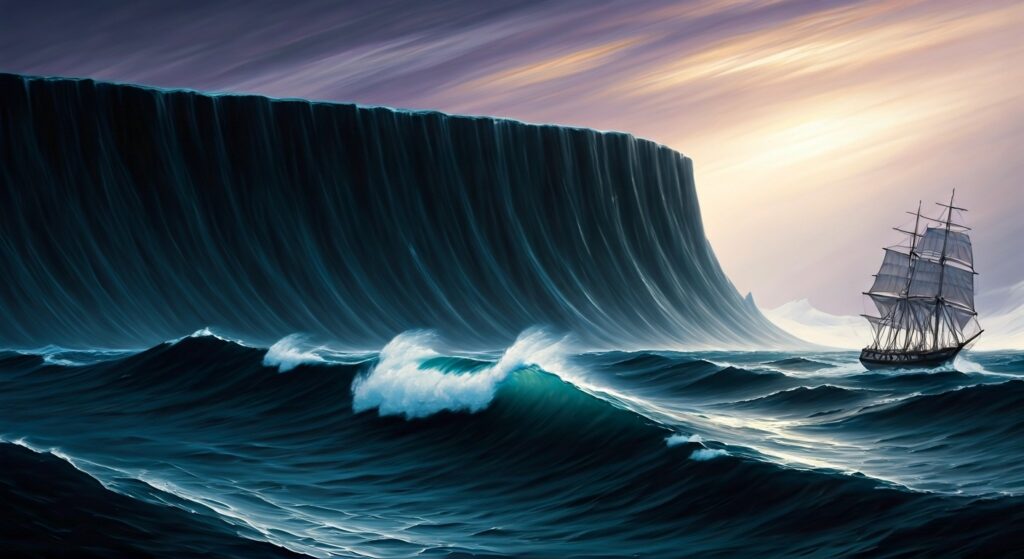
Imagine standing on the pitching deck of a 19th-century wooden clipper. The sky above is a bruised, freezing purple. Suddenly, the horizon vanishes, replaced by a five-story wall of black water blotting out the sun. You are at the bottom of the world, staring into the maw of the deadliest stretch of ocean in human history.
For centuries, sailors whispered its name with a mixture of reverence and absolute terror. It is a maritime meat grinder, a place where geography and meteorology conspire to obliterate human ambition. Welcome to the Drake Passage.
A Conveyor Belt of Chaos
To understand the nightmare, you must first understand the villain: the Antarctic Circumpolar Current (ACC). It is a conveyor belt of water that encircles the globe, completely unchecked by any landmass. Flowing west to east, the ACC is the most voluminous ocean current on Earth, moving an unfathomable 135 million cubic meters of water every single second. Without continents to slow it down, the current builds perpetual, furious momentum.
But at the southern tip of South America, this unstoppable force meets a terrifying roadblock.
Between Cape Horn and the icy South Shetland Islands of Antarctica lies a 600-mile-wide bottleneck. Here, the raging ACC is violently squeezed between the towering Andes and the Antarctic Peninsula. Forcing 135 million cubic meters of water per second through a tight geographic keyhole creates extreme hydrodynamic pressure. The result? Chaotic swells and unpredictable, hull-shattering currents.
Into the Screaming Sixties
As if the oceanographic violence wasn’t enough, the skies above are equally murderous. The passage sits squarely in extreme latitudes that sailors historically branded with terrifying monikers: the “Furious Fifties” and the “Screaming Sixties.”
Without landmasses to break the wind, cyclonic storms whip across the ocean unimpeded. These perpetual gales generate rogue waves that routinely exceed 50 feet in height. Since the Age of Sail began, the freezing depths of this passage have claimed over 800 ships and dragged more than 20,000 sailors to a watery grave. It is, quite literally, a graveyard of human ambition.
The Pirate and the Ghost
So, who gets the credit for mapping this watery hellscape?
In the English-speaking world, the passage bears the name of the legendary English privateer Sir Francis Drake. In 1578, Drake’s ship was blown wildly off course into these freezing waters, inadvertently proving that a southern open-ocean route around the Americas existed.
But history is often written by the victors—or the most famous pirates. The truth is, the passage was discovered decades earlier. In 1525, a Spanish navigator named Francisco de Hoces was pushed south by the very same gales. He saw the end of the earth long before Drake ever felt its icy spray. In the Spanish-speaking world, this terrifying stretch of sea is still rightfully referred to as the Mar de Hoces. Yet, both men likely wished they were anywhere else when the screaming winds hit.
The Monster That Feeds the World
Today, navigating the passage remains a formidable rite of passage for scientists and intrepid explorers heading to Antarctica. Modern seafarers categorize their crossings into two distinct experiences: the rare, eerily calm “Drake Lake,” or the dreaded “Drake Shake,” characterized by violently pitching decks, flying dinner plates, and widespread seasickness.
But there is a breathtaking twist to this terrifying natural wonder. Despite its absolute hostility to human life, the violent churning of the Drake Passage is ecologically vital to the entire planet.
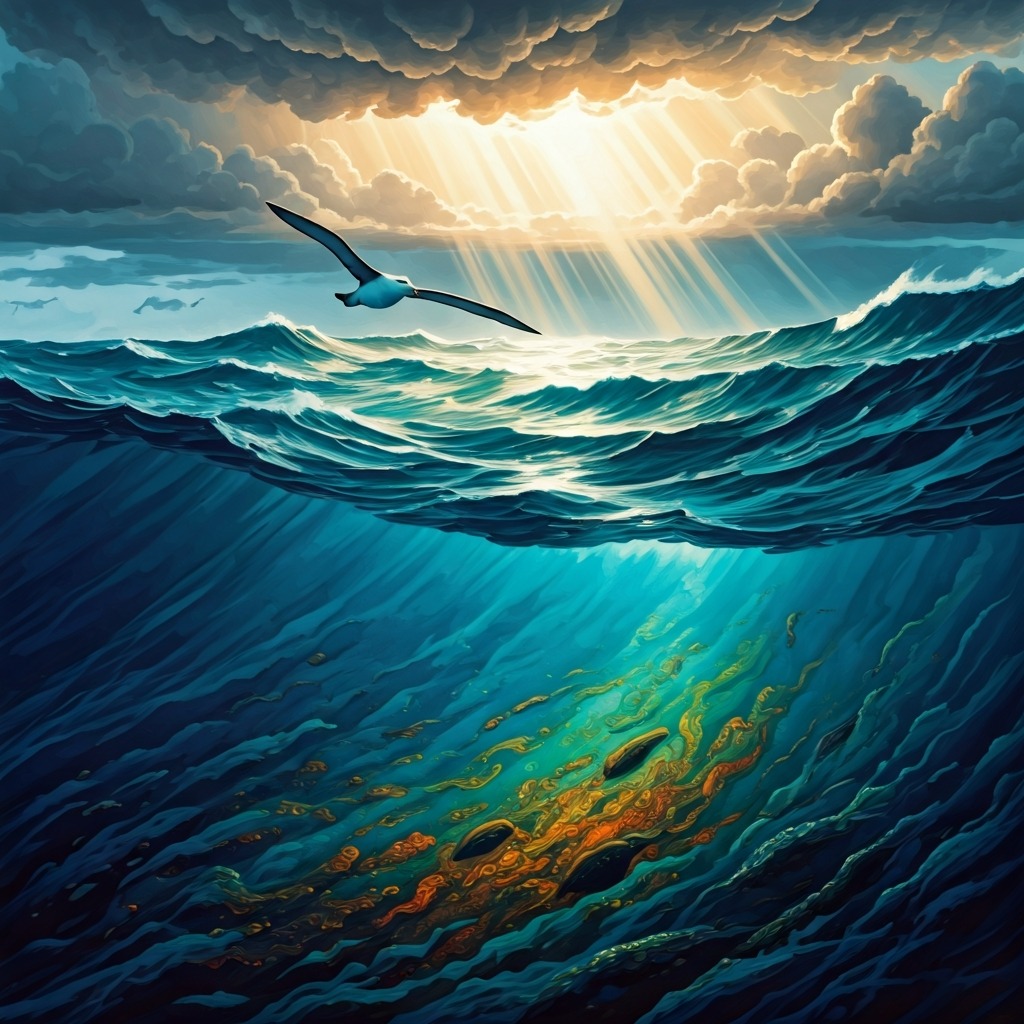
The intense turbulence creates a phenomenon known as upwelling, forcing deep, nutrient-rich waters to the surface. This violent mixing sustains massive, blooming clouds of phytoplankton, forming the base of a robust global food web. Those terrifying 50-foot waves are indirectly responsible for supporting vast populations of Antarctic krill, whales, seals, penguins, and the wandering albatross.
The deadliest stretch of ocean on Earth is, paradoxically, one of its most productive life-givers.