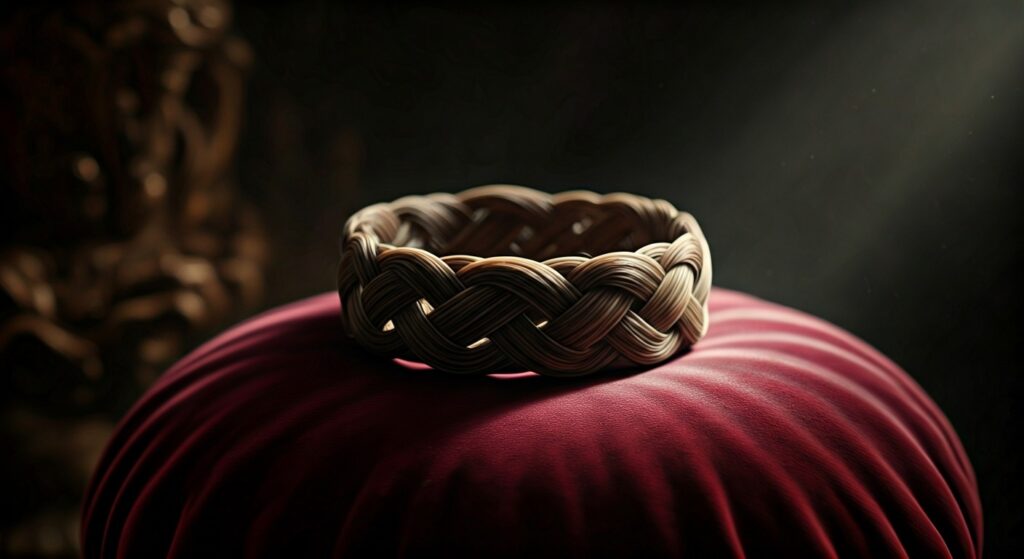
Picture a delicate, intricately woven bracelet resting on a velvet cushion in a dimly lit antique shop. Its craftsmanship is flawless, its pattern mesmerizing. But lean in closer. Those aren’t threads of silk or gold. They are spun entirely from human remains.
Welcome to the macabre, highly dramatic world of Victorian hair jewelry.
The Immortal Thread
To the modern mind, wearing a deceased loved one’s hair feels like the plot of a gothic horror novel. But to the Victorians, it was an act of profound, agonizing devotion. Born from the memento mori (remember you must die) traditions of the 17th and 18th centuries, this morbid fascination blossomed into a full-blown cultural phenomenon in the 1800s.
Why hair? Because unlike flesh and bone, hair refuses to decay. It acts as a perfect, incorruptible time capsule. It retains its color, texture, and luster long after the body has turned to dust, serving as a tangible, immortal piece of the person you loved.
Yet, it wasn’t exclusively reserved for the dead. Hair jewelry was the Victorian equivalent of a friendship bracelet or a wallet photograph. Betrothed couples exchanged locks to weave into rings, and mothers meticulously collected their children’s curls to map out elaborate, biological family trees.
A Queen’s Dark Devotion
No trend goes truly viral without a high-profile influencer, and the 19th century had the ultimate tastemaker: Queen Victoria.
When her beloved Prince Albert died in 1861, Victoria plunged into a state of perpetual, highly aestheticized mourning. She refused to wear anything but black for the rest of her life, and famously wore a locket containing a lock of Albert’s hair over her heart. When the most powerful woman in the world makes grief a fashion statement, the masses follow. Almost overnight, this royal endorsement popularized mourning culture—and the accompanying hair jewelry—across Europe and the United States.
The Macabre Artistry
The artistry required to forge these pieces was nothing short of staggering. Professional jewelers transformed human hair into breathtaking, intricate designs using three primary techniques:
- Palette work: Hair was glued flat onto a surface using a gum-like substance, meticulously sliced into intricate shapes like weeping willows, urns, or feathers, and sealed under glass in brooches.
- Table work: Using a specialized table with bobbins and weights, jewelers would braid and weave the hair over molds, creating incredibly durable, three-dimensional chains and necklaces.
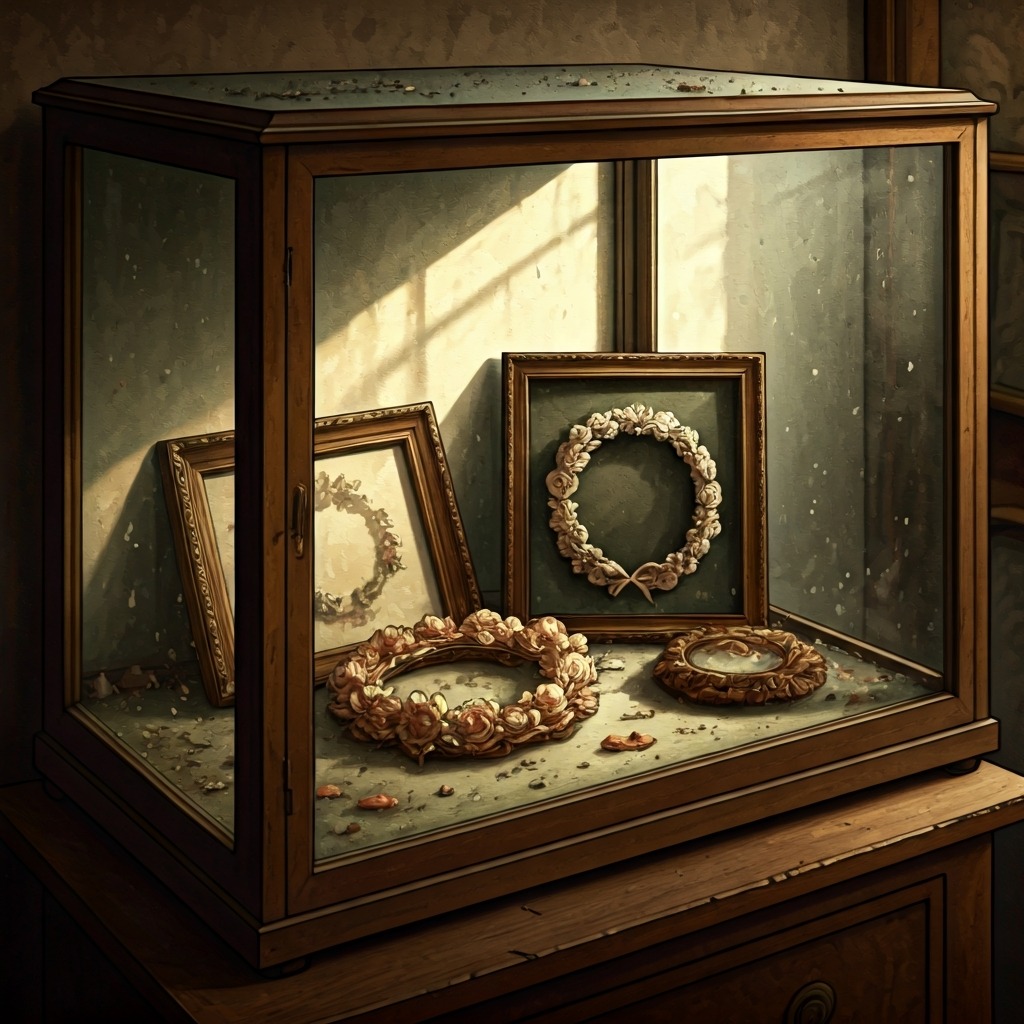
- Wire work: Hair was twisted tightly around wire to create floral wreaths or 3D sculptures, often framed as haunting shadowbox wall art.
Initially, this was a highly specialized, bespoke craft. But as the industry exploded, a dark secret began to whisper through the cobblestone streets.
The Great Parlor Deception
Imagine the horror: you send off the precious, irreplaceable lock of your late husband’s hair to a jeweler, paying a small fortune for a woven mourning ring. But when the piece arrives, the hair feels… different. Coarser. Wrong.
Rumors began to spread that overwhelmed—or simply greedy—jewelers were tossing out the delicate hair of the deceased. To make the weaving process easier and faster, they were secretly substituting it with horse hair or the hair of peasants.
For a society obsessed with sentimentality and the physical connection to the dead, this was a scandal of epic proportions. The fear of wearing a total stranger’s—or an animal’s—hair around your neck sparked a massive, sudden rebellion.
Women took the craft into their own hands. Publications like Godey’s Lady’s Book began printing patterns and instructions, elevating hair weaving from a commercial trade to a standard parlor craft for middle-class women. You didn’t just buy your mourning jewelry anymore; you wove your grief yourself, ensuring the biological authenticity of every single thread.
Fading into the Shadows
Like all intense cultural obsessions, the era of human hair jewelry eventually met its demise. By the early 20th century, a perfect storm of cultural shifts killed the aesthetic.
The advent of affordable photography gave people a less labor-intensive and far more accurate way to remember their loved ones. Simultaneously, the rise of germ theory made people suddenly, and understandably, wary of keeping human remains piled up in their living rooms. Finally, the mass casualties and unimaginable trauma of World War I made the heavy, formalized mourning culture of the Victorian era feel oppressive. Society wanted to move forward, not wear the dead on their sleeves.
Today, these intricate pieces of palette and table work sit quietly in museum cases and antique shops. They are tiny, beautiful ghosts—relics of a bygone age that dared to weave love, grief, and memory into a single, immortal thread.