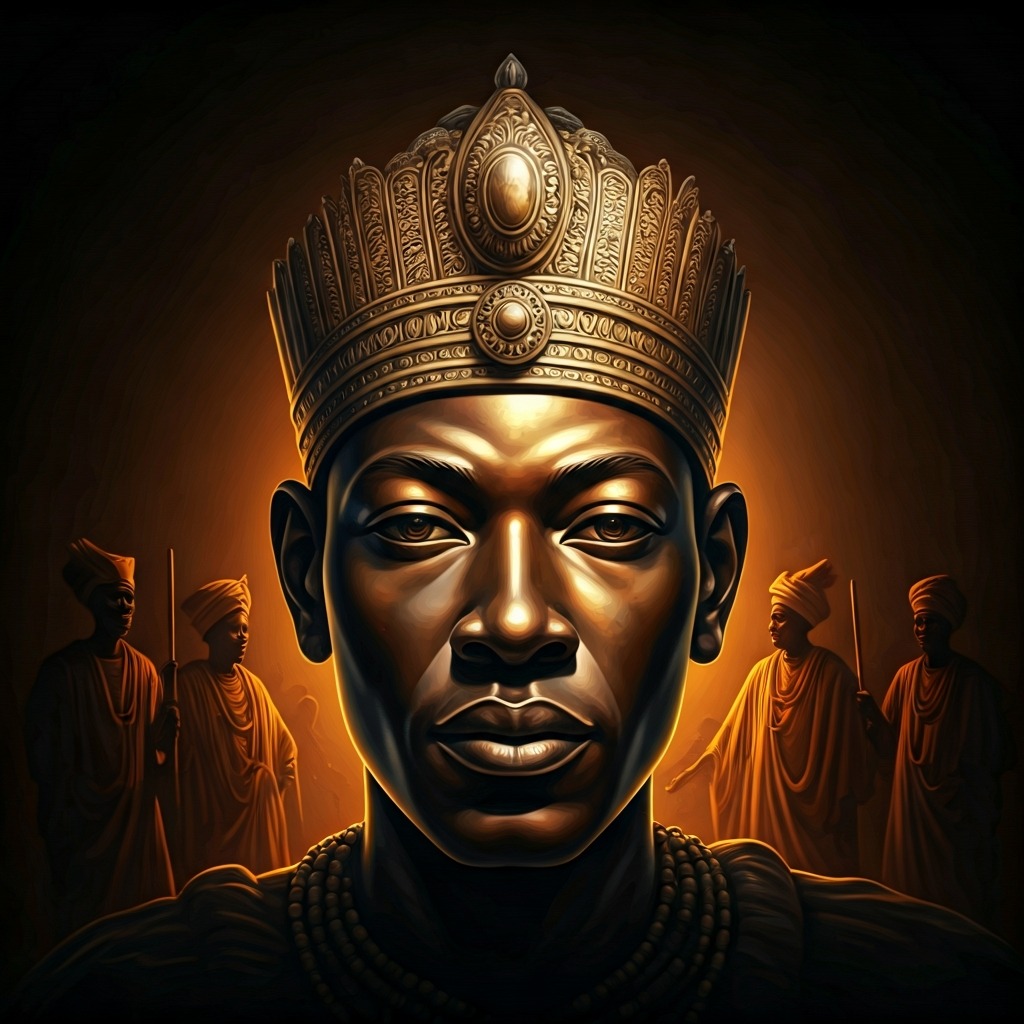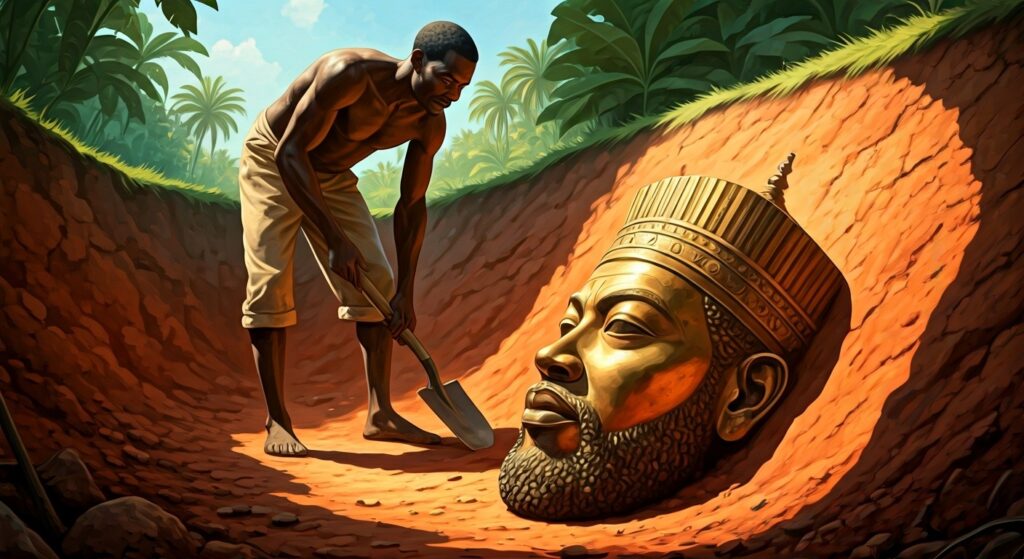
It is 1938 in the bustling city of Ife, present-day Nigeria. A laborer swings a shovel into the red earth of the Wunmonije Compound, preparing the foundation for a new home. The blade strikes something hard. Expecting a stone, he brushes away the dirt. Instead, a face stares back at him.
It is not a crude carving. It is a breathtakingly realistic human face cast in gleaming metal, adorned with an elaborate royal crown and intricate facial striations. He keeps digging. By sundown, the earth yields not just one face, but an entire royal court of thirteen flawless metal heads.
This accidental unearthing didn’t just halt construction—it sent shockwaves across the globe, shattering centuries of Western assumptions about African history.
The Atlantis Absurdity
To understand the sheer magnitude of this 1938 discovery, the clock must be rewound to 1910.
At the time, European explorers were stubbornly convinced that African art consisted entirely of highly stylized, abstract wooden masks. When German ethnographer Leo Frobenius stumbled upon similar metal and terracotta heads in Ife decades earlier, his worldview short-circuited.
The naturalism, the dignified expressions, the flawless proportions—it was all too much for his early 20th-century prejudices to process. Unable to accept the undeniable truth that indigenous Africans had forged these masterpieces, Frobenius did what any deeply biased explorer would do: he invented a fairy tale. He famously declared that these magnificent sculptures were left behind by survivors of the mythical lost city of Atlantis, or perhaps wandering ancient Greeks.
But the 1938 cache of thirteen heads, found firmly in their archaeological context, forced the Western art world to face reality. Atlantis was out. The brilliant Yoruba artisans were in.
Masters of the Molten Forge
The artisans of the Kingdom of Ife were absolute wizards of metallurgy. Created between the 12th and 15th centuries, these sculptures are universally known as the Bronze Heads of Ife. Yet, the term “bronze” is a historical misnomer; they are predominantly cast from heavily leaded brass and complex copper alloys.
To forge them, Yoruba craftsmen utilized a highly sophisticated, unforgiving method known as the lost-wax (cire perdue) casting technique. The process is a high-wire act of chemistry and heat. A sculptor carves the head in wax, encases it in clay, melts the wax out, and pours in molten metal. A fraction of a degree off in temperature, or a slight hesitation in the pour, and the entire piece shatters.
Despite these immense risks, the walls of the Ife heads are remarkably thin and virtually flawless. Their level of metallurgical mastery didn’t just rival the contemporary foundries of Renaissance Europe—in many ways, it surpassed them.
The Kings Who Lived Twice
Why risk such an exacting, perilous process to forge these hyper-realistic metal faces? The answer lies in a profound mystery of life, death, and divine power.
For the Yoruba people, the city of Ife is not merely a spot on a map; it is the spiritual heartland and the literal cradle of humanity. Historians and archaeologists believe these heads were commissioned to immortalize the Ooni (kings) and other high-ranking royals.
But they were never meant to be static decorations. They played a deeply mystical, active role in society, specifically in mysterious “second burial” ceremonies. When a king died, his physical body was interred, but the divine essence of the monarchy had to endure. These metal heads—with their serene, unblinking eyes—were likely attached to wooden effigies, dressed in spectacular royal regalia, and paraded through the city. They served as the ultimate symbol: the mortal man may have perished, but the divine kingship was eternal.
Today, the Bronze Heads of Ife stand as far more than beautiful museum pieces. They are a permanent, shining testament to the indigenous technological genius of West Africa—masterpieces that forced the world to look Africa in the eye and finally see the brilliance that was there all along.