Forget the monsters of myth and cinema. The most terrifying entity on this planet has no teeth, no claws, and it doesn’t breathe. It waits in the pitch-black basement of a ruined facility in Ukraine. If you stand in its presence for just five minutes, you are already dead. Welcome to Room 217/2.
The Birth of a Nightmare
On April 26, 1986, the Chernobyl Nuclear Power Plant suffered a disaster that defied human comprehension. Deep inside Reactor No. 4, a runaway chain reaction created a hellscape of unimaginable proportions. The uranium fuel rods, their zirconium cladding, and the reactor’s structural components didn’t just break apart—they melted together at temperatures exceeding 4,500 degrees Fahrenheit.
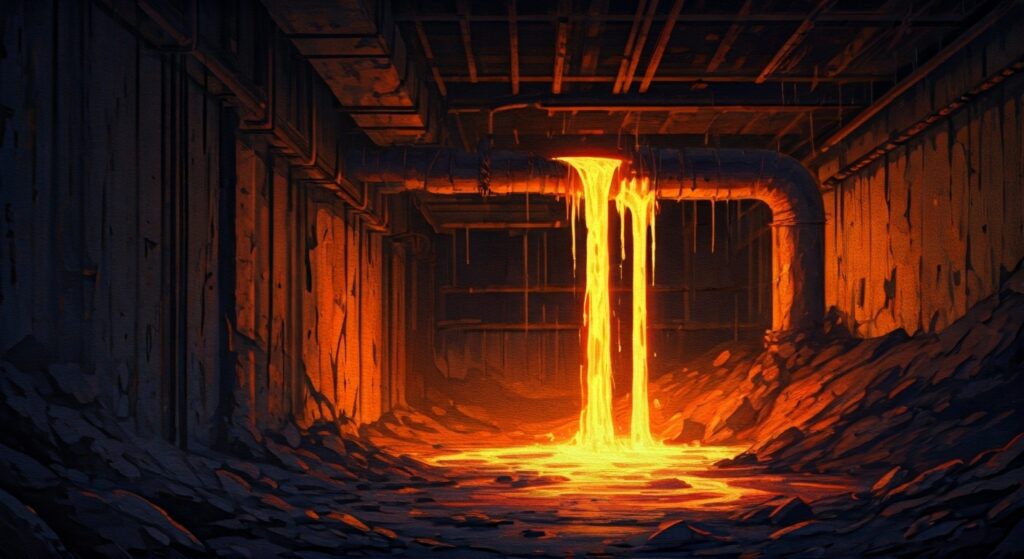
This apocalyptic heat birthed a synthetic, glowing lava known as “corium.” Like a highly radioactive xenomorph burning through the hull of a spaceship, this molten mass ate straight through the reinforced concrete floor of the reactor vessel. It flowed through pipes, swallowed metal, and slithered down corridors before finally pooling and cooling in the subterranean dark of the facility’s basement.
The 300-Second Death Sentence
For months, the basement remained a deadly, inaccessible tomb. It wasn’t until December 1986 that a team of Soviet scientists dared to peer into the abyss. Using a remote-controlled camera mounted on a makeshift wheeled rig, they navigated the debris-choked corridors.
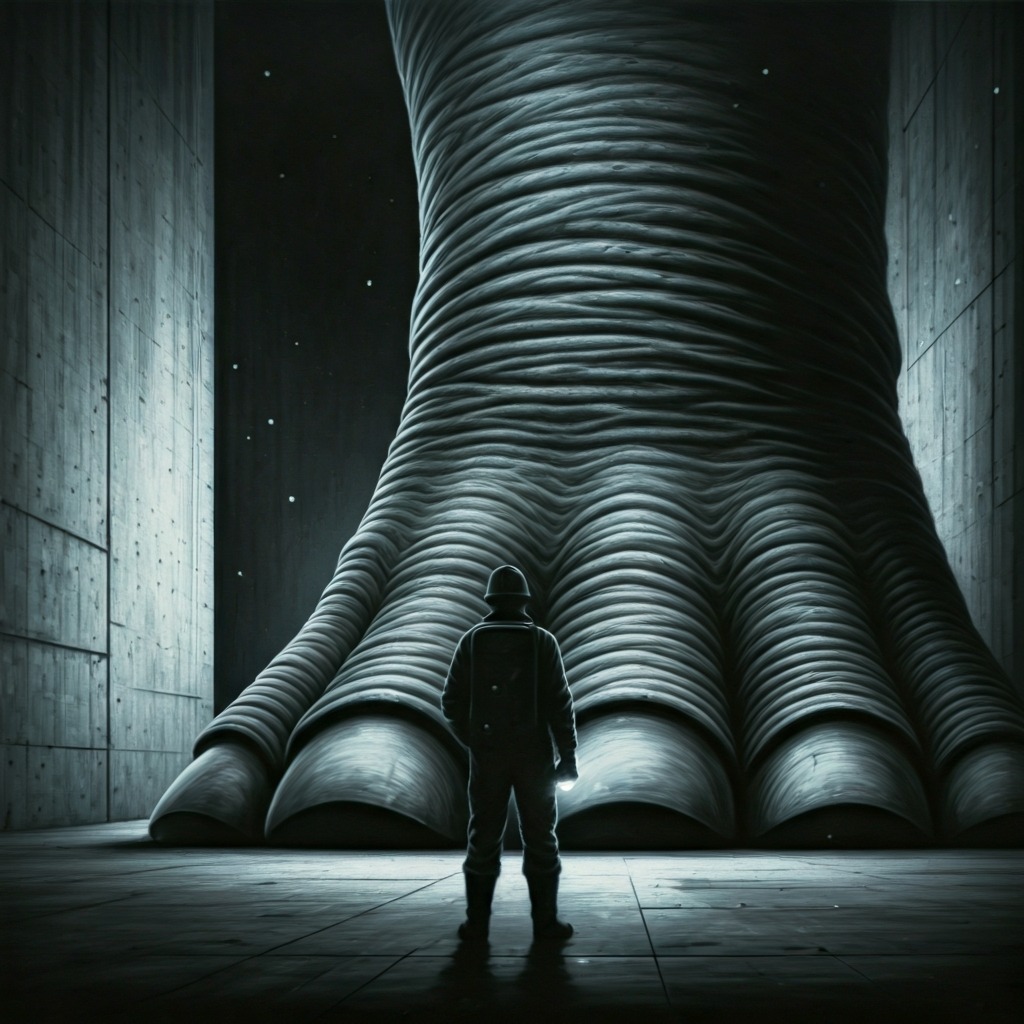
What they found in Room 217/2 was a massive, wrinkled, grayish-black formation. Its bizarre, bark-like texture looked eerily organic, earning it a chilling moniker: the Elephant’s Foot.
But this was no gentle giant. At the time of its discovery, the mass was emitting approximately 10,000 roentgens of radiation per hour—a level millions of times higher than normal background radiation. The timeline of lethality was a terrifying countdown. Stand in the room for 30 seconds, and you are hit with dizziness and crushing fatigue. At two minutes, your cells begin to break down, triggering internal hemorrhaging. Four minutes buys you violent vomiting and a spiking fever. Linger for 300 seconds—just five short minutes—and you absorb a fatal dose, guaranteeing a grueling death within two days.
Shooting the Beast
To understand their enemy, scientists needed a sample. But the Elephant’s Foot was stubbornly resilient. When they sent in a motorized trolley equipped with a drill, the bit ground uselessly against the hardened surface. The mass was simply too tough.
So, they resorted to the most delightfully brute-force scientific method in history: they sent a “liquidator” down to shoot it with an AK-47 assault rifle.
The gunfire successfully chipped off a piece for analysis. When examined, they found it was primarily composed of silicon dioxide—glass and melted concrete—laced with uranium, titanium, magnesium, and zirconium. The intense, apocalyptic conditions had even forged a brand-new, highly radioactive crystalline mineral, aptly named “chernobylite.”
The Ghost in the Grain
Fast forward to 1996. The most famous, spine-tingling interaction with the Foot involves Artur Korneyev, a Kazakhstani nuclear inspector who ventured into the basement to take photographs and measure radiation levels.
If you’ve ever seen the photos of Korneyev standing near the mass, you’ve likely noticed they look heavily grainy, distorted, and covered in strange static. That isn’t a stylistic choice, and it isn’t due to poor lighting. The intense radiation in the room was actively destroying the photographic film as the camera’s shutter clicked.
Despite his massive exposure over years of working in the belly of Chernobyl, Korneyev miraculously survived, though the radiation exacted a heavy toll, leaving him with severe cataracts and a host of other health issues.
A Decaying Menace
Today, the Elephant’s Foot is no longer the glowing, impenetrable lava monster it once was. Over the decades, it has cooled, and its radioactivity has slowly decreased. But as it cools, the once-solid mass has begun to crack, crumble, and degrade into radioactive dust.
This presents a terrifying new problem. If that dust becomes airborne, it could easily contaminate the surrounding environment all over again. To prevent this decaying menace from escaping, the gargantuan New Safe Confinement arch was moved over Reactor 4 in 2016, sealing the ruins and trapping the particulate matter inside.
The Elephant’s Foot is currently entombed in the dark, slowly turning to dust. It is a chilling reminder of the catastrophic power we wield—a man-made monster locked in a cage, waiting out a half-life that will outlast us all.