In the bloody, conquest-driven world of pre-Columbian Mesoamerica, the Aztec Empire is remembered as an unstoppable military juggernaut. They were the undisputed heavyweights, subjugating nearly every civilization from the Gulf of Mexico to the Pacific. But history has a way of hiding its most fascinating secrets in the shadows of giants.
What if there was a massive, highly organized superpower that the Aztecs were absolutely terrified of?
Welcome to the forgotten saga of the Purépecha Empire.
The Wall the Aztecs Couldn’t Breach
Centered in the lush Lake Pátzcuaro basin of modern-day Michoacán, Mexico, the Purépecha (historically known as the Tarascan Empire) were the second-largest empire in Mesoamerica during the late 15th and early 16th centuries.
While the Aztecs were busy expanding their borders through relentless warfare, they repeatedly slammed into a western wall they simply could not break. The Purépecha were an unconquered bulwark. Their ability to humiliate the Aztec war machine came down to a highly centralized government, massive armies, and a mysterious technological edge that baffled their contemporaries.
A Terrifying Technological Edge
If you were a warrior in Mesoamerica, your weapons were almost certainly crafted from obsidian, flint, or stone. Obsidian is razor-sharp, but it is notoriously brittle. The Purépecha, however, played by entirely different rules.
They were the most advanced metalworkers in pre-Columbian Mesoamerica. While neighboring empires were knapping stone, the Purépecha were smelting copper, silver, and gold. Crucially, they had unlocked the secret to making bronze. Armed with copper and bronze axes, spearheads, and projectiles, Purépecha warriors stepped onto the battlefield with a distinct, terrifying advantage.
But here is where the suspense deepens: historians still aren’t entirely sure how they acquired this metallurgical knowledge. The prevailing theory suggests these techniques arrived via maritime trade routes from the Andean civilizations in South America. This theory gains serious traction when you look at their words. The Purépecha tongue is a language isolate, sharing no known relatives in Mesoamerica but possessing structural similarities to indigenous languages of the Andes. They were, in many ways, an island of mystery in the middle of Mexico.
The Slaughter of the Aztec War Machine
The Aztec Triple Alliance viewed the Purépecha as an existential geopolitical threat. Unable to stomach the defiance on their western border, the Aztecs launched a series of massive campaigns to crush them. Every single one failed.
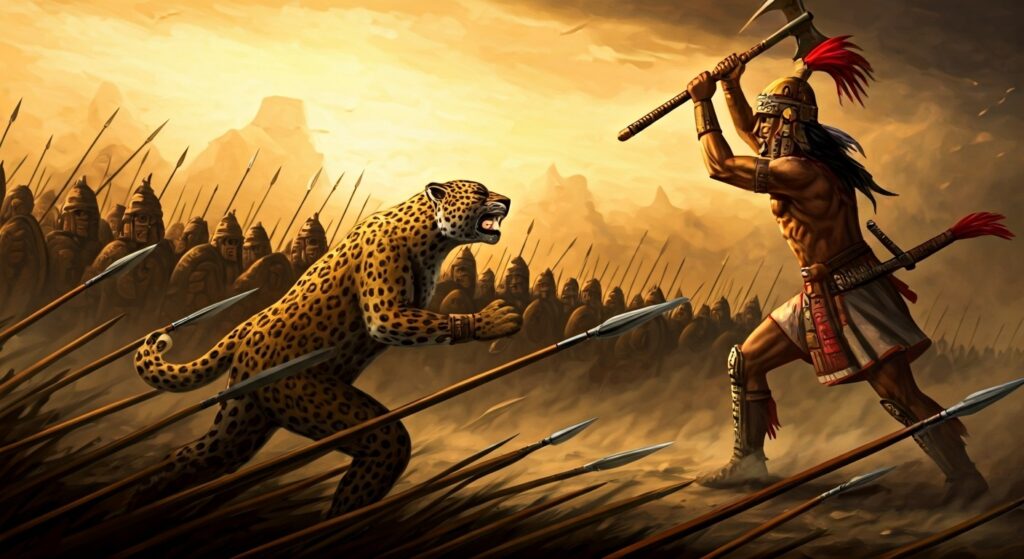
The most legendary clash occurred around 1478. The Aztec Emperor Axayacatl decided to end the Purépecha once and for all, marching an army of roughly 32,000 elite warriors into enemy territory.
They marched right into a trap.
Waiting for them was a highly organized Purépecha force numbering between 40,000 and 50,000 men, their copper-tipped weapons gleaming in the sun. The resulting battle was an absolute slaughter. The Aztecs lost over 20,000 men and were forced into a humiliating, catastrophic retreat. To ensure the Aztecs never tried it again, the Purépecha fortified their shared border with watchtowers, trenches, and fortresses, effectively halting Aztec westward expansion forever.
The City of Hummingbirds and Volcanic Stone
When they weren’t repelling invasions, the Purépecha were building a highly distinct society ruled by a paramount king known as the Cazonci. Their empire was governed from the capital city of Tzintzuntzan, a beautiful name that translates to the ‘Place of Hummingbirds.’ At its peak, this bustling metropolis housed around 35,000 people.
Their architecture was just as unique as their language and weaponry. Instead of the traditional square or rectangular step-pyramids favored by the Maya and Aztecs, the Purépecha built yácatas—massive, keyhole-shaped pyramids constructed from volcanic stone. These imposing structures served as both temples and tombs for their rulers. Here, they worshipped a pantheon of deities led by Kurikaweri, the god of fire, the sun, and war, to whom they offered blood sacrifices.
A Fatal Calculation and a Brutal Betrayal
The fall of this great empire wasn’t brought about by a failure of their bronze weapons or a collapse of their fortresses. It is, instead, a tragic tale of pragmatism.
In 1521, as the Spanish laid a brutal siege to the Aztec capital of Tenochtitlan, the desperate Aztecs swallowed their pride and begged the Purépecha for an alliance against the European invaders. The Purépecha Cazonci, Tangáxuan II, refused. He likely viewed the destruction of his ancient, hated enemies as a victory.
But that victory was incredibly short-lived. In 1522, the Spanish, led by Cristóbal de Olid, arrived in Michoacán. Tangáxuan II looked at the Spanish forces—and the tens of thousands of newly allied indigenous warriors backing them—and did the math. Knowing a war would mean the total annihilation of his people, he chose to submit peacefully to the Spanish Crown. Without a single major battle, the mighty Purépecha Empire officially ended.
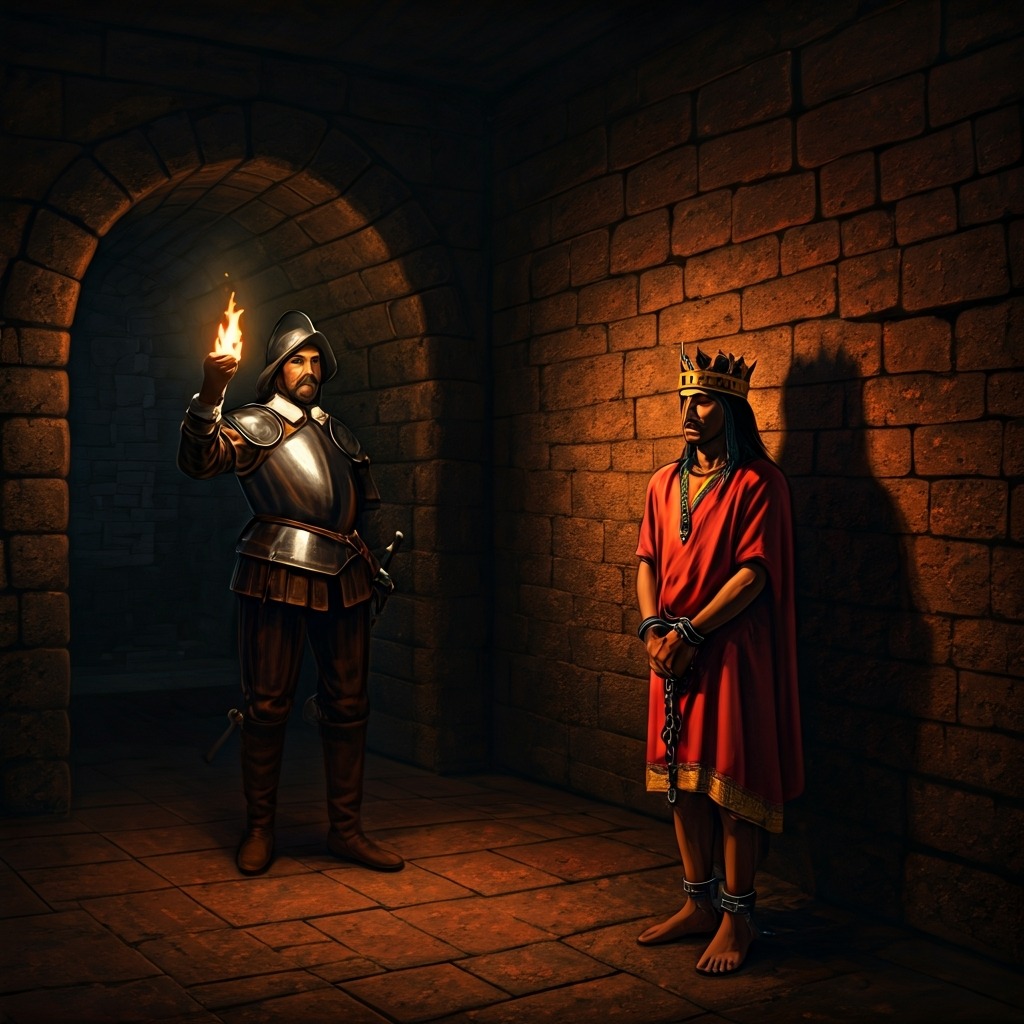
Tragically, Tangáxuan II’s peaceful surrender and regular tribute payments didn’t save him. In 1530, the notoriously brutal conquistador Nuño de Guzmán tortured and executed Tangáxuan II in a greedy attempt to extort more gold. This betrayal sparked a fierce Purépecha rebellion, which was only quelled through the diplomatic efforts of the Spanish friar Vasco de Quiroga.
Today, the legacy of the Purépecha lives on in Michoacán—a testament to a brilliant, bronze-wielding civilization that stood its ground against the fiercest conquerors of the ancient Americas.