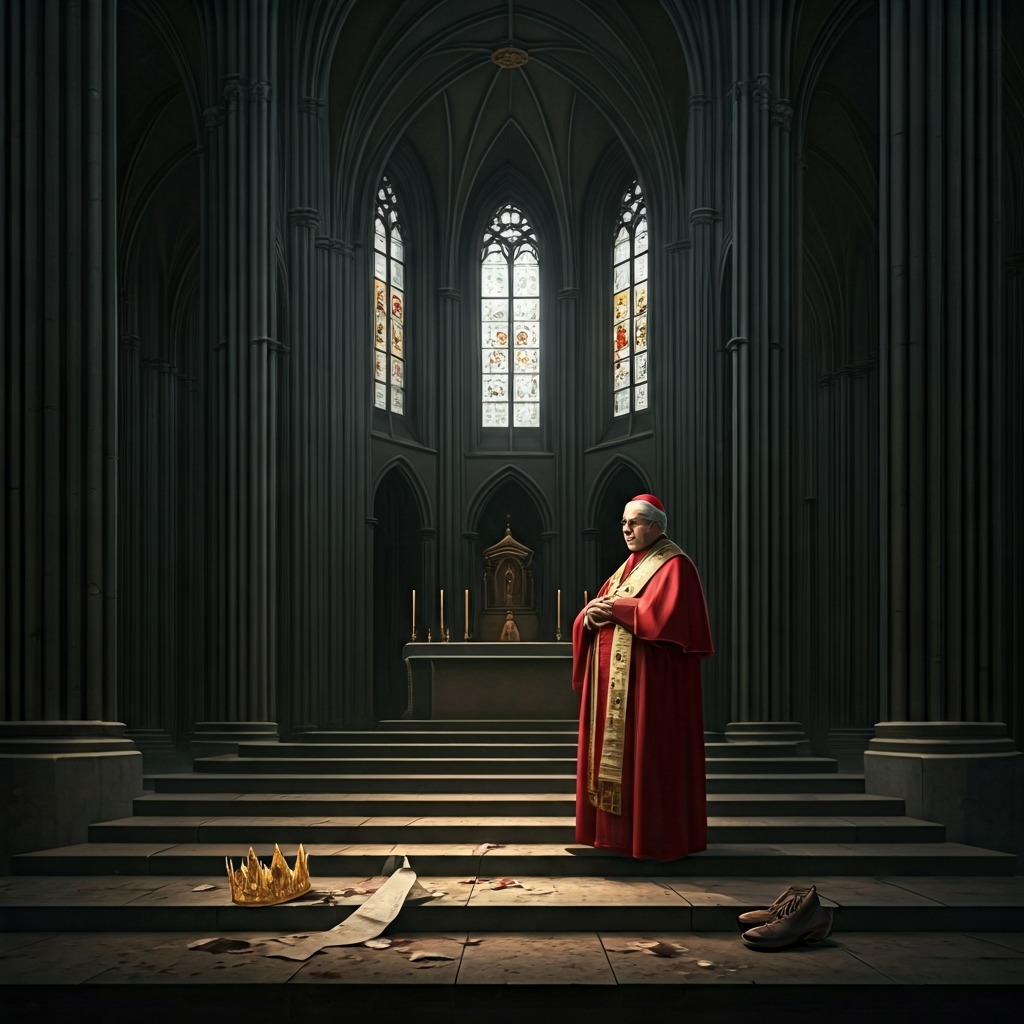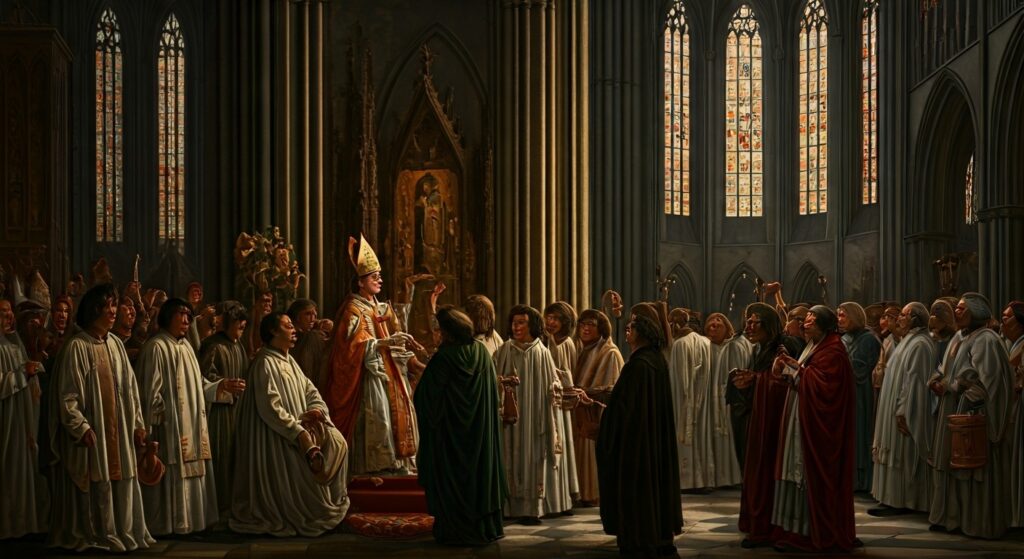
Imagine the terrifyingly rigid hierarchy of 12th-century Europe. The Catholic Church ruled everything, and its laws were absolute. But for exactly one day a year, the strict protocols of the grand cathedrals were violently thrown out the stained-glass windows. Bishops were overthrown, sacred rituals were mocked, and absolute, glorious chaos reigned supreme.
Welcome to the Festum Fatuorum. The Feast of Fools.
Mutiny in the Cathedral
The setting is France, sometime between the 12th and 16th centuries. The date is January 1st. On any normal day, the lower clergy—the subdeacons, the choir boys, the men who did the grueling grunt work for zero glory—were expected to keep their heads down, chant in perfect Latin, and live in quiet piety.
But January 1st was no normal day.
For twenty-four hours, the rigid social pyramid of the medieval world was flipped upside down. The lower clergy were permitted to mutiny. They held mock elections, crowning one of their own as the “Bishop of Fools,” or, if they were feeling particularly brazen, the “Pope of Fools.” Armed with this fake authority, these newly minted holy men proceeded to roast their bosses in a spectacle that would make a modern comedy roast look like a polite tea party.
Sausages, Dice, and Burning Shoes
What actually happened inside those echoing, candle-lit cathedrals? According to the horrified letters of the era’s high-ranking officials, it was absolute sacrilege.
The subdeacons reportedly strutted into the choir stalls wearing women’s clothing or terrifying animal masks. Instead of singing sacred hymns, they belted out bawdy, obscene tavern songs. When it was time for the Eucharist, they didn’t respectfully take the host; they allegedly stood right at the holy altar, loudly chewing on black puddings and greasy sausages.
And the sweet-smelling frankincense meant to carry prayers to heaven? The Fools dumped it out. Instead, they loaded the censers with old, rotting leather shoes, filling the sacred cathedral with the choking stench of burning footwear. They threw dice on the altar. They mocked the sacred rituals.
When they were done inside, the festival often spilled out into the streets. Laypeople joined the drunken revelry, and the mock-clergy rode in carts, throwing actual animal dung at the cheering crowds.
It sounds like a fever dream. How on earth did the most powerful institution on the planet allow this to happen?
The Divine Loophole
The theological justification for this madness was actually hidden in plain sight. It all came down to a single verse from the Magnificat, sung during the Vespers service: “He hath put down the mighty from their seat, and hath exalted the humble and meek.”
For the overworked, underpaid lower clergy, this verse was a literal instruction manual.
Psychologically speaking, the Feast of Fools was a safety valve. The Church understood that if you force young men to live under incredibly strict, joyless discipline 364 days a year, they are eventually going to snap. By giving them one day to blow off steam, dress in drag, and mock their superiors, the Church was theoretically reinforcing the social order. It was a controlled burn to prevent a forest fire.
The Medieval Smear Campaign
Here is where the historical narrative takes a massive twist. For centuries, folklorists believed the Feast of Fools was a stubborn, uncontrollable survival of pagan Roman festivals like Saturnalia—a burst of unchristian chaos that the Church just couldn’t stamp out.
But modern revisionist historians have recently dropped a bombshell: the debauchery might have been wildly exaggerated.
Scholars now argue that the Feast of Fools was actually a highly structured, reverent, and officially sanctioned liturgical play. So where did all those lurid stories of cross-dressing, sausage-eating, and altar-defiling come from?
They came from the medieval equivalent of angry Yelp reviews.
The most famous descriptions of this wild behavior come almost entirely from letters written by furious, high-ranking church reformers—like the notoriously strict theologians at the University of Paris in 1444. These reformers hated any kind of fun or subversion, and they were desperate to ban the festival. To get the Pope’s attention, they likely used extreme hyperbole, painting a boisterous but harmless tradition as a demonic, orgiastic threat to all of Christendom.
Basically, the medieval elite got trolled, couldn’t handle the joke, and wrote a wildly exaggerated smear campaign to get the festival canceled.
The Party’s Over
Whether the Feast of Fools was a genuinely unhinged riot or just a misunderstood piece of performance art, the higher-ups eventually lost their patience. The joke had run its course.
The festival was repeatedly and aggressively condemned by church authorities, most notably at the Council of Basel in 1431 and by the Pragmatic Sanction of Bourges in 1438. But much like a rumor that refuses to die, the tradition stubbornly persisted in rural French towns for another century.
It took the massive cultural earthquake of the Protestant Reformation, followed by the strict, no-nonsense moral crackdowns of the Catholic Counter-Reformation in the 16th century, to finally eradicate the Feast of Fools from the liturgical calendar. The era of the “Pope of Fools” was officially over.
The mighty were back in their seats, the humble were told to pipe down, and the old leather shoes were thrown in the trash where they belonged. But for a few glorious centuries, the underdogs ran the show—and they made sure their bosses never forgot it.