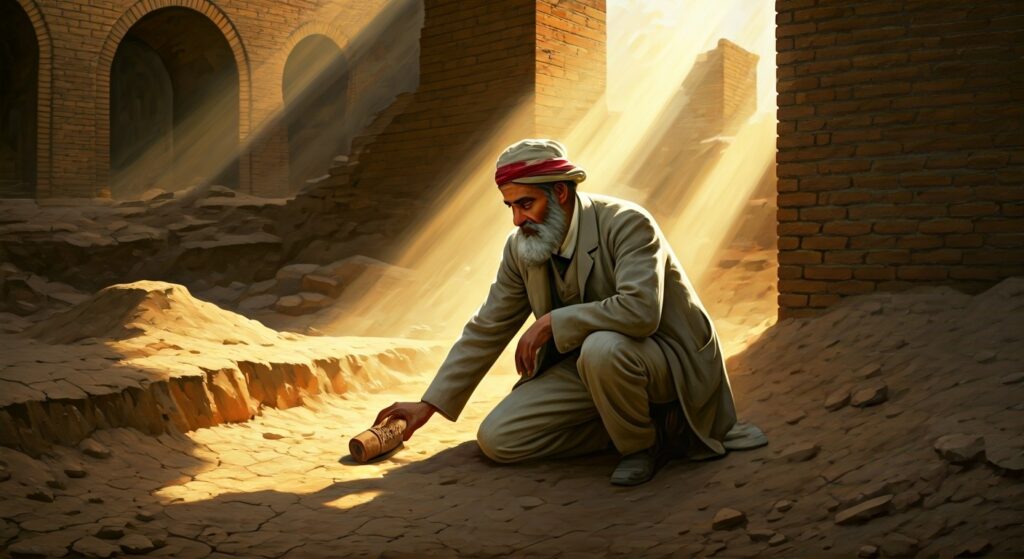
The year was 1879. Assyriologist Hormuzd Rassam was sifting through the myth-soaked, sun-baked ruins of Babylon when he unearthed something entirely unexpected. It wasn’t a chest of gold or a cache of jewel-encrusted weapons. It was a modest, barrel-shaped lump of baked clay.
Yet, this unassuming artifact, dating back to 539 BCE, held a secret powerful enough to send shockwaves through history. Covered in the elegant, wedge-shaped strokes of Akkadian cuneiform, it contained a message from the past. This wasn’t a mundane administrative log or a receipt for grain. It was the voice of Cyrus the Great, the founder of the mighty Achaemenid Persian Empire—and he had a highly specific, masterfully spun story to tell the world.
The Ultimate Smear Campaign
If you think modern politicians invented the smear campaign, a glance at this ancient cylinder will quickly correct the record.
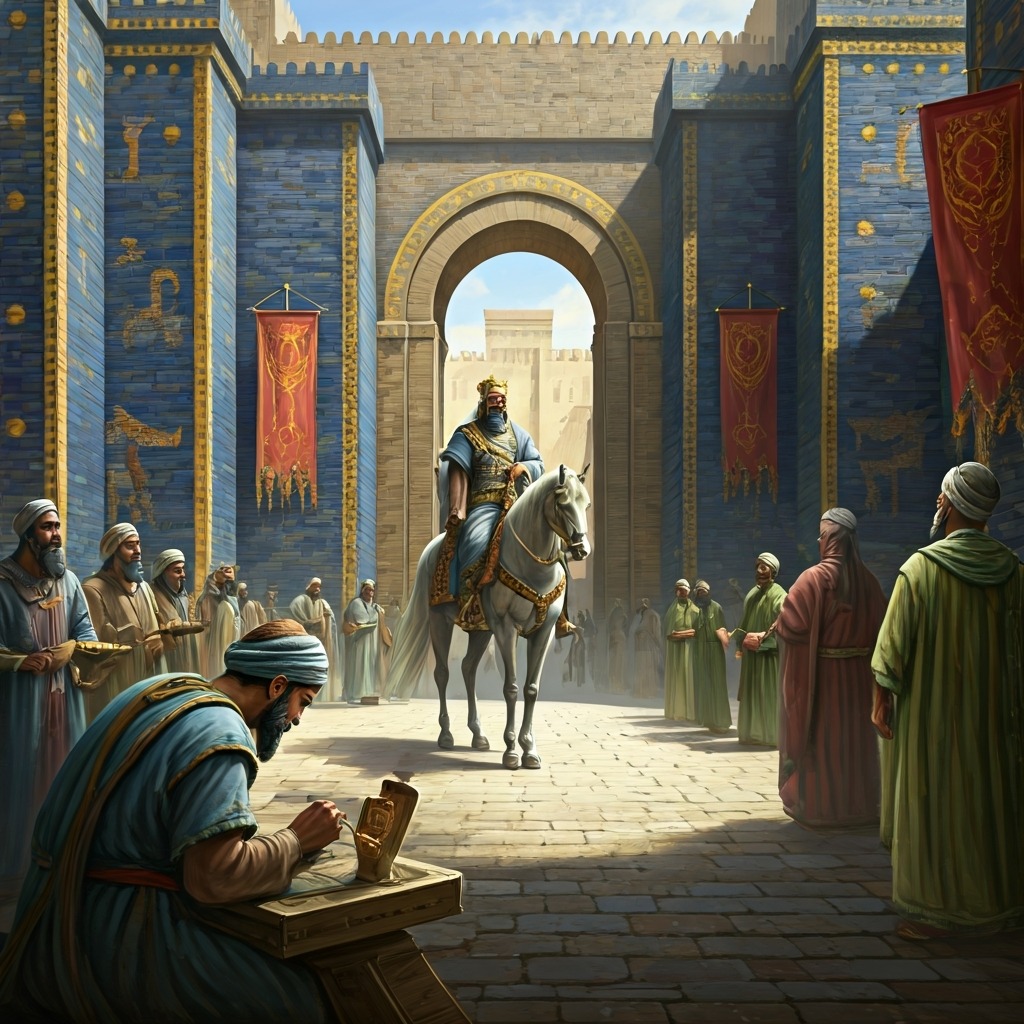
The text etched into the clay begins with a brutal, calculated takedown of Nabonidus, the recently defeated Babylonian king. Cyrus paints his predecessor as a tyrannical, impious ruler who foolishly neglected the cult of the chief Babylonian god, Marduk.
And Cyrus? According to his own cylinder, he was the chosen one. Cyrus boldly claimed that Marduk himself had surveyed the earth, selected Cyrus by name, and personally guided his army to conquer Babylon in order to restore peace and divine order. It was a masterclass in ancient propaganda: I didn’t invade your city; your god invited me to save it.
The Birth of a Modern Myth
Fast forward a few millennia, and this baked piece of clay took on a life of its own, transforming from ancient political spin into a modern diplomatic phenomenon.
In 1971, the Shah of Iran famously championed the artifact as the world’s “first declaration of human rights.” The narrative was so romantic and compelling that the United Nations even placed a replica on display at their headquarters in New York.
It is easy to see why this idealized vision took hold. The cylinder explicitly details Cyrus’s decree allowing deported peoples to return to their homelands and rebuild their destroyed sanctuaries. Historically, this mirrors the famous accounts in the biblical Book of Ezra, which describes the Jewish return from the Babylonian Captivity. A benevolent conqueror freeing the oppressed and honoring their gods? It sounds incredibly, almost impossibly, modern.
The Pragmatic Genius of the Ancient World
But history is rarely a fairy tale, and the scholarly reality is far more nuanced—and frankly, far more fascinating.
Modern historians argue that the Cyrus Cylinder is not a modern human rights charter. In reality, it is a traditional Mesopotamian foundation deposit. For centuries, new Mesopotamian rulers routinely issued these exact types of proclamations to legitimize their conquests. It was the standard playbook for appeasing local elites and calming down angry priesthoods.
Did the Cyrus Cylinder explicitly abolish slavery? No. Did it establish universal human rights in the contemporary sense? Definitely not.
Instead, it represents a brilliant, ancient form of imperial statecraft. Cyrus the Great prioritized religious tolerance and local autonomy not out of modern altruism, but as pragmatic tools for maintaining a vast, incredibly diverse empire. It illustrates a pivotal shift in ancient Near Eastern governance—a complex intersection of politics, religion, and spin.
The next time you hear a leader weaving a narrative to win over a crowd, just remember: Cyrus the Great did it first, he did it in cuneiform, and he probably did it better.