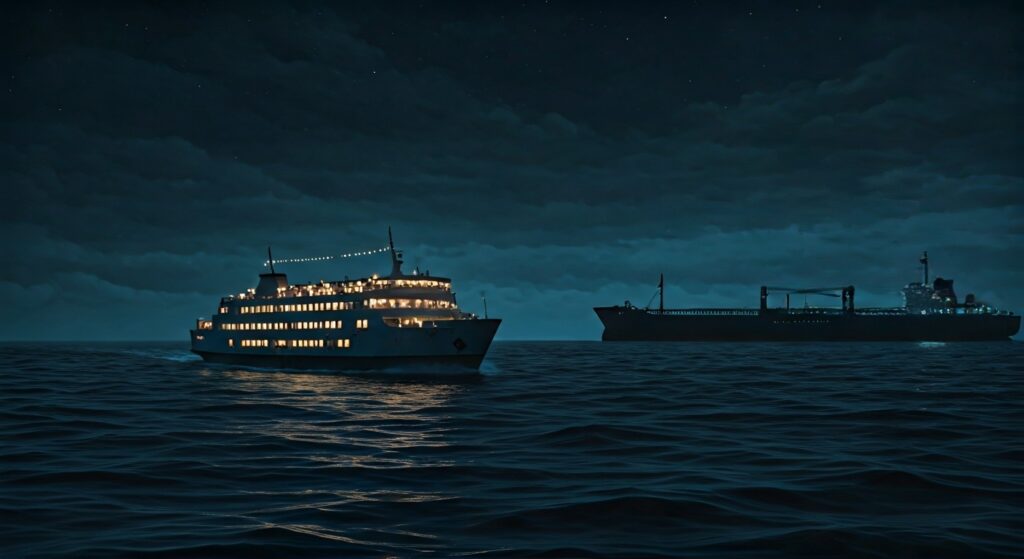
The dark waters of the Tablas Strait betrayed no warning. It was December 20, 1987, just days before Christmas, and the Philippine-registered passenger ferry MV Doña Paz was slicing through the pitch-black ocean en route to Manila. Below deck, thousands of exhausted travelers slept shoulder-to-shoulder, dreaming of holiday reunions. They had no idea a phantom ship was drifting directly into their path.
The Overloaded Voyage Home
To call the Doña Paz crowded would be a catastrophic understatement. Officially, the vessel was licensed to carry 1,424 passengers. But in the notoriously unregulated domestic shipping industry of the 1980s Philippines, manifests were mere suggestions. Desperate to get home for the holidays, unlisted travelers crammed onto the ferry by the thousands. They slept on cots in the narrow hallways, huddled on the open decks, and packed into the sweltering lower levels. As the ship navigated the strait, it carried well over 4,000 souls. Most were fast asleep, blissfully unaware of the lethal threat lurking in the dark.
A Phantom in the Dark
While the Doña Paz was severely overcrowded, the vessel approaching them had a far more explosive problem. The MT Vector was a motor tanker hauling 8,800 barrels of highly flammable petroleum products. In a properly regulated world, a ship carrying such a massive payload of combustible fuel would operate under the strictest safety protocols. But the Vector was a floating disaster waiting to happen. Entirely unseaworthy, it was operating without a license, lacked a qualified master at the helm, and—most chillingly—was navigating the crowded strait without a proper lookout. Two ships were now on a collision course: one carrying thousands of sleeping families, the other a massive payload of gasoline. In the unregulated waters of the Tablas Strait, a disastrous miscalculation was about to unfold.
The Ocean Catches Fire
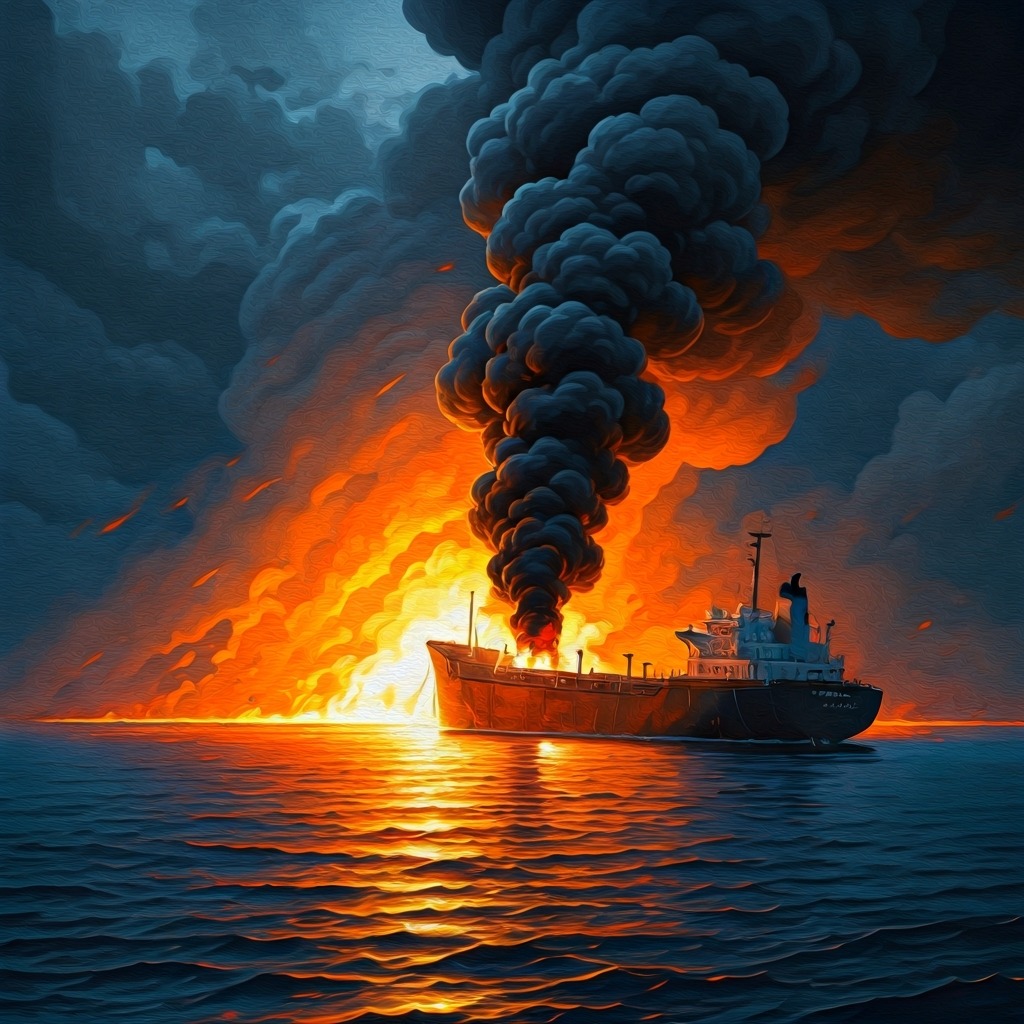
The silence of the night was shattered by the deafening crunch of grinding metal. The Vector sliced directly into the side of the Doña Paz. The violent impact was only the beginning. The collision instantly ruptured the Vector’s cargo hold, vomiting thousands of barrels of petroleum into the ocean and across the decks of the ferry. A single spark ignited the fuel. In a matter of seconds, both ships were engulfed in a catastrophic inferno. The fire didn’t just consume the vessels; it spread rapidly across the surface of the ocean, turning the surrounding waters into a literal sea of fire. Below deck on the Doña Paz, the scene devolved into pure nightmare. Panic erupted through the pitch-black, overcrowded corridors as passengers scrambled over one another, desperately trying to escape the thick, toxic smoke filling the air.
Locked Away and Left to the Sharks
Survival in a maritime disaster often comes down to preparation. On the Doña Paz, systemic negligence proved fatal. There was no evacuation plan, and no distress signals were ever sent. The crew, entirely overwhelmed and untrained for a disaster of this magnitude, panicked. When desperate travelers finally fought their way to the life jacket lockers, they made a horrifying discovery: the life jackets were padlocked. With the ship burning beneath their feet and no lifeboats deployed, passengers were forced into an impossible choice: burn to death on the deck, or jump into the flaming ocean. Those who chose the water had to dive beneath the burning surface, swimming blindly in the dark to find patches of ocean that weren’t ablaze. But the nightmare wasn’t over. The Tablas Strait is notoriously shark-infested. The blood, chaos, and sinking wreckage quickly drew predators from the deep.
The Staggering Toll of Negligence
By the time rescue vessels finally arrived, there was almost nothing left to save. Out of the more than 4,000 people involved in the collision, only 26 survivors were pulled from the water—24 passengers from the Doña Paz and two crew members from the Vector. The final death toll remains staggering. With an estimated 4,386 lives lost, the sinking of the Doña Paz stands as the deadliest peacetime maritime disaster in human history, claiming more than double the lives lost on the Titanic. The tragedy exposed the deep-seated corruption and abysmal safety standards within the Philippine shipping industry, sparking years of intense legal battles and forcing sweeping reforms. We often romanticize the sea, but the terrifying fate of the Doña Paz serves as a dark, unforgettable reminder: the ocean is unforgiving, and when human greed and negligence take the helm, the results are unimaginably tragic.