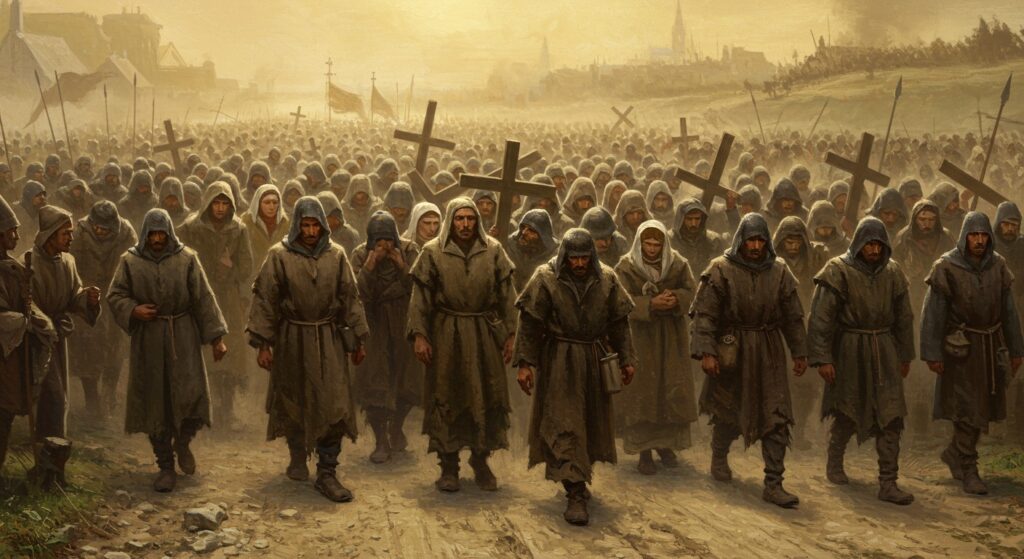
The year is 1212, and a strange, unsettling sound echoes across the dirt roads of Europe. It isn’t the heavy, armored march of knights, nor the rhythmic chanting of seasoned monks. It is the patter of thousands of small, bare feet.
According to the legend that has haunted history for centuries, an army of innocent children from France and Germany left their homes, armed with nothing but absolute faith. They marched toward the Mediterranean Sea, utterly convinced the waters would miraculously part for them just as the Red Sea had for Moses. Their goal? To walk across the dry seabed to Jerusalem and peacefully convert Muslims to Christianity.
The myth ends in a nightmare. The sea refused to part. The children supposedly starved, drowned in shipwrecks, or were betrayed by wicked merchants who sold them into North African slavery.
It is a deeply captivating and tragic tale. But there is a chilling secret hidden beneath centuries of historical dogma: the children never actually existed.
The Deadly Power of a Single Word
How does an entire army of children materialize in the history books out of thin air? The answer lies in a single, catastrophic mistranslation.
Modern historians have peeled back the layers of this grand illusion to reveal that this was never a crusade of literal children. The myth stems entirely from the Latin word pueri, which medieval chroniclers used to describe the marchers.
While pueri literally translates to “boys,” context is everything. In the rigid, unforgiving social hierarchy of the 13th century, pueri was a derogatory slang term. The elite used it to describe the wandering poor, landless peasants, and transient day laborers.
This wasn’t a naive march of toddlers and teens. It was a massive, desperate popular uprising of the impoverished rural classes. Driven by severe economic hardship and intense religious fervor, these peasants believed the wealthy, aristocratic crusaders of the past had failed to secure the Holy Land because they were corrupt. The poor believed that only they possessed the spiritual purity required for divine victory.
The Shepherd and the Stranger in Disguise
The events of 1212 actually fractured into two distinct, bizarre movements.
The first began in France with a young shepherd named Stephen of Cloyes. Stephen claimed that Jesus had appeared to him disguised as a humble pilgrim. The divine stranger allegedly handed Stephen a letter meant for King Philip II of France.
Word spread like wildfire. A massive crowd of zealous, impoverished peasants abandoned their fields and flocked to Stephen, gathering at Saint-Denis. The tension in the air was palpable; thousands of disenfranchised citizens were suddenly mobilizing under the banner of a mere shepherd.
But the climax was abruptly cut short. King Philip, advised by skeptical scholars at the University of Paris, simply ordered the crowd to disperse. Deflated and lacking resources, the vast majority obeyed. Despite the dramatic legends, there is no reliable historical evidence that Stephen’s French followers ever marched toward the sea.
The Alpine Death March
The German movement, however, was much larger, far more fanatical, and ultimately devastating.
Led by a charismatic young man named Nicholas of Cologne, thousands of German peasants decided to take matters into their own hands. Nicholas prophesied that they would march to the Italian port city of Genoa, where the Mediterranean would part before them.
What followed was a brutal, grueling trek across the treacherous Alps into Italy. These were not seasoned soldiers with supply trains; they were destitute laborers braving freezing altitudes, starvation, and exhaustion. Countless peasants died on the mountain passes before even setting foot in Italy.
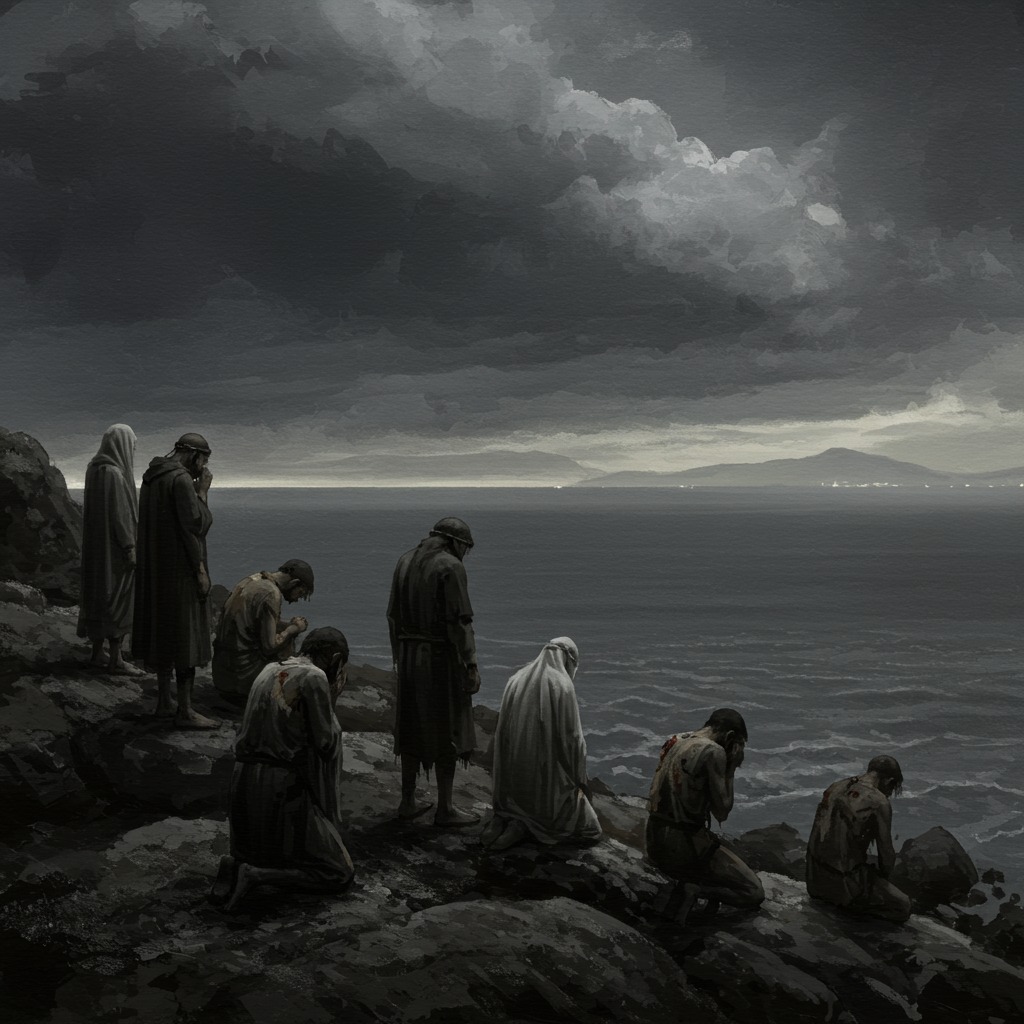
When the ragged, starving survivors finally stumbled into Genoa, they rushed to the shoreline. They waited. They prayed. They watched the horizon.
The sea remained stubbornly, silently unparted.
The psychological blow shattered the movement. Disillusioned, the crowd fractured. Some gave up and settled in Genoa, finding work where they could. Others pushed on to Rome, where Pope Innocent III gently praised their piety but firmly ordered them to return to their homes. For those who turned back, the return journey across the Alps claimed even more lives through disease and starvation.
William the Pig and a Weaponized Fairy Tale
If the sea didn’t part, and the marchers were just impoverished adults who went home or died of exposure, where did the terrifying story of children being sold into slavery come from?
The famous legend claims that two wicked merchants—ominously named Hugh the Iron and William the Pig—offered the children free passage to the Holy Land, only to betray them and sell them to slave markets in North Africa.
Historians have traced this dark twist to later, highly embellished chronicles, particularly the writings of Alberic of Trois-Fontaines. These tales were not historical records; they were moralistic fables designed and weaponized by the Church.
In the 13th century, the established religious hierarchy was deeply anxious about unsanctioned, popular religious movements. The Church wanted to maintain a strict monopoly on who could declare a crusade and how salvation was achieved. By turning a rebellion of the poor into a terrifying fairy tale about kidnapped, enslaved children, the Church effectively warned its flock: This is what happens when you try to take salvation into your own hands.
The true story of the Children’s Crusade is not a tale of naive innocence, but one of profound spiritual desperation. It was a fleeting, magnificent, and tragic moment when the most marginalized people in medieval society stood up, looked at the failures of their wealthy lords, and dared to believe that heaven belonged to the poor.