The Beast of the Baltic
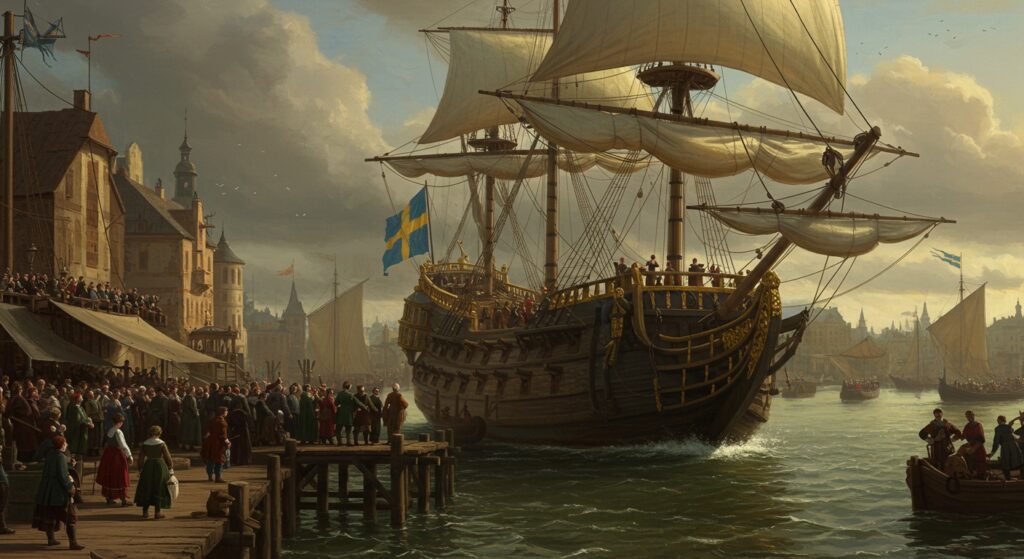
August 10, 1628. The air in Stockholm harbor crackled with anticipation. Thousands of locals and foreign dignitaries jostled along the docks, desperate to witness the launch of the most terrifying weapon the Baltic Sea had ever seen.
It was the Vasa, a towering, heavily armed galleon destined to be the crown jewel of the Swedish navy. Commissioned by King Gustavus Adolphus to project absolute military supremacy during the bloody Thirty Years’ War, the ship was designed to be an invincible floating fortress.
But as the massive sails caught the wind and the ship began to glide away from the harbor, a few men standing on the docks weren’t cheering. They were holding their breath. They knew a dark, fatal secret about the magnificent vessel soaking up the adoration of the crowd.
A Lethal Obsession with Firepower
The Vasa was doomed long before its hull ever touched the water.
Its tragic fate remains a historical masterclass in the lethal consequences of unchecked ambition. Originally designed by veteran Dutch shipbuilder Henrik Hybertsson, the Vasa was supposed to be a standard, albeit impressive, warship. But King Gustavus Adolphus had an insatiable appetite for destruction. He demanded an unprecedented arsenal: 64 massive bronze guns spread across two enclosed gun decks.
This single demand fundamentally broke the ship’s physics. When Hybertsson tragically passed away during construction, he left his apprentices to figure out how to satisfy a monarch who refused to compromise. The ship’s dimensions were never properly scaled for the immense weight of the artillery piled into its upper decks. The Vasa became dangerously top-heavy, its center of gravity pushed terrifyingly high above the waterline. Worse still, the hull simply lacked the physical space to hold enough stone ballast to counteract the crushing weight of the bronze cannons above.
The Test That Terrified an Admiral
The engineers knew something was terribly wrong. In the weeks leading up to the launch, Admiral Klas Fleming ordered a standard stability test while the Vasa was still safely moored at the dock.
The test was brutally simple: thirty men were ordered to sprint back and forth from one side of the upper deck to the other.
After only a few passes, the massive warship began to heave and roll with such violent, uncontrollable momentum that Admiral Fleming aborted the test in a panic. If the men had continued, the pride of the Swedish Navy would have capsized right there at the dock.
It was a chilling warning. The ship was a death trap. Yet, the immense pressure from the king to deploy the ship immediately created a fatal silence. Driven by the fear of royal wrath, the officers swallowed their warnings. The launch would proceed.
A 1,300-Meter Voyage to the Bottom
Back to that festive August afternoon. The Vasa had just slipped its moorings. The lower gun ports were propped wide open so the crew could fire a grand, booming salute to the cheering crowds of Stockholm.
The ship traveled a mere 1,300 meters.
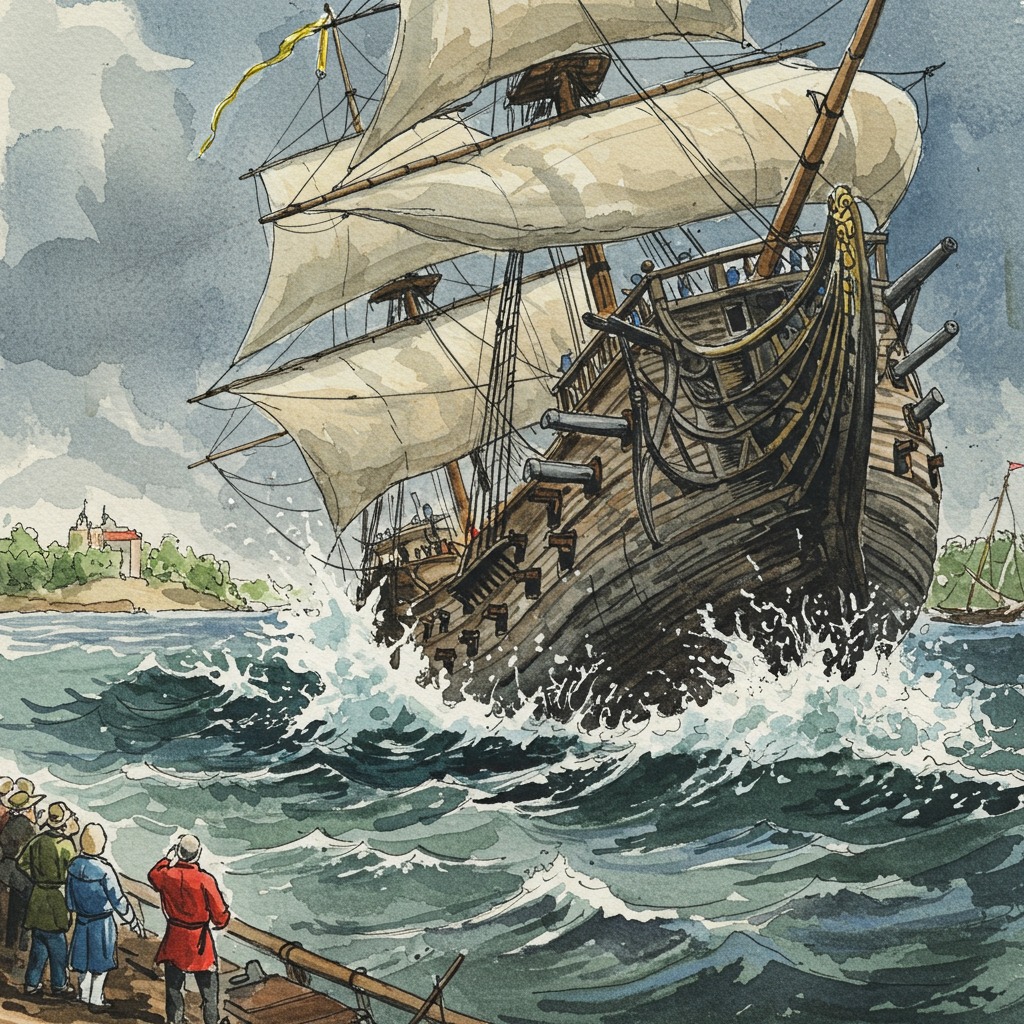
Suddenly, a relatively light gust of wind swept across the harbor and caught the Vasa’s sails. Because of its catastrophically high center of gravity, the ship didn’t just lean; it heeled over dramatically.
The crowd’s cheers turned to screams. With the lower gun ports left open for the salute, the dark waters of the Baltic Sea violently rushed inside. The flooding was instantaneous and catastrophic. In a matter of minutes, the ultimate symbol of Swedish military might vanished beneath the waves, dragging between 30 and 50 crew members and passengers to a watery grave.
The Ghost on Trial
The aftermath of the disaster was a masterclass in shifting the blame. An inquest was convened almost immediately to find a scapegoat for the international embarrassment.
But as investigators dug into the engineering reports and the aborted stability test, they hit a political brick wall. The finger of blame pointed squarely in two directions: at the master shipwright Henrik Hybertsson, who was already dead, and at King Gustavus Adolphus himself, whose unreasonable demands and direct interference had caused the engineering failure.
Unwilling to charge a corpse and terrified to accuse a sitting monarch, the inquest ultimately diffused the blame. No single person was ever punished.
The Vasa sat in the freezing darkness of Stockholm harbor for over three centuries. Remarkably preserved by the brackish water, the vessel was finally salvaged in 1961 in a monumental engineering feat. Today, it rests in the Vasa Museum—a breathtakingly beautiful monument to the lethal dangers of poor communication, scope creep, and royal hubris.